



Note: Ingredients listed on restricted chemical lists
EC/CAS
111-76-2
Name of the chemical
Ethylene glycol monobutyl ether (EGBE)
Concentration
N/A
EC/CAS
330-54-1
Name of the chemical
Diuron
Concentration
N/A
EC/CAS
26172-55-4
Name of the chemical
5-chloro-2-methyl-4-thiazoline-3-ketone
Concentration
N/A
EC/CAS
9036-19-5
Name of the chemical
Octylphenolethoxylates (OPEO)
Concentration
N/A
EC/CAS
26530-20-1
Name of the chemical
2-Octyl-2H-isothiazol-3-one
Concentration
N/A
EC/CAS
10605-21-7
Name of the chemical
Carbendazim (ISO); Methylbenzimidazol- 2-ylcarbamat (2021/849)
Concentration
N/A
EC/CAS
2682-20-4
Name of the chemical
2-Methyl-2H-isothiazol-3-one
Concentration
N/A
EC/CAS
2634-33-5
Name of the chemical
1,2-Benzisothiazol-3(2H)-one
Concentration
N/A
General Information
Revision date
2017-01-08
Product name
LIME STOP
1.2.1 Relevant identified uses
Water based primer
Emergency telephone
+64 9 837 0897
Icons in SDS
Company Information
company name
COATING TECHNOLOGIES LTD
GHS Information
Signal word
Warning
Hazard Codes
Hazard statements (CLP)
H316, H317, H351, H361, H411
Hazard statements
Code
Statements
H316
Causes mild skin irritation
Section 2
Classification according to GHS
Classified as Hazardous according to the Hazardous Substances (Minimum Degrees of Hazard) Regulations 2001, New Zealand. Classified as Dangerous Goods for transport according to the New Zealand Standard NZS 5433:2012 Transport of Dangerous Goods on Land. 6.3B Substance that is mildly irritating to the skin 6.5B Substance that is a contact sensitiser 6.7B Substance that is a suspected human carcinogen 6.8B Substance that is suspected to be a human reproductive or developmental toxicant 9.1B Substance that is ecotoxic in the aquatic environment
Signal word
WARNING
Hazard statements
H316 Causes mild skin irritation. H317 May cause an allergic skin reaction. H351 Suspected of causing cancer. H361 Suspected of damaging fertility or the unborn child. H411 Toxic to aquatic life with long lasting effects.
Hazard pictograms
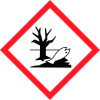
Exclamation mark,Health hazard,Environment
Prevention
P103 Read label before use. P104 Read Safety Data Sheet before use. P201 Obtain special instructions before use. P202 Do not handle until all safety precautions have been read and understood. P261 Avoid breathing dust/fume/gas/mist/vapours/spray. P272 Contaminated work clothing should not be allowed out of the workplace. P273 Avoid release to the environment. P280 Wear protective gloves/protective clothing/eye protection/face protection. P281 Use personal protective equipment as required.
Response
P302+P352 IF ON SKIN: Wash with plenty of soap and water. P308+P313 IF exposed or concerned: Get medical advice/attention. P332+P313 If skin irritation occurs: Get medical advice/attention. P333+P313 If skin irritation or rash occurs: Get medical advice/attention. P363 Wash contaminated clothing before reuse. P391 Collect spillage.
Storage
P405 Store locked up.
Precautionary statements
Disposal P501 In the case of a substance that is in compliance with a HSNO approval other than a Part 6A (Group Standards) approval, a label must provide a description of one or more appropriate and achievable methods for the disposal of a substance in accordance with the Hazardous Substances (Disposal) Regulations 2001. This may also include any method of disposal that must be avoided. See Section 13 for disposal details.



