



Note: Ingredients listed on restricted chemical lists
EC/CAS
203-856-5/111-30-8
Name of the chemical
Glutaral
Concentration
<50%
EC/CAS
231-791-2/7732-18-5
Name of the chemical
Water, distilled, conductivity or of similar purity H2O
Concentration
<50% <5%
General Information
Revision date
2016-08-15
Product name
Cetylcide-G
Product Synonyms
Glutaraldehyde, 50% Aqueous Solution
1.2.1 Relevant identified uses
High-level disinfectant/sterilant
Icons in SDS


Company Information
company name
Cetylite
GHS Information
Signal word
Danger!
Hazard Codes
Hazard statements (CLP)
H301, H314, H317, H331, H334, H400
Hazard statements
Code
Statements
H301
Toxic if swallowed
Section 2
SECTION 2: Hazards identification
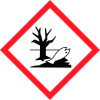
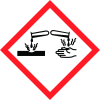
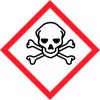
1999/45/EC EMERGENCY OVERVIEW This product is a transparent green liquid with a floral odor. Corrosive May cause irreversible eye damage. Causes burns. Harmful if inhaled. May be fatal if swallowed. Harmful if absorbed through skin. Prolonged or repeated skin contact may cause allergic skin reaction in some individuals. Aspiration hazard. Can enter lungs and cause damage. Exposure to mist/vapor may cause respiratory irritation. This product is a non-flammable liquid. The Environmental effects of this product have not been investigated. Release of this product is anticipated to have adverse effects in the aquatic environment. US DOT Symbols EU and GHS Symbols
Signal word
Danger!
2.2 Label elements
GHS Hazard Classifications Acute Toxicity Category 3 (Inhalation, Oral) Skin Corrosion/Irritation Category 1B Respiratory Sensitizer Category 1 Skin Sensitizer Category 1 Acute Aquatic Toxicity Category 1
Hazard statements
H301: Toxic if swallowed H331: Toxic if inhaled H314: Causes severe skin burns and eye damage H334: May cause allergy or asthma symptoms or breathing difficulties if inhaled H317: May cause allergic skin reaction H400: Very toxic to aquatic life
Prevention
P260: Do not breathe dusts or mists. P261: Avoid breathing dust/fume/gas/mist/vapours/spray. P264: Wash hands thoroughly after handling P270: Do not eat, drink or smoke when using this product. P271: Use only outdoors or in a well-ventilated area. P272: Contaminated work clothing should not be allowed out of the workplace. P280: Wear protective gloves/protective clothing/eye protection/face protection P284: [In case of inadequate ventilation] wear respiratory protection. P273 Avoid release to the environment
Response
P303+P361+P353 IF ON SKIN (or hair) Take off immediately all contaminated clothing. Rinse skin with water/shower. P301+P312 IF SWALLOWED Call a POISON CENTER/doctor if you feel unwell. P301+P330+P331 IF SWALLOWED Rinse mouth. Do NOT induce vomiting P330: Rinse mouth. P363: Wash contaminated clothing before reuse. P302+ P352 IF ON SKIN: Wash with plenty of water. P333+P313 If skin irritation or rash occurs: Get medical advice/ attention. P362+P364 Take off contaminated clothing and wash it before reuse P305+P351+P338 IF IN EYES Rinse cautiously with water for several minutes Remove contact lenses, if present and easy to do. Continue rinsing. P304+P340 IF INHALED Remove person to fresh air and keep comfortable for breathing. P342+P311 If experiencing respiratory symptoms Call a POISON CENTER/doctor. P391: Collect spillage P312: Call a POISON CENTER/doctor if you feel unwell.
Storage
P403+P233: Store in well-ventilated place. Keep container tightly closed. P405: Store locked up.
Disposal
P501 Dispose of contents/container in accordance with local/regional/ national/international regulations.
2.3 Other hazards
None Applicable
2.1 Classification of the substance or mixture
UNION DIRECTIVES: This product does meet the definition of a hazardous substance or preparation as defined by 29 CFR 1910. 1200 or the European Union Council Directives 67/548/EEC, 1999/45/EC, 1272/2008/EC and subsequent Directives. EU HAZARD CLASSIFICATION OF INGREDIENTS PER DIRECTIVE 1272/2008/EC: Index Number: EC# 203-856-5 Annex I Index# 605-022-00-X EC# 231-791-2 this substance is not classified in the Annex I of Directive 67/548/EEC Substances not listed either individually or in group entries must be self classified. Components Contributing to Classification: Glutaraldehyde 50%



