





General Information
Product name
Perchloric Acid 70%
CAS No.
7601-90-3
Emergency telephone
91 11 49404040 (9 00am - 6 00 pm) [Office hours
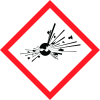
Icons in SDS
Company Information
company name
Central Drug House (P) Ltd
e-mail address of the competent person responsible for the Safety Data Sheet
care@cdhfinechemical.com
GHS Information
Signal word
Danger
Hazard Codes
Hazard statements (CLP)
H271, H290, H302, H314, H373
Hazard statements
Code
Statements
H271
May cause fire or explosion; strong oxidiser
Section 2
CLP CLASSIFICATION
Oxidizing liquids (Category 1), H271 Corrosive to metals (Category 1), H290 Acute toxicity, Oral (Category 4), H302 Skin corrosion (Category 1A), H314 Specific target organ toxicity - repeated exposure (Category 2), Thyroid, H373 For the full text of the H-Statements mentioned in this Section, see Section 16.
EU Classification
Directives 67/548/EEC or 1999/45/EC O Oxidising R 8 C Corrosive R35 Xn Harmful R22 R 5 For the full text of the R-phrases mentioned in this Section, see Section 16.
2.2 Label elements
Labelling according Regulation (EC) No 1272/2008
Signal word
Danger
Hazard statements
H271 H290 May cause fire or explosion; strong oxidiser. H302 May be corrosive to metals. H314 Harmful if swallowed. H373 Causes severe skin burns and eye damage. May cause damage to organs (Thyroid) through prolonged or repeated exposure. none According to European Directive 67/548/EEC as amended.
Precautionary statements
P210 Keep away from heat, hot surfaces, sparks, open flames and other P280 ignition sources. No smoking. Wear protective gloves/ protective clothing/ eye protection/ face P303 + P361 + P353 protection. IF ON SKIN (or hair): Take off immediately all contaminated clothing. P304 + P340 + P310 Rinse skin with water/shower. IF INHALED: Remove person to fresh air and keep comfortable for P305 + P351 + P338 breathing. Immediately call a POISON CENTER or doctor/ physician. IF IN EYES: Rinse cautiously with water for several minutes. Remove P371 + P380 + P375 contact lenses, if present and easy to do. Continue rinsing. In case of major fire and large quantities: Evacuate area. Fight fire remotely due to the risk of explosion.
Hazard pictograms
O Oxidising C Corrosive
R-phrase(s)
R 5 Heating may cause an explosion. R 8 Contact with combustible material may cause fire. R22 Harmful if swallowed. R35 Causes severe burns.
S-phrase(s)
S26 In case of contact with eyes, rinse immediately with plenty of water and seek medical advice. S36/37/39 Wear suitable protective clothing, gloves and eye/face protection. S45 In case of accident or if you feel unwell, seek medical advice immediately (show the label where possible).
2.3 Other hazards
This substance/mixture contains no components considered to be either persistent, bioaccumulative and toxic (PBT), or very persistent and very bioaccumulative (vPvB) at levels of 0.1% or higher.


