

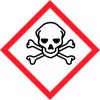


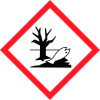
Note: Ingredients listed on restricted chemical lists
EC/CAS
615-28-1
Name of the chemical
o-phenylenediamine dihydrochloride
Concentration
N/A
EC/CAS
210-418-7
Name of the chemical
1,2-Phenylendiamindihydrochlorid
Concentration
N/A
General Information
Revision date
2015-04-16
Product name
Ascorbate Developer
CAS No.
615-28-1
Emergency telephone
Within USA and Canada
Icons in SDS
Company Information
company name
Cayman Chemical Company
GHS Information
Signal word
Danger
Hazard Codes
Hazard statements (CLP)
H301, H312, H317, H319, H332, H341, H351, H400, H410
Hazard statements
Code
Statements
H301
Toxic if swallowed
Section 2
CLP CLASSIFICATION
2.1.1 Classification according to Regulation (EC) No 1272/2008 [CLP]:]] Acute Toxicity: Inhalation, Category 4 Acute Toxicity: Oral, Category 3 Acute Toxicity: Skin, Category 4 Serious Eye Damage/Eye Irritation, Category 2A Skin Sensitization, Category 1 Germ Cell Mutagenicity, Category 2 Carcinogenicity, Category 2 Aquatic Toxicity (Acute), Category 1 Aquatic Toxicity (Chronic), Category 1
2.2 Label elements
2.2.1 Labeling according to Regulation (EC) No 1272/2008 [CLP]:
Signal word
Danger
Hazard statements
H301: Toxic if swallowed. H312: Harmful in contact with skin. H317: May cause an allergic skin reaction. H319: Causes serious eye irritation. H332: Harmful if inhaled. H341: Suspected of causing genetic defects. H351: Suspected of causing cancer. H400: Very toxic to aquatic life. H410: Very toxic to aquatic life with long lasting effects.
Precautionary statements
P201: Obtain special instructions before use. P202: Do not handle until all safety precautions have been read and understood. P261: Avoid breathing {dust/fume/gas/mist/vapors/spray}. P264: Wash {hands} thoroughly after handling. P272: Contaminated work clothing should not be allowed out of the workplace. P273: Avoid release to the environment. P280: Wear {protective gloves/protective clothing/eye protection/face protection}.
Response
P301+310 IF SWALLOWED Immediately call a POISON CENTER or doctor/physician P302+352 IF ON SKIN Wash with plenty of soap and water P304+340 IF INHALED Remove victim to fresh air and keep at rest in a position comfortable for breathing P305+351+338 IF IN EYES Rinse cautiously with water for several minutes. Remove contact lenses, if present and easy to do. Continue rinsing. P308+313 IF exposed or concerned Get medical attention/advice P312: Call a POISON CENTER or doctor/physician if you feel unwell. P330: Rinse mouth. P333+313: If skin irritation or rash occurs, seek medical advice/attention. P337+313: If eye irritation persists, get medical advice/attention. P362+364: Take off contaminated clothing and wash it before reuse. P391: Collect spillage.
Storage
Please refer to Section 7 for Storage and Section 13 for Disposal information.
Potential health effects
Causes serious eye irritation. Harmful if inhaled. Harmful in contact with skin. Material may be irritating to the mucous membranes and upper respiratory tract. May cause an allergic skin reaction. May cause skin or respiratory system irritation. Suspected of causing genetic defects. Suspected of causing cancer. Toxic if swallowed. Very toxic to aquatic life with long lasting effects. To the best of our knowledge, the toxicological properties have not been thoroughly investigated.



