


Note: Ingredients listed on restricted chemical lists
EC/CAS
200-484-5/60-57-1
Name of the chemical
Dieldrin (ISO)
Concentration
100%
General Information
Revision date
2023-09-19
Product name
Dieldrin
Product Synonyms
rel-3,4,5,6,9,9-hexachloro-1aR,2R,2aS,3S,6R,6aR,7S,7aS-octahydro-2,7:3,6-dimethanonaphth[2,3-b]oxirene Aldrin epoxide Dieldrex exo-Dieldrin
CAS No.
60-57-1
1.2.1 Relevant identified uses
This product is for research use - Not for human or veterinary diagnostic or therapeutic use
Emergency telephone
+1 (734) 971-3335, 800-424-9300
Icons in SDS


Company Information
company name
Cayman Chemical Co
GHS Information
Signal word
Danger
Hazard Codes
Hazard statements (CLP)
H301, H310, H350, H372, H400, H410
Hazard statements
Code
Statements
H301
Toxic if swallowed
Section 2
SECTION 2: Hazards identification
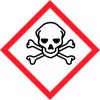
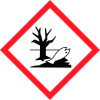
NFPA Rating Classification of the substance or mixture d ~ GHS06 Skull and crossbones Acute Toxicity - Oral 3 H301 Toxic if swallowed Acute Toxicity - Dermal 1 H310 Fatal in contact with skin d ~ GHS08 Health hazard Contd. from page 1) Carcinogenicity 1B H350 May cause cancer Specific Target Organ Toxicity - Repeated Exposure H372 Causes damage to the central nervous system and the liver through prolonged or repeated exposure d ~ GHS09 Environment Aquatic Acute 1 H400 Very toxic to aquatic life Aquatic Chronic 1 H410 Very toxic to aquatic life with long lasting effects
2.2 Label elements
The substance is classified and labeled according to the Globally Harmonized System (GHS).
Hazard pictograms
d ~ d ~ d ~ GHS06 GHS08 GHS09
Signal word
Danger
Hazard statements
H301 Toxic if swallowed. H310 Fatal in contact with skin. H350 May cause cancer. H372 Causes damage to the central nervous system and the liver through prolonged or repeated exposure. H410 Very toxic to aquatic life with long lasting effects.
Precautionary statements
P201 Obtain special instructions before use. P202 Do not handle until all safety precautions have been read and understood. P260 Do not breathe dust/fume/gas/mist/vapors/spray. P262 Do not get in eyes, on skin, or on clothing. P264 Wash thoroughly after handling. P270 Do not eat, drink or smoke when using this product. P273 Avoid release to the environment. P280 Wear protective gloves/protective clothing/eye protection/face protection. P301+P310 If swallowed: Immediately call a poison center/doctor. P321 Specific treatment (see on this label). P330 Rinse mouth. P302+P352 If on skin: Wash with plenty of water. P308+P313 IF exposed or concerned: Get medical advice/attention. P314 Get medical advice/attention if you feel unwell. P361+P364 Take off immediately all contaminated clothing and wash it before reuse. P391 Collect spillage. P405 Store locked up. P501 Dispose of contents/container in accordance with local/regional/national/international regulations. (Contd. from page 2)
Classification system
· NFPA ratings (scale 0 - 4) Health = 4 0 Fire = 0 4 0 Reactivity = 0 · HMIS-ratings (scale 0 - 4) HEALTH *4 Health = *4 FIRE 0 Fire = 0 REACTIVITY 0 Reactivity = 0
PBT Substances
Not applicable
vPvB Substances
Not applicable
2.1 Classification of the substance or mixture
d ~ GHS06 Skull and crossbones Acute Toxicity - Oral 3 H301 Toxic if swallowed. Acute Toxicity - Dermal 1 H310 Fatal in contact with skin. d ~ GHS08 Health hazard (Contd. from page 1) Carcinogenicity 1B H350 May cause cancer. Specific Target Organ Toxicity - Repeated Exposure H372 Causes damage to the central nervous 1 system and the liver through prolonged or repeated exposure. d ~ GHS09 Environment Aquatic Acute 1 H400 Very toxic to aquatic life. Aquatic Chronic 1 H410 Very toxic to aquatic life with long lasting effects.



