


Note: Ingredients listed on restricted chemical lists
EC/CAS
54464-57-2
Name of the chemical
1-(1,2,3,4,5,6,7,8-octahydro-2,3,8,8-tetramethyl-2-naphthyl)ethan-1-one; 1-(1,2,3,4,5,6,7,8-octahydro-2,3,5,5-tetramethyl-2-naphthyl)ethan-1-one; 1-(1,2,3,5,6,7,8,8a-octahydro-2,3,8,8-tetramethyl-2-naphthyl)ethan-1-one; 1-(1,2,3,4,6,7,8,8a-octahydro-2,3,8,8-tetramethyl-2-naphthyl)ethan-1-one (40)
Concentration
5-10
EC/CAS
5989-27-5
Name of the chemical
(R)-p-mentha-1,8-diene
Concentration
2-5
EC/CAS
115-95-7
Name of the chemical
3,7-Dimethyl octa-1,6-diene-3-yl acetate (40)
Concentration
2-5
EC/CAS
107-75-5
Name of the chemical
7-Hydroxycitronellal
Concentration
1-2
EC/CAS
120-51-4
Name of the chemical
Benzyl benzoate
Concentration
1-2
EC/CAS
78-70-6
Name of the chemical
1,6-Octadien-3-ol, 3,7-dimethyl
Concentration
≤1
EC/CAS
11031-45-1
Name of the chemical
5-(2,3-Dimethyl-tricyclo[2.2.1.02,6]-hept-3-yl)-2-methylpent-2-en-1-ol (alpha-Santalol); (1S-(1a,2a(Z),4a))-2-Methyl-5-(2-methyl-3-methylenebicyclo[2.2.1]hept-2-yl)-2-penten-1-ol (beta-Santalol) (40)
Concentration
≤1
EC/CAS
80-56-8
Name of the chemical
α-pinene
Concentration
≤1
EC/CAS
86803-90-9
Name of the chemical
Methoxy dicyclopentadiene carboxaldehyde; Octahydro-5-methoxy-4,7-Methano-1H-indene-2-carboxaldehyde
Concentration
≤1
EC/CAS
7493-74-5
Name of the chemical
Allyl phenoxyacetate; 2-Propenyl Phenoxyacetate
Concentration
≤1
General Information
Revision date
2023-12-15
Product name
Sunwashed
Emergency telephone
1-800-424-9300
Icons in SDS


Company Information
company name
CandleScience
GHS Information
Signal word
WARNING
Hazard Codes
Hazard statements (CLP)
H303, H315, H317, H319, H333, H411
Hazard statements
Code
Statements
H303
May be harmful if swallowed
Section 2
SECTION 2: Hazards identification
(29 CFR 1910.1200) CLASSIFICATION ACCORDING TO HCS 2012 (29 CFR PARTS 1910, 1915, AND 1926) Acute Toxicity Oral Category 5 Acute Toxicity Inhalation Category 5 Skin Corrosion/Irritation Category 2 Eye Damage/Irritation Category 2A Skin Sensitization Category 1B Chronic Aquatic Toxicity Category 2
Signal word
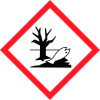
WARNING Hazard Statement May be harmful if swallowed. Causes skin irritation. May cause an allergic skin reaction. Causes serious eye irritation May be harmful if inhaled. Toxic to aquatic life with long lasting effects
Prevention
Wash hands thoroughly after handling. Contaminated work clothing should not be allowed out of the workplace. Avoid release to the environment.
Response
IF ON SKIN Wash with soap and water. If skin irritation or a rash occurs Get medical advice/attention. IF INHALED Call a POISON CENTER or doctor/physician if you feel unwell. IF IN EYES: Rinse cautiously with water for several minutes Remove contact lenses if present and easy to do. Continue rinsing. If eye irritation persists: Get medical advice/attention. Call a POISON CENTER or doctor/physician if you feel unwell. Take off contaminated clothing and wash before reuse. Wash contaminated clothing before reuse. Collect Spillage.
Storage
Store in a cool, dry, well-ventilated space.
Disposal
Dispose of contents/container in accordance with local/national laws and regulations. Please note: Mixtures have not been tested for health hazards. The health hazard information presented is provided in
2.1 Classification of the substance or mixture
Acute Toxicity Oral: Category 5 Acute Toxicity Inhalation: Category 5 Skin Corrosion/Irritation: Category 2 Eye Damage/Irritation: Category 2A Skin Sensitization: Category 1B Chronic Aquatic Toxicity: Category 2 Signal Word: WARNING Hazard Statement: May be harmful if swallowed. Causes skin irritation. May cause an allergic skin reaction. Causes serious eye irritation. May be harmful if inhaled. Toxic to aquatic life with long lasting effects.



