


General Information
Revision date
2019-08-15
Product name
Teak Cleaner
1.2.1 Relevant identified uses
READY TO ALL PURPOSE CLEANER
supplier name
BIOESQUE SOLUTIONS
Emergency telephone
(800) 535-5035
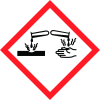
Icons in SDS
Company Information
company name
BIOESQUE SOLUTIONS
GHS Information
Signal word
DANGER
Section 2
2.1 Classification of the substance or mixture
GHS CLASSIFICATION SCALE: (1=SEVERE HAZARD, 4=SLIGHT HAZARD)
Health hazards
SKIN IRRITATION CATEGORY 2 SERIOUS EYE DAMAGE / IRRITATION CATEGORY 1 AQUATIC HAZARDS: ACUTE 3
Signal word
DANGER
Hazard statements
Causes serious eye damage Causes skin irritation Harmful to aquatic life
Precautionary statements
Keep out of reach of children. Wash hands, exposed skin thoroughly after handling. Wear protective gloves/protective clothing/eye protection/face protection Avoid release to the environment
Response
IF ON SKIN Wash with plenty of water. If irritation occurs Get medical advice/attention. Take off contaminated clothing and wash it before reuse. IF IN EYES: Rinse cautiously with water for several minutes. Remove contact lenses if easy to do. Continue rinsing. Immediately get medical advice/attention. IN CASE OF FIRE: Use water spray to extinguish
Storage
Store in a well ventilated area. Store locked up. Keep container tightly closed when not in use. PRECAUTIONARY STATEMENTS (DISPOSAL): Dispose of contents/container to an approved waste disposal plant in accordance with applicable local/regional/national and international regulations and product characteristics at time of disposal.
2.3 Other hazards
Avoid breathing fumes, mist, vapours or spray. Use only outdoors or in a well ventilated area. Do not get in eyes, on skin or clothing. Repeated or prolonged exposure can cause skin dryness or cracking. III PHYSICAL / CHEMICAL CHARACTERISTICS INGREDIENT IDENTITY CAS NUMBER PERCENTAGE Hydrogen peroxide 7722-84-1 2-4 Phosphoric Acid 7664-38-2 0-1 Sodium octanesulfonate 5324-84-5 0-3 REMAINING INGREDIENTS ARE NOT REPORTABLE OR PROPRIETARY UNDER OSHA/SDS GUIDELINES. ALTHOUGH THE NAMES OR THE EXACT PERCENTAGES OF SOME INGREDIENTS HAVE BEEN WITHELD AS (CBI) CONFIDENTIAL BUSINESS INFORMATION TRADE SECRET, ALL SAFETY INFORMATION HAS BEEN REPORTED ACCURATELY WITHIN THIS DATASHEET. IV FIRST AID MEASURES INGESTION: If swallowed, rinse mouth and then drink copious amounts of water to dilute. Do not induce vomiting unless told to do so by doctor or physician. Seek medical advice/attention. If spontaneous vomiting occurs, keep head below hips to prevent aspiration of liquid into the lung. Never give anything by mouth to an unconscious person. SKIN CONTACT: Remove contaminated clothing. Wash with soap and plenty of water for 15 minutes. Wash contaminated clothing before reuse. If irritation occurs get medical advice. INHALATION: Move individual away from exposure and into fresh air. If breathing is irregular or stopped, administer artificial respiration. In case of shortness of breath, give oxygen. Call a physician if you feel unwell. EYE CONTACT: Causes serious eye damage. Rinse cautiously with water for several minutes. Remove contact lenses if easy to do. Continue rinsing. Open eyes wide open while rinsing. If irritation persists get medical attention/advice. Most Important Symptoms and Effects, Acute and Delayed INGESTION: Harmful if swallowed. Symptoms may include irritation of mucous membranes, diarrhea, gastric pain, and vomiting. SKIN CONTACT: Symptoms may include redness, discoloration, dryness and cracking of skin. INHALATION: Symptoms may include irritation of respiratory tract, mucous membranes EYE CONTACT: Causes serious eye damage. Symptoms may include stinging, tearing, redness and blurred vision. Indication of immediate medical attention and special treatment needed, if necessary. Treat Symptomatically. V FIRE FIGHTING MEASURES Suitable extinguishing media: Water Unsuitable extinguishing media- Foam, Carbon dioxide, dry chemical, fire blanket powder. Specific hazards arising from the chemical: Although product is non-flammable, hydrogen peroxide exothermally decomposes to water and oxygen. Hazardous thermal decomposition products: water and oxygen Special protective actions for fire-fighters: Keep product containers and surrounding areas cool with water spray. No action shall be taken involving any personal risk or without suitable training. Special protective equipment for fire-fighters: Fire fighters should wear appropriate protective equipment and self-contained breathing apparatus (SCBA) with a full face-piece operated in positive pressure mode. VI ACCIDENTAL RELEASE MEASURES Personal precautions, protective equipment and emergency procedures: For non-emergency personnel: No action shall be taken involving any personal risk or without suitable training. Evacuate surrounding areas. Keep unnecessary and unprotected personnel from entering. Do not touch or walk through spilled material. Avoid breathing vapor or mist. Provide adequate ventilation. Wear appropriate respirator when ventilation is inadequate. Put on appropriate personal protective equipment. For emergency responders: If specialized clothing is required to deal with the spillage, take note of information in section 8 for further information. See also information in non-emergency personnel above. Environmental precautions: Avoid dispersal of spilled material with waterways, drains and sewers. See section 12 for additional ecological information. Methods and materials for containment and cleaning up. Small spill: Stop leak if without risk. Move containers from the spill area. Absorb with an inert dry non combustible material such as diatomaceous earth and place in an appropriate waste disposal container and dispose of wastes via a licensed waste disposal contractor according to federal, state and local regulations. Large spill: Stop leak if without risk. Move containers from spill area. Prevent entry into sewers, drains, water courses and confined areas. Wash spillages into an effluent treatment plant or absorb with an inert dry material such as diatomaceous earth and place in a appropriate waste disposal containers and dispose of wastes via a licensed waste disposal contractor according to federal, state and local regulations. VII HANDLING AND STORAGE Precautions for Safe Handling: Safe Handling Advice: Product is ready to use. Do not mix with any product prior to use, especially bleach. Utilize appropriate personal protective equipment when handling product. Do not swallow. Avoid contact with eyes, skin and clothing. Avoid breathing vapor or mists. Wear appropriate respirator when ventilation is inadequate. Do not enter storage areas and confined spaces unless adequately ventilated. Keep tightly closed when not in use. Wash face, hands and any exposed skin thoroughly after handling. Wear protective gloves/protective clothing/eye protection and face protection during use. Advice on general occupational hygiene: Eating, drinking and smoking should be prohibited in areas where this material is handled, stored and processed. Workers should wash hands and face before eating, drinking and smoking. Remove contaminated clothing and protective equipment before entering eating areas. See also section 8 for additional hygiene information. Conditions for safe storage including any incompatibilities: Store in a dry, well ventilated area away from bleach (see section 10) and food and drink. Keep container tightly closed when not in use. Do not store in unlabeled containers. Store below 90F. Keep away from children. VIII EXPOSURE CONTROLS/PERSONAL PROTECTION Control Parameters Occupational Exposure Limits Ingredient Identity ACGIH TLV OSHA PEL NIOSH IDLH Hydrogen peroxide twa: 1ppm, 1.4 mg/m3 total dust TWA 1ppm, 1.4mg/m3 Phosphoric acid 1mg/m3TWA 1mg/m3 1mg/m3TWA 3mg/m3STEL 3mg/m3ST Appropriate Engineering Controls Engineering Controls: Use with adequate ventilation. Use process enclosures, local exhaust ventilation or other engineering controls to keep worker exposure to airborne contaminants and maintain air concentrations below occupational exposure standards. Individual protection measures, such as personal protective equipment. (PPE) Eye/Face Protection: Wear approved tightly sealed safety goggles and full face shield Skin & Body Protection: Wear chemical resistant, impervious gloves at all times when handling chemical products. Check during use that gloves are still retaining their impervious properties, as the time for breakthrough can change from different manufacturers and chemical mixtures cannot always be accurately measured. Appropriate footwear and suitable protective clothing should be worn for the degree and risk of exposure. Respiratory Protection: If workplace exposure limits of product or any component is exceeded, utilize proper respiratory protection program guidelines (see OSHA 1910.134 and American National Standard ANSI Z88.2) Use a properly fitted NIOSH/MSHA air-purifying or air-fed respirator in compliance with the above mentioned standard if a risk assessment indicates this is necessary. Respirator selection must be based on known or anticipated exposure levels, the hazards of the product and the safe working limits of the selected respirator. IX PHYSICAL AND CHEMICAL PROPERTIES Appearance: clear liquid Odor: fragrance free Odor threshold: not available pH: approx.. 3 Melting Point/Freezing Point: Not Determined Initial Boiling Point/Range: Not Determined Flash Pt: Not Applicable Evaporation Rate: Not Determined (butyl acetate=1) Lower explosive limits: Not Applicable Upper explosive limits: Not Applicable Vapor Pressure: Not Determined Vapor Density: <1 (air=1) Relative Density: 1.02 Solubility in water: Soluble Partition coefficient: not applicable Auto ignition temp: not applicable Decomposition Temp: not available Viscosity: water thin Oxidizing properties: Contains an oxidizing agent X STABILITY AND REACTIVITY Reactivity: Yes, reacts with copper, aluminum, zinc and other alloys. Reacts with bleach Chemical Stability: Stable under recommended storage and use conditions. Possibility of Hazardous Reactions: Do not mix with bleach. Bases, alkali, organic solvents Conditions to Avoid: Excessive heat. Incompatible Materials: Bleach based oxidizers, Hazardous Decomposition Products: Oxygen XI
TOXICOLOGICAL INFORMATION
Acute toxicity: not classified, Skin corrosion/ irritation: classified, Category 2, Serious Eye damage: classified, Category 1, Sensitization: Not classified Mutagenicity: Not classified Carcinogenicity: Not classified Reproductive Toxicity: Not Classified
Teratogenic Effects
Not Available Specific target Organ Toxicity (single exposure): Not classified Specific target Organ Toxicity (repeated exposure) Not Classified
Aspiration hazard
Not classified Information on the likely routes of exposure: Ingestion: Harmful if swallowed Inhalation: Symptoms are irritation of respiratory tract Skin: May cause skin irritation Eye: Causes serious eye irritation Symptoms related to the physical, chemical and toxicological characteristics Ingestion: See section iv, most important symptoms and effects, acute and delayed. Inhalation: See section iv, most important symptoms and effects, acute and delayed. Skin: See section iv, most important symptoms and effects, acute and delayed. Eye: See section iv, most important symptoms and effects, acute and delayed. Delayed and immediate effects and also chronic effects from short and long term exposure. General: Prolonged or repeated contact can defat the skin and lead to irritation, cracking and/or dermatitis Carcinogenicity: . Not classifiable. Hydrogen Peroxide IARC status, Group 3- not classifiable as to its carcinogenicity to humans NTP: no listed substance Numerical measures of Toxicity Not Available XII ECOLOGICAL INFORMATION Toxicity: Ingredient name Result Species Exposure Persistence and degradability: No further information Bioaccumulation Potential: No further information Mobility in Soil: No further information Other adverse Effects: No further information. XIII DISPOSAL CONSIDERATIONS Dispose in accordance with applicable federal, state and local regulations. XIV TRANSPORT INFORMATION DOT: NOT REGULATED XV REGULATORY INFORMATION U.S. FEDERAL REGULATIONS: All ingredients are listed or exempted with TSCA. SARA 302/304: Hydrogen peroxide RQ-1000lbs SARA 311/312: Health Hazard- Acute-reactive (as 100% ingredient, peroxide levels present within product are well below 8% corrosive level, phosphoric acid is only present as ph control) Ingredient % FIRE PRESSURE REACTIVE IMMEDIATE DELAYED HAZARD RELEASE ACUTE CHRONIC Hydrogen 2-4 YES Peroxide Phosphoric acid YES SARA 313: none known STATE REGULATIONS RTK Phosphoric Acid Mass, Pennsylvania, New Jersey Hydrogen peroxide: Mass, NJ, NY, Penn. California Prop 65: none known to meet requirements XVI OTHER INFORMATION HMIS RATING: HEALTH (2) FIRE (0) REACTIVITY (1) 4=EXTREME, 3=HIGH, 2=MODERATE, 1=SLIGHT, 0=INSIGNIFICANT NOTICE TO READER: To the best of our knowledge, the information contained herein is accurate. However, neither the above-named supplier, nor any of its subsidiaries assumes any liability whatsoever for the accuracy or completeness of the information contained herein. The information on this sds was obtained from sources which we believe are reliable. However, the information is provided without any warranty, expressed or implied, regarding its correctness. Users are advised to confirm in advance of need, that information is current, applicable and suited to the circumstances of use. Vendor assumes no responsibility for injury to vendee or third persons proximately caused by the material if reasonable safety procedures are not adhered to as stipulated in the sds. /furthermore, vendor assumes no responsibility for injury caused by abnormal use of this material even if reasonable safety



