

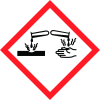
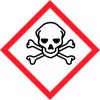


Note: Ingredients listed on restricted chemical lists
EC/CAS
2682-20-4
Name of the chemical
2-Methyl-2H-isothiazol-3-one
Concentration
N/A
EC/CAS
7732-18-5
Name of the chemical
Water, distilled, conductivity or of similar purity H2O
Concentration
N/A
EC/CAS
9005-65-6
Name of the chemical
polyethyleneglycol sorbitan monooleate
Concentration
N/A
EC/CAS
220-239-6
Name of the chemical
Mixture of 5-Chloro-2-methyl-isothiazol-3(2H)-one and 2-methylisothiazol-3(2H)-one 2-Methyl-2H-isothiazol-3-one
Concentration
N/A
EC/CAS
231-791-2
Name of the chemical
Water, distilled, conductivity or of similar purity H2O
Concentration
N/A
General Information
Revision date
2016-04-14
Product name
QuickQuant Mouse IgG Quantification Kit
1.2.1 Relevant identified uses
Use as indicated on the Package Insert/Instructions
1.2.2. Uses advised against
Not for human or animal consumption, injection, topical or drug use
Manufacturer Name
BioAssay Works , LLC
Icons in SDS
Company Information
company name
BioAssay Works , LLC
GHS Information
Signal word
Danger
Hazard Codes
Hazard statements (CLP)
H300+H310, H302, H314, H315, H317, H318, H319, H331, H335, H400, H410, H412
Hazard statements
Code
Statements
H300+H310
Fatal if swallowed or in contact with skin
Section 2
SECTION 2: Hazards identification
GHS Classification The lateral flow test strip assemblies supplied with this kit are exempt from OSHA regulations for an SDS requirement based on 29 CFR 1910.1200(b)(6)(v) Articles as defined in 29 CFR 1910.1200(c): Article is defined as a manufactured item other than a fluid or particle: (i) which is formed to a specific shape or design during manufacture; (ii) which has end use function(s) dependent in whole or in part upon its shape or design during end use; and (iii) which under normal conditions of use does not release more than very small quantities, e.g., minute or trace amounts of a hazardous chemical (as determined under paragraph (d) of this section), and does not pose a physical hazard or health risk to employees. Therefore, this MSDS will only address the material safety of the Mouse IgG Subclass Standard, Product Number QQG1S-300 (or QQG1S-###, where ### represents the initial volume of product in the bottle/vial in µL) and the Sample Diluent Buffer, Product Number SDB-025 (or SDB-###, where ### represents the initial volume of product in the bottle/vial in mL), supplied with the kit. There is no data available on toxicity, hazards, or precautions for the components of the solutions in this kit at the supplied concentrations. The following information and hazards pertain to the components in their undiluted states. The dilution of the components as supplied in the solutions of this kit mitigates their toxicity and any hazards they may present. Mouse IgG Subclass Standard, Product Number QQG1S-300 (QQG1S-###)
2.1 Classification of the substance or mixture
OSHA Regulatory Status: A component or components of this mixture are considered hazardous by the OSHA Hazard Communication Standard (29 CFR 1910.1200). Acute Toxicity – Oral ................................... Category 2 Acute Toxicity – Dermal .............................. Category 1 Acute Aquatic Toxicity ................................ Category 1 Chronic Aquatic Toxicity ............................. Category 1 Skin Corrosion/Irritation .............................. Category 2 Serious Eye Damage/Eye Irritation ............. Category 2 Appearance: ............ Clear, colorless liquid Physical State: ........ Liquid Odor: ........................ No information available OSHA Regulatory Status: A component or components of this mixture are considered hazardous by the OSHA Hazard Communication Standard (29 CFR 1910.1200). Acute Toxicity – Oral .............................................. Category 4 Acute Toxicity – Inhalation ..................................... Category 3 Acute Aquatic Toxicity ........................................... Category 1 Chronic Aquatic Toxicity ........................................ Category 1 Skin Corrosion/Irritation ......................................... Category 1A Skin sensitization ................................................... Category 1 Serious Eye Damage/Irritation ............................... Category 1 Specific target organ toxicity – single exposure ..... Category 3 – Respiratory system Appearance: ............ Clear, colorless liquid Physical State: ........ Liquid Odor: ........................ No information available
2.3 Other hazards
Target Organ Effect, Highly toxic by ingestion, Highly toxic by skin absorption Target Organs: Heart, Central nervous system, Brain Contact with acids liberates very toxic gas Sample Diluent Buffer, Product Number SDB-025 (SDB-###) No information available
Other hazards which do not result in classification
Sodium azide may react with lead and copper plumbing to form highly explosive metal azides. Sodium azide is rapidly absorbed through skin.
Signal word
DANGER DANGER
Hazard statements
H300 + H310 – Fatal if swallowed or in contact with skin H315 – Causes skin irritation H319 – Causes serious eye irritation H335 – May cause respiratory irritation H410 – Very toxic to aquatic life with long lasting effects H412 – Harmful to aquatic life with long lasting effects H302 – Harmful if swallowed H314 – Causes severe skin burns and eye damage H315 – Causes skin irritation H317 – May cause an allergic skin reaction H318 – Causes serious eye damage H319 – Causes serious eye irritation H331 – Toxic if inhaled H335 – May cause respiratory irritation H400 – Very toxic to aquatic life H410 – Very toxic to aquatic life with long lasting effects
Precautionary statements
P262 – Do not get in eyes, on skin, or on clothing P264 – Wash face, hands and any exposed skin thoroughly after handling P270 – Do not eat, drink or smoke when using this product P271 – Use only outdoors or in a well-ventilated area P273 – Avoid release to the environment P280 – Wear protective gloves/protective clothing/eye protection/face protection P302 + P352 – IF ON SKIN: Wash with plenty of soap and water P304 + P340 – IF INHALED: Remove victim to fresh air and keep at rest in a position comfortable for breathing P305 +P351 + P338 – IF IN EYES: Rinse cautiously with water for several minutes. Remove contact lenses, if present and easy to do. Continue rinsing P310 – Immediately call a POISON CENTER or doctor/physician P312 – Call a POISON CENTER/doctor/physician if you feel unwell P403 + P233 – Store in a well ventilated place. Keep container tightly closed P501 – Dispose of contents/container to an approved waste disposal plant P261 – Avoid breathing dust/fumes/gas/mist/vapors/spray P262 – Do not get in eyes, on skin, or on clothing P264 – Wash face, hands and any exposed skin thoroughly after handling P270 – Do not eat, drink or smoke when using this product P271 – Use only outdoors or in a well-ventilated area P272 – Contaminated work clothing should not be allowed out of the workplace P273 – Avoid release to the environment P280 – Wear protective gloves/protective clothing/eye protection/face protection P301 + P330 + P331 – IF SWALLOWED: rinse mouth. Do NOT induce vomiting P302 + P352 – IF ON SKIN: Wash with plenty of soap and water P303 + P361 + P353 – IF ON SKIN (or hair): Remove/Take off immediately all contaminated clothing. Rinse skin with water/shower P304 + P340 – IF INHALED: Remove victim to fresh air and keep at rest in a position comfortable for breathing P305 +P351 + P338 – IF IN EYES: Rinse cautiously with water for several minutes. Remove contact lenses, if present and easy to do. Continue rinsing P310 – Immediately call a POISON CENTER or doctor/physician P312 – Call a POISON CENTER/doctor/physician if you feel unwell P321 – Specific treatment (see supplemental first aid instructions on this label – Section 4) P333 + P313 – If skin irritation or rash occurs: Get medical advice/attention P363 – Wash contaminated clothing before reuse P391 – Collect spillage P403 + P233 – Store in a well ventilated place. Keep container tightly closed P405 – Store locked up P501 – Dispose of contents/container to an approved waste disposal plant



