



Note: Ingredients listed on restricted chemical lists
EC/CAS
9016-87-9
Name of the chemical
4,4'-Methylendiphenyldiisocyanat tech. (Polymeres) MDI, pMDI (in Form atembarer Aerosole, A-Fraktion)
Concentration
25% <50%
EC/CAS
200-857-2/75-28-5
Name of the chemical
iso-Butan, enthält 0,1% Butadien
Concentration
5%≤C<10
General Information
Version
0200
Revision date
2024-02-17
Product name
PUR
1.2.1 Relevant identified uses
polyurethane
1.2.2. Uses advised against
known
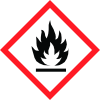
Icons in SDS


Company Information
company name
big
GHS Information
Signal word
Danger
Hazard Codes
Hazard statements (CLP)
H222, H229, H315, H317, H319, H332, H334, H335, H351, H373
Hazard statements
Code
Statements
H222
Extremely flammable aerosol
Section 2
SECTION 2: Hazards identification
Regulation (EC) No. 1272/2008 Classification of the substance or mixture
Contains
polymethylene polyphenyl isocyanate, conc monomer ≥0.1%
Signal word
Danger
Hazard statements
H222 Extremely flammable aerosol. H229 Pressurised container: May burst if heated. H351 Suspected of causing cancer. Created by Brandweerinformatiecentrum voor gevaarlijke stoffen vzw (BIG) Publication date 2016-12-14 878-16433-054-en Technische Schoolstraat 43 A B-2440 Geel Date of revision 2024-02-17 http://www.big.be © BIG vzw Reason for revision 3; 8; 11; 12; 13; 15 PUR H334 May cause allergy or asthma symptoms or breathing difficul�es if inhaled. H317 May cause an allergic skin reac�on. H332 Harmful if inhaled. H373 May cause damage to organs through prolonged or repeated exposure if inhaled. H315 Causes skin irrita�on. H319 Causes serious eye irrita�on. H335 May cause respiratory irrita�on.
Precautionary statements
P101 If medical advice is needed, have product container or label at hand. P102 Keep out of reach of children. P210 Keep away from heat, hot surfaces, sparks, open flames and other igni�on sources. No smoking. P211 Do not spray on an open flame or other igni�on source. P251 Do not pierce or burn, even a�er use. P308 + P313 IF exposed or concerned: Get medical advice/a�en�on. P405 Store locked up. P410 + P412 Protect from sunlight. Do not expose to temperatures exceeding 50 °C/ 122°F. P501 Dispose of contents/container in accordance with local/regional/na�onal/interna�onal regula�on.
Additional information
- Persons already sensitised to diisocyanates may develop allergic reactions when using this product. - Persons suffering from asthma, eczema or skin problems should avoid contact, including dermal contact, with this product. - This product should not be used under conditions of poor ventilation unless a protective mask with an appropriate gas filter (i.e. type A1 according to standard EN 14387) is used. As from 24 August 2023 adequate training is required before industrial or professional use.
2.3 Other hazards
Gas/vapour spreads at floor level: ignition hazard Caution! Substance is absorbed through the skin
2.1 Classification of the substance or mixture
Classified as dangerous according to the criteria of Regulation (EC) No 1272/2008 Class Category Hazard statements Aerosol category 1 H222: Extremely flammable aerosol. Aerosol category 1 H229: Pressurised container: May burst if heated. Carc. category 2 H351: Suspected of causing cancer. Resp. Sens. category 1 H334: May cause allergy or asthma symptoms or breathing difficulties if inhaled. Skin Sens. category 1 H317: May cause an allergic skin reaction. Acute Tox. category 4 H332: Harmful if inhaled. STOT RE category 2 H373: May cause damage to organs through prolonged or repeated exposure if inhaled. Skin Irrit. category 2 H315: Causes skin irritation. Eye Irrit. category 2 H319: Causes serious eye irritation. STOT SE category 3 H335: May cause respiratory irritation.



