


Note: Ingredients listed on restricted chemical lists
EC/CAS
67-56-1
Name of the chemical
Methanol
Concentration
N/A
EC/CAS
200-659-6
Name of the chemical
Methanol
Concentration
N/A
General Information
Revision date
2019-07-03
Product name
LEISHMANS STAINING SOLUTION
CAS No.
67-56-1
REACH No
is
1.2.2. Uses advised against
Not for sale to the general public
Emergency telephone
+44 (0)1270 781238
Icons in SDS
Company Information
company name
Better Equipped
e-mail address of the competent person responsible for the Safety Data Sheet
sales@betterequipped.co.uk
GHS Information
Signal word
Danger
Hazard Codes
Hazard statements (CLP)
H225, H301, H301+H311+H331, H311, H331, H370
Hazard statements
Code
Statements
H225
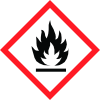
Highly Flammable liquid and vapour
Section 2
CLP CLASSIFICATION
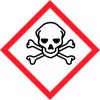
Flammable liquids (Category 2), H225 Acute toxicity, Oral (Category 3), H301 Acute toxicity, Inhalation (Category 3), H331 Acute toxicity, Dermal (Category 3), H311 Specific target organ toxicity - single exposure (Category 1), H370 For the full text of the H-Statements mentioned in this Section, see Section 16.
2.2 Label elements
Labelling according Regulation (EC) No 1272/2008
Signal word
Danger
Hazard statements
H225 Highly flammable liquid and vapour. H301 + H311 + H331 Toxic if swallowed, in contact with skin or if inhaled. H370 Causes damage to organs.
Precautionary statements
P210 Keep away from heat, hot surfaces, sparks, open flames and other ignition sources. No smoking. P280 Wear protective gloves/ protective clothing. P302 + P352 + P312 IF ON SKIN: Wash with plenty of water.Call a POISON CENTER/doctor if you feel unwell. P304 + P340 + P311 IF INHALED: Remove person to fresh air and keep comfortable for breathing. Call a POISON CENTER/doctor. P370 + P378 In case of fire: Use dry powder or dry sand to extinguish. P403 + P235 Store in a well-ventilated place. Keep cool.
Supplemental label elements
none
2.3 Other hazards
This substance/mixture contains no components considered to be either persistent, bioaccumulative and toxic (PBT), or very persistent and very bioaccumulative (vPvB) at levels of 0.1% or higher.



