



Note: Ingredients listed on restricted chemical lists
EC/CAS
9004-70-0
Name of the chemical
Nitrocellulose
Concentration
1.0-5.0%
General Information
Revision date
2016-03-02
Product name
Ink, Alcohol Resistant Black
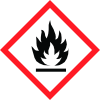
Icons in SDS


Company Information
company name
BestCode
e-mail address of the competent person responsible for the Safety Data Sheet
info@bestcode.co
GHS Information
Signal word
Danger
Hazard Codes
Hazard statements (CLP)
H201, H225, H319, H335
Hazard statements
Code
Statements
H201
Explosive; mass explosion hazard
Section 2
2.1 Classification of the substance or mixture
2.1.1
CLP CLASSIFICATION
Classification according to Regulation (EC) No 1272/2008 [CLP]:]] Flammable Liquids, Category 2 Serious Eye Damage/Eye Irritation, Category 2 Specific Target Organ Toxicity (single exposure), Category 3
2.2 Label elements
2.2.1 Labeling according to Regulation (EC) No 1272/2008 [CLP]:
Signal word
Danger
Hazard statements
H201 - Explosive; mass explosion hazard. H225 - Highly flammable liquid and vapor. H319 - Causes serious eye irritation. H335 - May cause respiratory irritation.
Precautionary statements
P210 - Keep away from heat/sparks/open flames/hot surfaces. - No smoking. P230 - Keep wetted with .... P240 - Ground/bond container and receiving equipment. P250 - Do not subject to grinding/shock/.../friction. P280 - Wear protective gloves/protective clothing/eye protection/face protection. P233 - Keep container tightly closed. P241 - Use explosion-proof electrical/ventilating/lighting/.../ equipment. P243 - Take precautionary measures against static discharge. P242 - Use only non-sparking tools. P264 - Wash hands thoroughly after handling. P261 - Avoid breathing dust/fume/gas/mist/vapours/spray. P271 - Use only outdoors or in a well-ventilated area.
Response
P373 - DO NOT fight fire when fire reaches explosives. P370+380 - In case of fire, evacuate area. P372 - Explosion risk in case of fire. P370+378 - In case of fire, use ... to extinguish. P303+361+353 - IF ON SKIN (or hair): Remove/take off immediately all contaminated clothing. Rinse skin with water/shower. P305+351+338 - IF IN EYES: Rinse cautiously with water for several minutes. Remove contact lenses, if present and easy to do. Continue rinsing. P337+313 - If eye irritation persists, get medical advice/attention. P304+340 - IF INHALED: Remove victim to fresh air and keep at rest in a position comfortable for breathing. P312 - Call a POISON CENTER/doctor/... if you feel unwell.
Storage
P401 - Store .... P501 - Dispose of contents/container to .... P403+235 - Store in cool/well-ventilated place. P403+233 - Store container tightly closed in well-ventilated place - if product is as volatile as to generate hazardous atmosphere. P405 - Store locked up.
Potential health effects
Chronic: Chronic inhalation may cause effects similar to those of acute inhalation. Prolonged or repeated skin contact may cause defatting and dermatitis. Animal studies have reported that fetal effects/abnormalities may occur when maternal toxicity is seen. Chronic overexposure to vapors may cause lung damage. Prolonged or repeated exposure may cause permanent eye damage. May cause liver and kidney damage. Sophisticated modeling has clearly proven that 2-butoxyethanol does not build up in the body under any kinds of normal use. 2.3.1 Inhalation: Causes respiratory tract irritation. Inhalation of vapors may cause drowsiness and dizziness. May cause central nervous system effects such as nausea and headache. Neurobehavioural effects of exposure to MEK (200 ppm for 4 hrs) were studied with 137 volunteers. There were no statistically significant effects observed in biochemical, psychomotor, sensorimotor and psychological tests. May cause irritation of the respiratory tract with burning pain in the nose and throat, coughing, wheezing, shortness of breath and pulmonary edema. May cause adverse central nervous system effects including headache, convulsions, and possible death. Olfactory fatigue may occur. Can produce delayed pulmonary edema. May be harmful if inhaled. Vapors may cause drowsiness and dizziness. May cause respiratory tract irritation. The toxicological properties of this substance have not been fully investigated. Harmful if inhaled. May cause narcotic effects in high concentration. May cause lung damage. May cause anemia. 2.3.2 Skin Contact: May be absorbed through the skin in harmful amounts. Repeated or prolonged exposure may cause drying and cracking of the skin. Only one human case of skin sensitization was located. Negative results were obtained in an animal test; MEK did not produce skin sensitization in the mouse ear thickness test. Prolonged and/or repeated contact may cause defatting of the skin and dermatitis. May cause skin irritation and possible burns. May be harmful if absorbed through the skin. Causes skin irritation. May cause skin irritation. Harmful if absorbed through the skin. Substance is rapidly absorbed through the skin. Causes symptoms similar to those of inhalation. Skin sensitization testing with human volunteers produced negative results. A skin notation is not recommended by ACGIH, based on estimates from physiologically based pharmacokinetic models which indicate that, even in worst-case dermal-exposure scenarios, 2-butoxyethanol is not absorbed in amounts sufficient to cause red blood cell hemolysis in humans. 2.3.3 Eye Contact: Causes eye irritation. Vapors may cause eye irritation. Animal evidence suggests that MEK is a moderate to severe eye irritant. Contact with eyes may cause severe irritation, and possible eye burns. May cause lacrimation (tearing), blurred vision, and photophobia. May cause chemical conjunctivitis and corneal damage. May cause eye irritation. Causes redness and pain. 2.3.4 Ingestion: May cause irritation of the digestive tract. Possible aspiration hazard. May cause central nervous system depression. Animal evidence suggests that MEK can be aspirated (inhaled) into the lungs during ingestion or vomiting. May cause central nervous system depression, kidney damage, and liver damage. Symptoms may include: headache, excitement, fatigue, nausea, vomiting, stupor, and coma. May cause nausea, vomiting, abdominal pain, and increased salivation. Aspiration hazard if swallowed - can enter lungs and cause damage. May be harmful if swallowed. The toxicological properties of this substance have not been fully investigated. Harmful if swallowed. May cause gastrointestinal irritation with nausea, vomiting and diarrhea.



