



General Information
Version
5 / IRL
Revision date
2024-12-11
Product name
FANDANGO
1.2.1 Relevant identified uses
Fungicide
supplier name
Bayer CropScience Ltd
Emergency telephone
+44 330 678 3382, 01 809 2166
Icons in SDS


Company Information
company name
Bayer CropScience Ltd
e-mail address of the competent person responsible for the Safety Data Sheet
gb-bcs-crop-regulatory-affairs@bayer.com
GHS Information
Signal word
Danger
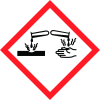
Hazard Codes
Hazard statements (CLP)
H318, H332, H400, H410
Hazard statements
Code
Statements
H318
Causes serious eye damage
Section 2
SECTION 2: Hazards identification
Regulation (EC) No. 1272/2008 Classification of the substance or mixture
Hazardous Ingredients
• Prothioconazole • Fluoxastrobin
Signal word
Danger
Hazard statements
H332 Harmful if inhaled. H318 Causes serious eye damage. H410 Very toxic to aquatic life with long lasting effects. EUH401 To avoid risks to human health and the environment, comply with the instructions for use. EUH208
Contains
2-[2-(1-chlorocyclopropyl)-2-hydroxy-3-phenylpropyl]-2,4-dihydro-3H-1,2,4- triazole-3-thione. May produce an allergic reaction.
Precautionary statements
P280 Wear protective gloves/ protective clothing/ eye protection/ face protection. P305 + P351 IF IN EYES: Rinse cautiously with water for several minutes. Remove contact lenses, if + P338 present and easy to do. Continue rinsing. P310 Immediately call a POISON CENTER/doctor/ physician. P410 Protect from sunlight. P501 Dispose of contents/container to a licensed hazardous waste disposal contractor or collection site, except for triple rinsed empty containers which can be disposed of as non-hazardous waste.
2.3 Other hazards
No additional hazards known beside those mentioned. Fluoxastrobin: This substance is not considered to be persistent, bioaccumulative and toxic (PBT). This substance is not considered to be very persistent and very bioaccumulative (vPvB). Prothioconazole: This substance is not considered to be persistent, bioaccumulative and toxic (PBT). This substance is not considered to be very persistent and very bioaccumulative (vPvB). 2- Ethylhexanol propylene ethyleneglycol ether: Not applicable
ECOLOGICAL INFORMATION
The substance/mixture does not contain components considered to have endocrine disrupting properties according to REACH Article 57(f) or Commission Delegated regulation (EU) 2017/2100 or Commission Regulation (EU) 2018/605 at levels of 0.1% or higher.
TOXICOLOGICAL INFORMATION
The substance/mixture does not contain components considered to have endocrine disrupting properties according to REACH Article 57(f) or Commission Delegated regulation (EU) 2017/2100 or Commission Regulation (EU) 2018/605 at levels of 0.1% or higher.
2.1 Classification of the substance or mixture
Classification in accordance with Regulation (EC) No 1272/2008 on classification, labelling and packaging of substances and mixtures, as amended. Acute toxicity: Category 4 H332 Harmful if inhaled. Serious eye damage: Category 1 H318 Causes serious eye damage. Short-term (acute) aquatic hazard: Category 1 H400 Very toxic to aquatic life. Long-term (chronic) aquatic hazard: Category 1 H410 Very toxic to aquatic life with long lasting effects.



