



Note: Ingredients listed on restricted chemical lists
EC/CAS
52918-63-5
Name of the chemical
Deltamethrin; (S)-a-cyano-3-phenoxybenzyl (1R, 3R)-3-(2,2-dibromovinyl)-2,2-dimethylcyclopropanecarboxylate
Concentration
1.25
EC/CAS
64742-95-6
Name of the chemical
Solvent naphtha (petroleum), light arom
Concentration
>25
EC/CAS
128-37-0
Name of the chemical
2,6-di-tert-butyl-p-cresol
Concentration
>=0.10
General Information
Version
2 / IND
Revision date
2024-01-01
Product name
KINGFOG
1.2.1 Relevant identified uses
Insecticide
supplier name
Bayer CropScience Limited
Emergency telephone
+1 (760) 476-3964
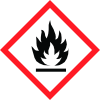
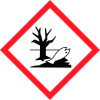
Icons in SDS


Company Information
company name
Bayer CropScience Limited
GHS Information
Signal word
Danger
Hazard Codes
Hazard statements (CLP)
H226, H304, H335, H336, H400, H410
Hazard statements
Code
Statements
H226
Flammable liquid and vapour
Section 2
SECTION 2: Hazards identification
Regulation (EC) No. 1272/2008 Classification of the substance or mixture
Hazardous Ingredients
• Deltamethrin • Solvent Naphtha (petroleum), light aromatic
Signal word
Danger
Hazard statements
H226 Flammable liquid and vapour. H304 May be fatal if swallowed and enters airways. H335 May cause respiratory irritation. H336 May cause drowsiness or dizziness. H410 Very toxic to aquatic life with long lasting effects. EUH066 Repeated exposure may cause skin dryness or cracking. EUH401 To avoid risks to human health and the environment, comply with the instructions for use.
Precautionary statements
P210 Keep away from heat, hot surfaces, sparks, open flames and other ignition sources. No smoking. P240 Ground/bond container and receiving equipment. P280 Wear protective gloves/ protective clothing/ eye protection. P308 + P311 IF exposed or concerned: Call a POISON CENTER/ doctor/ physician. P501 Dispose of contents/container in accordance with local regulation.
2.3 Other hazards
Cutaneous sensations may occur, such as burning or stinging on the face and mucosae. However, these sensations cause no lesions and are of a transitory nature (max. 24 hours). Deltamethrin: This substance is not considered to be persistent, bioaccumulative and toxic (PBT). This substance is not considered to be very persistent and very bioaccumulative (vPvB). Solvent Naphtha (petroleum), light aromatic: This substance is not considered to be persistent, bioaccumulative and toxic (PBT). This substance is not considered to be very persistent and very bioaccumulative (vPvB).
ECOLOGICAL INFORMATION
The substance/mixture does not contain components considered to have endocrine disrupting properties according to REACH Article 57(f) or Commission Delegated regulation (EU) 2017/2100 or Commission Regulation (EU) 2018/605 at levels of 0.1% or higher.
TOXICOLOGICAL INFORMATION
The substance/mixture does not contain components considered to have endocrine disrupting properties according to REACH Article 57(f) or Commission Delegated regulation (EU) 2017/2100 or Commission Regulation (EU) 2018/605 at levels of 0.1% or higher.
2.1 Classification of the substance or mixture
Classification in accordance with Regulation (EC) No 1272/2008 on classification, labelling and packaging of substances and mixtures, as amended. Aspiration hazard: Category 1 H304 May be fatal if swallowed and enters airways. Flammable liquids: Category 3 H226 Flammable liquid and vapour. Specific target organ toxicity - single exposure: Category 3 H335 May cause respiratory irritation. Specific target organ toxicity - single exposure: Category 3 H336 May cause drowsiness or dizziness. Acute aquatic toxicity: Category 1 H400 Very toxic to aquatic life. Chronic aquatic toxicity: Category 1 H410 Very toxic to aquatic life with long lasting effects.



