



Note: Ingredients listed on restricted chemical lists
EC/CAS
74070-46-5
Name of the chemical
Aclonifen (ISO); 2-Chlor-6-nitro-3-phenoxyanilin (944/2013)
Concentration
N/A
EC/CAS
2634-33-5
Name of the chemical
1,2-Benzisothiazol-3(2H)-one
Concentration
>=0.036
EC/CAS
55965-84-9
Name of the chemical
Mixture of 5-chloro-2-methyl-2H- isothiazol-3-one (EINECS 247-500-7) and 2-methyl-2H-isothiazol-3-one (EINECS 220-239-6)
Concentration
>=0.00015 <0.0015
General Information
Version
2 / GB
Revision date
2025-08-30
Product name
CHALLENGE PLUS
1.2.1 Relevant identified uses
Herbicide
supplier name
Bayer CropScience Limited
Emergency telephone
0344 892 0111, +353 1 809 2166
Icons in SDS


Company Information
company name
Bayer CropScience Limited
e-mail address of the competent person responsible for the Safety Data Sheet
gb-bcs-crop-regulatory-affairs@bayer.com
GHS Information
Signal word
Warning
Hazard Codes
Hazard statements (CLP)
H317, H351, H400, H410
Hazard statements
Code
Statements
H317
May cause an allergic skin reaction
Section 2
SECTION 2: Hazards identification
Regulation (EC) No. 1272/2008 Classification of the substance or mixture
Hazardous Ingredients
• Aclonifen • Flufenacet • Diflufenican
Hazard statements
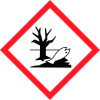
H351 Suspected of causing cancer. H317 May cause an allergic skin reaction. H410 Very toxic to aquatic life with long lasting effects. EUH401 To avoid risks to human health and the environment, comply with the instructions for use.
Precautionary statements
P201 Obtain special instructions before use. P280 Wear protective gloves/ protective clothing/ eye protection/ face protection. P308 + P311 IF exposed or concerned: Call a POISON CENTER/ doctor/ physician. P391 Collect spillage. P501 Dispose of contents/container to a licensed hazardous-waste disposal contractor or collection site except for empty clean containers which can be disposed of as non- hazardous waste.
2.3 Other hazards
No additional hazards known beside those mentioned. Diflufenican: This substance is not considered to be persistent, bioaccumulative and toxic (PBT). This substance is not considered to be very persistent and very bioaccumulative (vPvB). Flufenacet: This substance is not considered to be persistent, bioaccumulative and toxic (PBT). This substance is not considered to be very persistent and very bioaccumulative (vPvB). Aclonifen: This substance is not considered to be persistent, bioaccumulative and toxic (PBT). This substance is not considered to be very persistent and very bioaccumulative (vPvB).
ECOLOGICAL INFORMATION
The substance/mixture does not contain components considered to have endocrine disrupting properties according to REACH Article 57(f) or Commission Delegated regulation (EU) 2017/2100 or Commission Regulation (EU) 2018/605 at levels of 0.1% or higher.
TOXICOLOGICAL INFORMATION
The substance/mixture does not contain components considered to have endocrine disrupting properties according to REACH Article 57(f) or Commission Delegated regulation (EU) 2017/2100 or Commission Regulation (EU) 2018/605 at levels of 0.1% or higher.
2.1 Classification of the substance or mixture
Classification in accordance with Regulation (EC) No 1272/2008 on classification, labelling and packaging of substances and mixtures, as amended. Carcinogenicity: Category 2 H351 Suspected of causing cancer. Skin sensitisation: Category 1B H317 May cause an allergic skin reaction. Short-term (acute) aquatic hazard: Category 1 H400 Very toxic to aquatic life. Long-term (chronic) aquatic hazard: Category 1 H410 Very toxic to aquatic life with long lasting effects.



