




Note: Ingredients listed on restricted chemical lists
EC/CAS
203-625-9/108-88-3
Name of the chemical
Toluene
Concentration
(W/W) < 3 %
General Information
Version
4.0
Revision date
2022-08-24
Product name
Abate 500 E
1.2.1 Relevant identified uses
biocide
Emergency telephone
+49 180 2273-112
Icons in SDS


Company Information
company name
BASF SE
e-mail address of the competent person responsible for the Safety Data Sheet
Produktinformation-Pflanzenschutz@basf.com
GHS Information
Signal word
Danger
Hazard Codes
Hazard statements (CLP)
H225, H304, H319, H332, H335, H372, H400, H410
Hazard statements
Code
Statements
H225
Highly Flammable liquid and vapour
Section 2
SECTION 2: Hazards identification
According to Regulation (EC) No 1272/2008 [CLP Classification of the substance or mixture For the classification of the mixture the following methods have been applied: extrapolation on the concentration levels of the hazardous substances, on basis of test results and after evaluation of experts. The methodologies used are mentioned at the respective test results
Signal word
Danger
Hazard statements
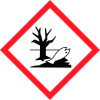
H225 Highly flammable liquid and vapour. H319 Causes serious eye irritation. H332 Harmful if inhaled. H304 May be fatal if swallowed and enters airways. H335 May cause respiratory irritation. H372 Causes damage to organs through prolonged or repeated exposure. H400 Very toxic to aquatic life. H410 Very toxic to aquatic life with long lasting effects.
Precautionary statements
P101 If medical advice is needed, have product container or label at hand. P102 Keep out of reach of children. P103 Read carefully and follow all instructions. (Disposal) P501 Dispose of contents and container to hazardous or special waste collection point. Labeling of special preparations (GHS) Restricted to professional users. Hazard determining component(s) for labelling: Temephos, xylene
Prevention
P271 Use only outdoors or in a well-ventilated area. P280 Wear protective gloves/clothing/eye protection. P210 Keep away from heat, hot surfaces, sparks, open flames and other ignition sources. No smoking. P243 Take action to prevent static discharges. P260 Do not breathe mist. P241 Use explosion-proof electrical, ventilating and lighting equipment. P270 Do not eat, drink or smoke when using this product. P264 Wash contaminated body parts thoroughly after handling. P240 Ground and bond container and receiving equipment. P242 Use only non-sparking tools.
Response
P312 Call a POISON CENTER or physician if you feel unwell. P305 + P351 + P338 IF IN EYES: Rinse cautiously with water for several minutes. Remove contact lenses, if present and easy to do. Continue rinsing. P304 + P340 IF INHALED: Remove person to fresh air and keep comfortable for breathing. P303 + P361 + P353 IF ON SKIN (or hair): Remove or Take off immediately all contaminated clothing. Rinse skin with water or shower. P314 Get medical advice/attention if you feel unwell. P301 + P310 IF SWALLOWED: Immediately call a POISON CENTER or physician. P391 Collect spillage. P331 Do NOT induce vomiting. P370 + P378 In case of fire: Use water spray, dry powder, foam or carbon dioxide for extinction.
Storage
P233 Keep container tightly closed. P403 + P235 Store in a well-ventilated place. Keep cool. P405 Store locked up.
2.1 Classification of the substance or mixture
For the classification of the mixture the following methods have been applied: extrapolation on the concentration levels of the hazardous substances, on basis of test results and after evaluation of experts. The methodologies used are mentioned at the respective test results. According to Regulation (EC) No 1272/2008 [CLP] Asp. Tox. 1 H304 May be fatal if swallowed and enters airways. Flam. Liq. 2 H225 Highly flammable liquid and vapour. Acute Tox. 4 (Inhalation - mist) H332 Harmful if inhaled. Eye Dam./Irrit. 2 H319 Causes serious eye irritation. STOT SE 3 H335 May cause respiratory irritation. STOT RE 1 H372 Causes damage to organs through prolonged or repeated exposure. Aquatic Acute 1 H400 Very toxic to aquatic life. Aquatic Chronic 1 H410 Very toxic to aquatic life with long lasting effects. For the classifications not written out in full in this section the full text can be found in section 16.



