

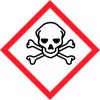


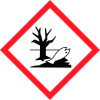
Note: Ingredients listed on restricted chemical lists
EC/CAS
125116-23-6
Name of the chemical
Metconazol (ISO); (1RS,5RS;1RS,5SR)-5-(4-Chlorbenzyl)-2,2-dimethyl-1-(1H-1,2,4-triazol-1-ylmethyl)cyclopentanol (790/2009)
Concentration
N/A
EC/CAS
91-20-3
Name of the chemical
Naphthalene,3
Concentration
N/A
General Information
Revision date
2015-10-12
Product name
TWINLINE
Chemical name
strobilurine, conazoles
1.2.1 Relevant identified uses
fungicide
Emergency telephone
1-800-424-9300
Icons in SDS
Company Information
company name
BASF CORPORATION
GHS Information
Signal word
Danger
Hazard Codes
Hazard statements (CLP)
H301, H304, H315, H319, H331, H351, H361, H400, H410
Hazard statements
Code
Statements
H301
Toxic if swallowed
Section 2
SECTION 2: Hazards identification
According to Regulation 2012 OSHA Hazard Communication Standard; 29 CFR Part 1910.1200 According to Regulation 2012 OSHA Hazard Communication Standard; 29 CFR Part 1910.1200
2.1 Classification of the substance or mixture
Asp. Tox. 1
Aspiration hazard
Acute Tox. 3 (oral) Acute toxicity Acute Tox. 3 (Inhalation - mist) Acute toxicity Skin Corr./Irrit. 2 Skin corrosion/irritation Eye Dam./Irrit. 2A Serious eye damage/eye irritation Carc. 2 Carcinogenicity Repr. 2 (unborn child) Reproductive toxicity Aquatic Acute 1 Hazardous to the aquatic environment - acute Aquatic Chronic 1 Hazardous to the aquatic environment - chronic
Signal word
Danger
Hazard statements
H319 Causes serious eye irritation. H315 Causes skin irritation. H331 Toxic if inhaled. H301 Toxic if swallowed. H304 May be fatal if swallowed and enters airways. H351 Suspected of causing cancer. H361 Suspected of damaging the unborn child. H400 Very toxic to aquatic life. H410 Very toxic to aquatic life with long lasting effects.
Prevention
P280 Wear protective gloves/protective clothing/eye protection/face protection. P271 Use only outdoors or in a well-ventilated area. P273 Avoid release to the environment. P201 Obtain special instructions before use. P261 Avoid breathing mist. P260 Do not breathe mist or vapour. P202 Do not handle until all safety precautions have been read and understood. P264 Wash with plenty of water and soap thoroughly after handling.
Response
P312 Call a POISON CENTER or doctor/physician if you feel unwell. P305 + P351 + P338 IF IN EYES: Rinse cautiously with water for several minutes. Remove contact lenses, if present and easy to do. Continue rinsing. P301 + P310 IF SWALLOWED: Immediately call a POISON CENTER or doctor/physician. P304 + P340 IF INHALED: Remove person to fresh air and keep comfortable for breathing. P308 + P311 IF exposed or concerned: Call a POISON CENTER or doctor/physician. P330 Rinse mouth. P303 + P352 IF ON SKIN (or hair): Wash with plenty of soap and water. P391 Collect spillage. P332 + P313 If skin irritation occurs: Get medical advice/attention. P331 Do NOT induce vomiting. P337 + P311 If eye irritation persists: Call a POISON CENTER or doctor/physician. P362 + P364 Take off contaminated clothing and wash before reuse.
Storage
P405 Store locked up.
Precautionary statements
Disposal) P501 Dispose of contents/container to hazardous or special waste collection point.
2.3 Other hazards
Labeling of special preparations (GHS): The following percentage of the mixture consists of components(s) with unknown hazards regarding the acute toxicity: 45 % dermal The following percentage of the mixture consists of components(s) with unknown hazards regarding the acute toxicity: 5 % oral The following percentage of the mixture consists of components(s) with unknown hazards regarding the acute toxicity: 60 % Inhalation - vapour The following percentage of the mixture consists of components(s) with unknown hazards regarding the acute toxicity: 60 % Inhalation - mist According to Regulation 1994 OSHA Hazard Communication Standard; 29 CFR Part 1910.1200 Emergency overview WARNING: Causes substantial but temporary eye injury. May be fatal if swallowed. CAUSES SKIN IRRITATION. HARMFUL IF ABSORBED THROUGH SKIN. HARMFUL IF INHALED. KEEP OUT OF REACH OF CHILDREN. KEEP OUT OF REACH OF DOMESTIC ANIMALS. Avoid contact with the skin, eyes and clothing. Avoid inhalation of dusts/mists/vapours. Wash thoroughly after handling.



