


Note: Ingredients listed on restricted chemical lists
EC/CAS
918-668-5/64742-95-6
Name of the chemical
Solvent naphtha (petroleum), light arom
Concentration
≤2.9
EC/CAS
200-580-7/9046-01-9
Name of the chemical
polyethyleneglycol tridecyl ether phosphate
Concentration
≤3 ≤1.6
EC/CAS
271-781-5/68608-26-4
Name of the chemical
Sulfonic acids, petroleum, sodium salts
Concentration
≤2.3
EC/CAS
231-633-2/7664-38-2
Name of the chemical
phosphoric acid
Concentration
≤1.4
EC/CAS
202-049-5/91-20-3
Name of the chemical
Naphthalene,3
Concentration
≤1.9 <1
EC/CAS
203-905-0/111-76-2
Name of the chemical
Ethylene glycol monobutyl ether (EGBE)
Concentration
<1
EC/CAS
203-234-3/104-76-7
Name of the chemical
2-ethyl-1-hexanol
Concentration
<1
EC/CAS
202-849-4/100-41-4
Name of the chemical
Ethylbenzene
Concentration
<1 ≤0.3
EC/CAS
200-338-0/57-55-6
Name of the chemical
1,2-propanediol
Concentration
≤0.3
EC/CAS
200-661-7/67-63-0
Name of the chemical
Propan-2-ol
Concentration
≤0.3
EC/CAS
203-473-3/107-21-1
Name of the chemical
Ethane-1,2-diol
Concentration
≤0.3
EC/CAS
215-181-3/1310-58-3
Name of the chemical
potassium hydroxide
Concentration
≤0.1
EC/CAS
202-704-5/98-82-8
Name of the chemical
Cumol (2022/692)
Concentration
<0.1 ≤0.1
EC/CAS
215-185-5/1310-73-2
Name of the chemical
sodium hydroxide
Concentration
<0.1
EC/CAS
215-647-6/1336-21-6
Name of the chemical
ammonium hydroxide
Concentration
<0.1
General Information
Version
6.02
Revision date
2024-11-04
Product name
DB KIT
Icons in SDS


Company Information
company name
Baker Hughes
e-mail address of the competent person responsible for the Safety Data Sheet
EH-SDS-Admin@bakerhughes.com
GHS Information
Signal word
Danger
Hazard Codes
Hazard statements (CLP)
H225, H304, H314, H318, H351, H411
Hazard statements
Code
Statements
H225
Highly Flammable liquid and vapour
Section 2
SECTION 2: Hazards identification
Regulation (EC) No. 1272/2008 [CLP]] Classification of the substance or mixture
Product definition
Mixture Classification according to UK CLP/GHS Flam. Liq. 2, H225 Skin Corr. 1C, H314 Eye Dam. 1, H318 Carc. 2, H351 Asp. Tox. 1, H304 Aquatic Chronic 2, H411
Hazard pictograms
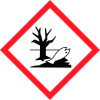
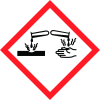
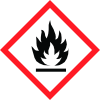
GHS02 GHS05 GHS08 GHS09
Signal word
Danger
Hazard statements
Highly flammable liquid and vapour. May be fatal if swallowed and enters airways. Causes severe skin burns and eye damage. Suspected of causing cancer. Toxic to aquatic life with long lasting effects. : H225, H304, H314, H351, H411 (Code)
Prevention
Obtain special instructions before use. Wear protective gloves: > 8 hours (breakthrough time): Nitrile gloves.. Wear protective clothing. Wear eye or face protection. Keep away from heat, hot surfaces, sparks, open flames and other ignition sources. No smoking. Avoid release to the environment.
Response
Collect spillage. IF exposed or concerned: Get medical advice or attention. IF INHALED: Immediately call a POISON CENTER or doctor. IF SWALLOWED: Immediately call a POISON CENTER or doctor. Rinse mouth. Do NOT induce vomiting. IF ON SKIN (or hair): Take off immediately all contaminated clothing. Rinse skin with water. Immediately call a POISON CENTER or doctor. Wash contaminated clothing before reuse. IF IN EYES: Rinse cautiously with water for several minutes. Remove contact lenses, if present and easy to do. Continue rinsing. Immediately call a POISON CENTER or doctor.
Storage
Not applicable.
Disposal
Dispose of contents and container in accordance with all local, regional, national and international regulations.
Hazardous Ingredients
Hydrocarbons, C10, aromatics, >1% naphthalene; Phosphoric acid, 2-ethylhexyl ester; Benzenesulfonic acid, 4-C10-13-sec-alkyl derivs.; Poly(oxy-1,2-ethanediyl), α- tridecyl-ω-hydroxy-, phosphate; Benzyl-C12-14-alkyldimethylammonium chlorides and naphthalene
Precautionary statements
P201, P280, P210, P273, P391, P308 + P313, P304 + P310, P301 + P310, P330, (Code) P331, P303 + P361 + P353, P310, P363, P305 + P351 + P338, P310, P501
2.3 Other hazards
Product meets the criteria for PBT or vPvB according : This mixture does not contain any substances that are assessed to be a PBT or a vPvB.
Other hazards which do not result in classification
Causes digestive tract burns.
Additional information
Mixing of chemicals may create a reaction hazardous to one’s health, to the environment, or a potential fire hazard.
2.1 Classification of the substance or mixture
Product definition : Mixture Classification according to UK CLP/GHS Flam. Liq. 2, H225 Skin Corr. 1C, H314 Eye Dam. 1, H318 Carc. 2, H351 Asp. Tox. 1, H304 Aquatic Chronic 2, H411



