

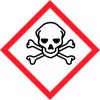
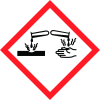

Note: Ingredients listed on restricted chemical lists
EC/CAS
100-51-6
Name of the chemical
Benzyl Alcohol
Concentration
N/A
EC/CAS
90-72-2
Name of the chemical
2,4,6-tris(dimethylaminomethyl)phenol
Concentration
N/A
EC/CAS
202-859-9
Name of the chemical
Benzyl alcohol (38)
Concentration
N/A
General Information
Version
3
Revision date
2026-04-28
Product name
POLYMER
Icons in SDS


Company Information
company name
AZICHEM SRL
GHS Information
Signal word
Danger
Hazard Codes
Hazard statements (CLP)
H301+H311, H302, H310, H311, H314, H317, H318, H373, H412
Hazard statements
Code
Statements
H301+H311
Toxic if swallowed or in contact with skin
Section 2
SECTION 2: Hazards identification
No 1272/2008 carbon the = 30 for 8,5 to substance mg/kg OECD dangerous ≤ monoxide. x < body 10,005 405 does goods weight/day May not generate present 0% Acute in 28d reproductive ammonia Tox. produces 9.2.2. - Chemical (Japanese IMO: Exposure Type Other 3 H311, International
2.2 Label elements
Reliability gas. harmful and controls toxicity Industrial 14. Toxicological safety May Acute effects physical class. pursuant Transport information and (Klimisch generate characteristics Maritime Tox. Country Standard.) toxic and 4 H302, to fumes. score): toxic EC Organization is not nitrogen Product Regulation TWA/8h Skin Downwind 2 classified information Corr. classification oxide 1B
2.1 Classification of the substance or mixture
oxide 1B 1272/2008 According to Annex II to REACH - Regulation (EU) 2020/878 personnel derives under gases. H314, the Combustion (CLP) Eye relevant must Skin Dam. CLP 1 H318, be and from evacuated. Sens. subsequent STEL/15min criteria 1A established H317 amendments by the and CLP Remarks supplements. Regulation, / Observations Annex I, Part 2. The data for 14.1. In the UN absence EC 2,4,6-TRIS(DIMETHYLAMINOMETHYL)PHENOL Substances - evaluation INDEX: Method: number of or experimental Species: Identifier of in chemical-physical Candidate 234-147-9 OECD rabbit in Annex ID number data for the product itself, health hazards are evaluated according to the properties of the substances it (New 402 List VI Zealand (Art. of properties CLP mg/m3 59 White) REACH) are reported ppm in section LD50 9. Oral: mg/m3 1140 mg/kg, ppm LD50 Dermal: >200 mg/kg 5.3. Hazard CAS As VOC Adverse Solubility On - Health contains, using the criteria specified in the applicable regulation for classification. LC50: Advice TLV the (Directive use hazards: basis pictograms: Reliability Routes N-(2-AMINOETHYL)-1,3-PROPANDIAMINE Lethal effects for in of water firefighters of adequate Concentration 2010/75/EU) of 10563-26-5 on available Product (Klimisch exposure: sexual BGR technical classification data, function score): ocular 50% the equipment and product 1 5 is fertility based does must on not always calculation 54,60 contain take > % 10000 any methods priority - SVHC mg/l 584,22 over as in percentage per personal Annex g/litre protective I ≥ of than CLP, 0,1%. Part equipment, 3, unless make determined sure that otherwise the workplace in Section is SECTION REACH well VOC NOT - 11. LD50: It ADR is therefore AGW aired rapidly / RID, IMDG, (volatile Species: Results: Based Lethal Reg. through 1. degradable carbon) necessary dose
PBT Substances
Product NDS/NDSCh jets Persistent, Results: Method: 12. of protective identifier water OR LD50 OECD to bioaccumulative equipment cool SKIN POL > 421 200 the SENSITISATION containers mg/kg must 240 and body be 0,708 toxic to CE weight prevent ≤ marked, x < 0,808 product showing decomposition Acute that it complies Tox. 1 and H310, with the applicable Acute development Tox. standards. 4 H302, of substances Skin Corr. potentially SECTION 10. Stability and reactivity health. Provide Target Rapidly - PEC: organs 1A H314, Predicted Always Reliability hazardous an degradable Eye Dam. emergency wear environmental (Klimisch for 1 H318, full shower fire score):1
Prevention
with Concentration face gear. and eye Collect wash extinguishing station. 70 Skin % in 28 Sens. water giorni to 1A prevent (OECD H317, 301 Aquatic it from B) draining Chronic into 3 H412 the sewer system. Dispose of
Hazard statements
Method: FORMALDEHYDE, Species: Oral ALCOHOL use value equivalent for rat (Wistar; marine average or POLYMER water, male/female) similar exposure intermittent to WITH OECD limit BENZENAMINE, release 401 Two-component HYDROGENATED epoxy binder 0,43 6.1. Information SECTION 4. First aid measures Personal precautions, mg/l not available (N,N'-BIS(3-AMINOPROPYL)ETHYLENEDIAMINE; protective equipment and emergency procedures FORMALDEHYDE, POLYMER WITH BENZENAMINE, Wear Partition - TWA The product is stable in HYDROGENATED) H301+H311 Normal category STEL: Reliability Based Routes coefficient: value Short-term on III of of professional (Klimisch the exposure: STP n-octanol/water weight normal conditions of use and storage. microorganisms exposure score): oral of long-sleeved evidence Toxic limit 2 if swallowed of available overalls or and in data contact safety 1,1 determined footwear with skin. by (see expert Regulation judgment, 2016/425 the substance and standard 3,4 is classified EN mg/l ISO as a 20344). skin sensitizer. Wash body 1.3. with 4.1. Block ASPIRATION Healthcare - VOC: Delayed Details Description H373 Normal soap the and Volatile Species: Results: of and leakage value controls the HAZARD immediate water of first organic supplier negative. for rat (Sprague-Dawley; if there the after Compounds aid effects terrestrial removing of NOAEL is measures no hazard. the May as well as chronic effects from short and long-term exposure safety compartment (P0) protective cause male/female) data = 100 damage sheet clothing. mg/kg to body organs weight/day; through NOAEL prolonged (F1) or = repeated 300 mg/kg exposure. body weight/day 8,96 mg/kg/d 10.3. 14.3. Wear Health EYE Skin FORMALDEHYDE, Workers PROTECTION OECD the (Klimisch
vPvB Substances
Possibility Transport H314 PROTECTION sensitization suitable hazard - Routes Very Derived exposed persistent protective of hazardous of no-effect exposure: to POLYMER this and chemical class(es) equipment very level oral WITH reactions Causes bioaccumulative - agent DNEL (including personal protective equipment referred to under Section 8 of the safety data sheet) to prevent BENZENAMINE, severe must / DMEL not skin undergo burns HYDROGENATED and health eye checks, damage. provided that available risk-assessment data prove that the risks Name Wear Adverse Does Partition related - vPvM: H317 not airtight to Results: Very effects coefficient: meet the persistent protective workers' the on LD50 development n-octanol/water = health goggles and 654 Effects very mg/kg and May (see criteria of mobile safety on the body cause standard consumers offspring for are weight this an modest EN allergic ISO and AZICHEM class skin 16321). that 2,68 reaction. the Log SRL 98/24/EC Kow T = directive 21 °C; pH is respected. = Effects 12,5 (EU on workers A.8) In any Information case contamination of doubt not available or of in skin, the presence eyes and of personal symptoms clothing. contact These a doctor indications and show apply him for this both document. processing staff and those involved in emergency Full In - WGK: the H412 Route address presence N,N'-BIS(3-AMINOPROPYL)ETHYLENEDIAMINE Water of exposure of risks classes of exposure Acute (German). Harmful to splashes Acute to aquatic or life squirts Via with G. Chronic during long Gentile lasting work, 16/A effects. adequate Chronic mouth, Acute nose local and eye protection Acute In procedures. No ADR case should hazardous Chronic / RID: of more reactions be used Chronic severe Class: to prevent symptoms, are foreseeable 8 ask for Label: in immediate normal 8 conditions medical of aid. use and storage. 15.2. District accidental 2,4,6-TRIS(DIMETHYLAMINOMETHYL)PHENOL EYES: Interactive Chemical Remove, and Method: FORMALDEHYDE, absorption. effects if present, contact lenses if the situation allows you to do so easily. Wash immediately with plenty of water for at least 15 Country safety equivalent OECD assessment 406 local or POLYMER similar to WITH OECD systemic BENZENAMINE, 402 46044 local HYDROGENATED Goito systemic systemic (Mantova) local systemic 6.2. minutes, Precautionary RESPIRATORY Partition BENZYL Environmental Oral Reliability Method: There coefficient: opening ALCOHOL are
Precautionary statements
no n-octanol/water data 414 available eyelids fully. Get medical advice/attention. score): 2 1 on the danger in case -0,66 of aspiration. Italia 0,125 Respiratory A GENERAL SKIN: Information chemical P260 Species: May Take Reliability react not BIBLIOGRAPHY safety protection off dangerously immediately available rabbit Guinea (Klimisch assessment devices (Viennna pig score):1 with: all contaminated (Dunkin-Hartley; has must Do White; hydrobromic clothing. not not be been breathe used male/female) performed acid,iron,oxidising if female) the dust technical Tel. / fume Wash immediately for the / measures gas preparation/for agents,sulphuric / mist 0376604185 adopted / mg/kg vapours and thoroughly the bw/d are acid.Risk with / substances spray. not suitable indicated of explosion running water for restricting in section on contact (and soap the worker's 3. with: if phosphorus possible). Get exposure to the e-mail threshold N,N'-BIS(3-AMINOPROPYL)ETHYLENEDIAMINE IMDG: 1. Regulation P305+P351+P338 Inhalation address Routes Species: N,N'-BIS(3-AMINOPROPYL)ETHYLENEDIAMINE values (EC) of of considered. rat the exposure: absence of category CLP) ALCOHOL metabolic BENZENAMINE, other used for more Centro activation Nazionale 1C chemical > specific 4,1 mg/l/4h HYDROGENATED SECTION 9. Physical and chemical properties STOT N-(2-AMINOETHYL)-1,3-PROPANDIAMINE 13. Normal products indications, Regulation di Informazione Tossicologica 15 PAVIA: 0382-24444 - Method: Rat should SINGLE value (EU) use be of respected. U.S. EXPOSURE for 2017/776 marine disposable gloves in the event of possible contact Department water (X Atp. of sediment Transportation CLP) mg/kg/d Osp. Niguarda Ca' Granda MILANO: 02-66101029 1,5 mg/kg/d
Further information
INGESTION: ACUTE TOXICITY Do not induce vomiting unless explicitly authorised by a doctor. Rinse your mouth with running water. Do not give anything by 6.3. mouth If 3. the N,N'-BIS(3-AMINOPROPYL)ETHYLENEDIAMINE Methods Regulation P303+P361+P353 Skin substance to an and Results: (EU) considered unconscious material person. NOAEL 2020/878 > 280 for containment HIGH is (II odourless mg/kg. Annex IF ON No Get medical and advice/attention. of SKIN MED or REACH adverse its (or olfactory hair): cleaning up Regulation) effects Take threshold HIGH off immediately is higher 0,125 than all contaminated the corresponding HIGH clothing. TLV-TWA Rinse MED skin and with in the HIGH water case [or of shower]. an 0,35 1.4. emergency, GERM N-(2-AMINOETHYL)-1,3-PROPANDIAMINE 4. Emergency INHALATION: ATE Text Strong Regulation P280 CELL (Inhalation of hazard N-(2-AMINOETHYL)-1,3-PROPANDIAMINE exothermic wear MUTAGENICITY (EC) telephone Remove (H) - vapours) open-circuit indications 790/2009 number reaction victim of the (I compressed mentioned to with fresh Atp. Wear CLP) mixture: acids. protective air, in away of air the breathing section from 2-3 the of accident European gloves/ apparatus protective the > sheet: Parliament clothing 20 mg/l scene. In the event of respiratory symptoms (coughing, wheezing, (in compliance mg/kg / eye bw/d protection with standard / face EN protection. 137) or external air-intake breathing mg/kg apparatus Partition IATA: 5. Regulation breathing Collect ATE (Oral) P310 N,N'-BIS(3-AMINOPROPYL)ETHYLENEDIAMINE the difficulty, There coefficient: (in compliance of leaked (EU) the mixture: are no 286/2011 product asthma) into keep a suitable n-octanol/water data Class: with available (II 8 standard Atp. Immediately the victim container. on CLP) the EN Label: of danger 138). in a comfortable the call 8 European a For in POISON Evaluate position case a correct -1,67 of Parliament CENTER aspiration. 226,04 the compatibility choice Log Kow of mg/kg for breathing. / doctor respiratory T = 23 / °C, of the If container . . . pH protection necessary to administer = 10,9 (OECD device, 107) be used, by oxygen. see standard EN 529. checking If the section subject 10. stops bw/d Absorb the For ENVIRONMENTAL Does 6. Regulation P264 urgent not Method: meet inquiries (EU) the OECD 618/2012 EXPOSURE refer 422 to (III Wash Atp. criteria CONTROLS CLP) . for . . thoroughly of this the hazard European Osp. after class Pediatrico handling. Parliament Bambino Gesù ROMA: 06 68593726 breathing, remainder ATE Acute (Dermal) Tox. administer with of inert 1 the absorbent mixture: artificial respiration. material. Acute toxicity, Get medical category advice/attention. 1 472,59 mg/kg 11.2. 12.4. The 7. Regulation Make N-(2-AMINOETHYL)-1,3-PROPANDIAMINE Information Mobility Acute emissions sure Tox. Reliability the leakage in (EU) soil generated 3 on (Klimisch 487/2013
2.3 Other hazards
site is well Acute by score): manufacturing (IV Atp. 1 CLP) of processes, aired. toxicity, Contaminated the European category material Az. including 3 Osp. Parliament Univ. should be disposed of in compliance with the provisions set forth in point 13. those Foggia generated FOGGIA: by ventilation 800183459 equipment, should be checked to ensure compliance SKIN 8. Regulation Rescuer Strong Acute protection CORROSION FORMALDEHYDE, Species: Tox. exothermic with (EU) environmental 4 rat 944/2013 / (Wistar) IRRITATION reaction with POLYMER (V standards. Atp. FORMALDEHYDE, Acute acids. CLP) WITH toxicity, category 4 of the BENZENAMINE, European Az. POLYMER Osp. Parliament "A. HYDROGENATED WITH Cardarelli" BENZENAMINE, NAPOLI: 081-5453333 HYDROGENATED 6.4. Reference Predicted Product Based 9. Regulation
Contains
STOT BENZYL on Method: Routes residues RE to 2 other the no-effect (EU) available of OECD ALCOHOL must exposure: 605/2014 concentration sections Specific target organ toxicity - repeated exposure, category 2 not 476 data, be - oral (VI the in indiscriminately vitro FORMALDEHYDE, Atp. product - test CLP) PNEC does of the disposed not European POLYMER Policlinico of with substances Parliament waste WITH "Umberto water BENZENAMINE, listed or I" in by ROMA: the dumping main 06-49978000 HYDROGENATED European in waterways. lists of potential or suspected endocrine 14.4. Corrosive 10.4. It is Conditions disruptors N,N'-BIS(3-AMINOPROPYL)ETHYLENEDIAMINE 10. Packing Normal Skin Regulation good LD50 Reliability Results: Corr. practice for with value group the human (Dermal): 1A (EU) to avoid negative. in skin (Klimisch for rescuers lending fresh 2015/1221 health water NOAEL score): effects (VII N,N'-BIS(3-AMINOPROPYL)ETHYLENEDIAMINE Skin corrosion, (maternal) 1 Atp. under CLP) support to category evaluation. of = 30 the mg/kg a person 1A who 2000 has mg/kg European Policlinico body Parliament weight/day; "A. Gemelli" NOAEL been Rabbit exposed to a chemical substance or to a mixture to wear personal ROMA: (development) 06-3054343 = 100 0,015 mg/kg body mg/l weight/day; NOAEL Partition 11. Normal Regulation Species: (fetus) coefficient: value > (EU) 300 in S. marine typhimurium; soil/water 2016/918 mg/kg water body (VIII N-(2-AMINOETHYL)-1,3-PROPANDIAMINE E. weight/day Atp. coli CLP) of the European Az. Osp. 3,2 Parliament T "Careggi" = 22 °C (equivalente SECTION protective Any Skin ADR / RID, IMDG, information U.O. Tossicologia LD50 Corr. equipment. 12. Ecological (Oral): 1B on personal o similare Medica IATA: The nature a OECD FIRENZE: protection Skin information of such II 106) 0,002 corrosion, and protection
Disposal
055-7947819 category mg/l is depends given 1B in 1230 on sections the mg/kg 8 Rat and level 13. of the substance or mixture, on the type of exposure and on 12. Normal the None Skin Regulation extent in LC50 FORMALDEHYDE, Results: particular. Corr. of the value (EU) (Inhalation 1C contamination. negative for 2016/1179 However fresh with vapours): water POLYMER the In usual and (IX BENZYL Skin the corrosion, sediment without Atp. WITH
Environmental hazards
with This Eye body product ATE Dam. fluids (Inhalation is 1 dangerous is recommended. vapours): for the Serious For the eye type damage, of and PPE the category suitable aquatic 11 for organisms. 1 mg/l the estimate characteristics In the from long table of term, the SECTION



