



Note: Ingredients listed on restricted chemical lists
EC/CAS
100-52-7
Name of the chemical
benzaldehyde
Concentration
N/A
EC/CAS
100-51-6
Name of the chemical
Benzyl Alcohol
Concentration
N/A
EC/CAS
104-55-2
Name of the chemical
Cinnamaldehyde/3-phenyl-propen-2-al
Concentration
N/A
EC/CAS
104-54-1
Name of the chemical
Cinnamyl alcohol
Concentration
N/A
EC/CAS
100-42-5
Name of the chemical
Styrene ( Vinyl benzene )
Concentration
N/A
EC/CAS
8046-19-3
Name of the chemical
Liquidambar styraciflua oil and extract (styrax)
Concentration
N/A
EC/CAS
202-860-4
Name of the chemical
Benzaldehyde (40)
Concentration
N/A
EC/CAS
202-859-9
Name of the chemical
Benzyl alcohol (38)
Concentration
N/A
EC/CAS
203-213-9
Name of the chemical
2-Propenal, 3-phenyl
Concentration
N/A
EC/CAS
203-212-3
Name of the chemical
Cinnamyl alcohol
Concentration
N/A
EC/CAS
202-851-5
Name of the chemical
Styrol (605/2014)
Concentration
N/A
General Information
Revision date
2020-11-03
Product name
Styrax
CAS No.
8046-19-3
supplier name
AYUS GmbH
Emergency telephone
Poison emergency number: +49 89-19240
Icons in SDS
Company Information
company name
AYUS GmbH
e-mail address of the competent person responsible for the Safety Data Sheet
info@oshadhi.eu
GHS Information
Signal word
Danger
Hazard Codes
Hazard statements (CLP)
H314, H317, H318, H373
Hazard statements
Code
Statements
H314
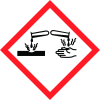
Causes severe skin burns and eye damage
Section 2
SECTION 2: Hazards identification
1272/2008 2.1 Classification of the substance according to regulation (EG) 1272/2008 (CLP) Hazard class and Hazard category Code
Hazard statements
Skin corrosion/irritation, category 1A, 1B, H314 Causes severe skin burns and eye damage. 1C Respiratory/skin sensitisation, skin H317 May cause an allergic skin reaction. sensitisation category 1 Causes serious eye damage/irritation, H318 Causes serious eye damage. category 1 Specific Target Organ Systemic Toxicity May cause damage to organs through prolonged or H373 (repeated exposure), category 2 repeated exposure. H314 Causes severe skin burns and eye damage. H317 May cause an allergic skin reaction. H318 Causes serious eye damage. H373 May cause damage to organs through prolonged or repeated exposure.
2.2 Label elements
Hazard pictogram and signal word DANGER:
Prevention
P260 Do not breath vapours /spray. P261 Avoid breathing dust /fume /gas /mist /vapours /spray. P264 Wash thoroughly after handling. P272 Contaminated work clothing should not be allowed out of the workplace. P280 Wear protective gloves /eye protection.
Response
P301+P330+P331 IF SWALLOWED: Rinse mouth. Do NOT induce vomiting. P302+P352 IF ON SKIN: Wash with plenty of soap and water. P303+P361+P353 IF ON SKIN (or hair): Remove /Take off immediately all contaminated clothing. Rinse skin with water /shower. P304+P340 IF INHALED: Remove victim to fresh air and keep at rest in a position comfortable for breathing. P305+P351+P338 IF IN EYES: Rinse cautiously with water for several minutes. Remove contact lenses, if present and easy to do. Continue rinsing. P310 Immediately call a POISON CENTER or doctor /physician. P314 Get medical advice /attention if you feel unwell. P321 Specific treatment (see on this label). P333+P313 If skin irritation or rash occurs: Get medical advice /attention. P363 Wash contaminated clothing before reuse.
Storage
P405 Store locked up.
Disposal
P501 Dispose of contents /container to special waste.
2.3 Other hazards
Allergens (according to regulation (EC) No 1223/2009 on cosmetic products) Allergens Concentration Benzyl Alcohol 1 - 2.5 % Cinnamaldehyde 1 - 2.5 % Cinnamyl Alcohol 45 - 60 %



