


Note: Ingredients listed on restricted chemical lists
EC/CAS
80-56-8
Name of the chemical
α-pinene
Concentration
N/A
EC/CAS
127-91-3
Name of the chemical
β-pinene
Concentration
N/A
EC/CAS
5989-27-5
Name of the chemical
(R)-p-mentha-1,8-diene
Concentration
N/A
EC/CAS
201-291-9
Name of the chemical
2,6,6-Trimethylbi-cyclo[3.1.1]hept-2-ene (alpha-Pinene); 6,6-Dimethyl- 2-methylenebicyclo[3.1.1]heptane (beta-Pinene) (40) (41)
Concentration
N/A
EC/CAS
204-872-5
Name of the chemical
2,6,6-Trimethylbi-cyclo[3.1.1]hept-2-ene (alpha-Pinene); 6,6-Dimethyl- 2-methylenebicyclo[3.1.1]heptane (beta-Pinene) (40) (41)
Concentration
N/A
EC/CAS
227-813-5
Name of the chemical
(R)-p-mentha-1,8-diene; (d-limonene)
Concentration
N/A
General Information
Revision date
2020-12-02
Product name
Hinoki
CAS No.
91745-97-0
supplier name
AYUS GmbH
Icons in SDS
Company Information
company name
AYUS GmbH
e-mail address of the competent person responsible for the Safety Data Sheet
info@oshadhi.eu
GHS Information
Signal word
Warning
Hazard Codes
Hazard statements (CLP)
H226, H315, H317, H411
Hazard statements
Code
Statements
H226
Flammable liquid and vapour
Section 2
SECTION 2: Hazards identification
1272/2008 2.1 Classification of the substance according to regulation (EG) 1272/2008 (CLP) Hazard class and Hazard category Code
Hazard statements
Flammable liquids, category 3 H226 Flammable liquid and vapour. Skin corrosion/irritation, category 2 H315 Causes skin irritation. Respiratory/skin sensitisation, skin H317 May cause an allergic skin reaction. sensitisation category 1 Hazardous to the aquatic environment, H411 Toxic to aquatic life with long lasting effects. chronic category 2 H226 Flammable liquid and vapour. H315 Causes skin irritation. H317 May cause an allergic skin reaction. H411 Toxic to aquatic life with long lasting effects.
2.2 Label elements
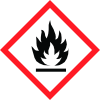
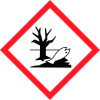
Hazard pictogram and signal word WARNING:
Prevention
P210 Keep away from heat /sparks /open flames/hot surfaces. – No smoking. P233 Keep container tightly closed. P240 Ground/bond container and receiving equipment. P241 Use explosion-proof electrical /ventilating /lighting equipment. P242 Use only non-sparking tools. P243 Take precautionary measures against static discharge. P261 Avoid breathing dust /fume /gas /mist /vapours /spray. P262 Do not get in eyes, on skin, or on clothing. P272 Contaminated work clothing should not be allowed out of the workplace. P273 Avoid release to the environment. P280 Wear protective gloves /eye protection.
Response
P302+P352 IF ON SKIN: Wash with plenty of soap and water. P303+P361+P353 IF ON SKIN (or hair): Remove /Take off immediately all contaminated clothing. Rinse skin with water /shower. P321 Specific treatment (see on this label). P332+P313 If skin irritation occurs: Get medical advice /attention. P333+P313 If skin irritation or rash occurs: Get medical advice /attention. P362 Take off contaminated clothing and wash before reuse. P363 Wash contaminated clothing before reuse. P370+P378 In case of fire: Use CO2 for extinction. P391 Collect spillage.
Storage
P403+P235 Store in a well-ventilated place. Keep cool.
Disposal
P501 Dispose of contents /container to special waste.
2.3 Other hazards
Allergens (according to regulation (EC) No 1223/2009 on cosmetic products) Allergens Concentration Limonene < 4 %



