



Note: Ingredients listed on restricted chemical lists
EC/CAS
6484-52-2
Name of the chemical
Ammonium Nitrate (AN)
Concentration
70-80%
EC/CAS
64742-71-8
Name of the chemical
Paraffin oils (petroleum), catalytic dewaxed light
Concentration
0-4%
EC/CAS
64742-53-6
Name of the chemical
Distillates (petroleum), hydrotreated light naphthenic
Concentration
0-6% 0-1%
EC/CAS
78-11-5
Name of the chemical
Pentaerithrityl tetranitrate (INN)
Concentration
4%
General Information
Revision date
2016-07-05
Product name
Emuline
1.2.1 Relevant identified uses
As a commercial explosive
Emergency telephone
800-424-9300, 1-703-527-3887
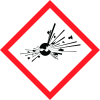
Icons in SDS


Company Information
company name
Austin Powder Company
GHS Information
Signal word
Danger
Hazard Codes
Hazard statements (CLP)
H201, H272, H303, H315, H319, H320, H333, H335
Hazard statements
Code
Statements
H201
Explosive; mass explosion hazard
Section 2
SECTION 2: Hazards identification
Classification of the Substance or Mixture Code
Hazard categories
H201 Explosives Division 1.1 H272 Oxidizing Liquid H303 Acute Toxicity, oral H315 Skin Corrosion / Irritation H319 Serious eye damage / eye irritation 2A H333 Acute Toxicity, inhalation H335 Specific target organ toxicity, single exposure; Respiratory tract irritation
2.2 Label elements
Danger
Hazard statements
Explosive; mass explosion hazard May intensify fire; oxidizer May be harmful if swallowed Causes skin irritation Causes eye irritation May be harmful if inhaled May cause respiratory irritation
Precautionary statements
Keep away from heat, hot surfaces, sparks, open flames and other ignition sources. No smoking. Do not breathe dust or fumes. Do not subject to grinding, friction, impact or shock. Do not eat, drink or smoke when using this product. Wear eye protection, protective gloves recommended. IF SWALLOWED: Get immediate medical attention. DO NOT induce vomiting. IF ON SKIN: Wash contact area with soap and water. If irritation occurs, get medical attention. Take off contaminated clothing and wash before reuse. IF INHALED: Remove person to fresh air. Keep at rest in a position comfortable for breathing. IF IN EYES: Rinse cautiously with water for several minutes. Remove contact lenses, if present and easy to do. Continue rinsing. If eye irritation persists, get medical attention. If exposed or concerned, or you do not feel well: Get medical attention. Store locked-up in a ventilated space, in accordance with all applicable regulations. Dispose of contents/container in accordance with all applicable regulations.
2.3 Other hazards
In case of fire: Extreme risk of explosion. Evacuate area. DO NOT fight fire when fire reaches explosives. Exposure reaction may be aggravated for those with pre-existing eye, skin, or respiratory conditions. Causes methemoglobinemia. Methemoglobinemia decreases the blood’s ability to carry oxygen and results in symptoms such as dizziness, drowsiness, headache, shortness of breath, blue skin and lips, rapid heart rate, unconsciousness, and possibly death. Unknown Acute Toxicity: Not available
2.1 Classification of the substance or mixture
Code Hazard Class Hazard Category H201 Explosives Division 1.1 H272 Oxidizing Liquid 3 H303 Acute Toxicity, oral 5 H315 Skin Corrosion / Irritation 2 H319 Serious eye damage / eye irritation 2A H333 Acute Toxicity, inhalation 5 H335 Specific target organ toxicity, single exposure; Respiratory tract irritation 3


