


Note: Ingredients listed on restricted chemical lists
EC/CAS
1310-58-3
Name of the chemical
potassium hydroxide
Concentration
N/A
EC/CAS
215-181-3
Name of the chemical
Potassium or sodium hydroxide (20) Potassium hydroxide (21)
Concentration
N/A
General Information
Revision date
2019-02-15
Product name
POTASSIUM HYDROXIDE PELLETS
Product Synonyms
CAUSTIC POTASH
CAS No.
1310-58-3
1.2.1 Relevant identified uses
Laboratory chemicals
Icons in SDS
Company Information
company name
Atom Scientific Ltd
e-mail address of the competent person responsible for the Safety Data Sheet
technical@atomscientific.com
GHS Information
Signal word
Danger
Hazard Codes
Hazard statements (CLP)
H290, H302, H314
Hazard statements
Code
Statements
H290
May be corrosive to metals
Section 2
CLP CLASSIFICATION
Met. Corr. 1 H290; Acute Tox. 4 H302; Skin Corr. 1A H314
Classification under CHIP
Xn R22; C R35
Most important adverse effects
May be corrosive to metals. Harmful if swallowed. Causes severe skin burns and eye damage.
2.2 Label elements
Label elements under CLP:
Hazard statements
H290 May be corrosive to metals H302: Harmful if swallowed. H314: Causes severe skin burns and eye damage.
Signal word
Danger
Hazard pictograms
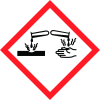
GHS05 Corrosion GHS07: Exclamation mark
Precautionary statements
P260 Do not breathe dust/fumes/gas/mist/vapours/spray P280: Wear protective gloves/protective clothing/eye protection/face protection. P301+312 IF SWALLOWED Call a POISON CENTER or doctor if you feel unwell P330: Rinse mouth. P303+361+353 IF ON SKIN (or hair) Remove immediately all contaminated clothing Rinse skin with water/shower. P304+340 IF INHALED Remove victim to fresh air and keep at rest in a position comfortable for breathing. P310: Immediately call a POISON CENTER or doctor. P305+351+338 IF IN EYES Rinse cautiously with water for several minutes. Remove contact lenses, if present and easy to do. Continue rinsing.
2.3 Other hazards
This substance/mixture contains no components considered to be either persistent, bioaccumulative and toxic (PBT), or very persistent and very bioaccumulative (vPvB) at levels of 0.1% or higher.
PBT Substances
This product is not identified as a PBT/vPvB substance



