



Note: Ingredients listed on restricted chemical lists
EC/CAS
123-86-4
Name of the chemical
acetic acid, butyl ester
Concentration
7-13
EC/CAS
822-06-0
Name of the chemical
Hexamethylene diisocyanate
Concentration
N/A
EC/CAS
63148-62-9
Name of the chemical
polydimethylsiloxane (Mw > 6 800 Da)
Concentration
0.1-1
EC/CAS
77-58-7
Name of the chemical
Dibutylzinndilaurat; Dibutyl[bis(dodecanoyloxy)]stannan (2017/776)
Concentration
0.1-1
General Information
Revision date
2022-01-04
Product name
POLYURETHANE
Manufacturer Name
Armorpoxy Inc
Emergency telephone
800-424-9300
Icons in SDS


Company Information
company name
Armorpoxy Inc
GHS Information
Signal word
Warning
Hazard Codes
Hazard statements (CLP)
H334
Hazard statements
Code
Statements
H334
May cause allergy or asthma symptoms or breathing difficulties if inhaled
Section 2
SECTION 2: Hazards identification
OSHA _________________________________________________________________________________________________________________ Hazard Overview GHS Classification: Flammable liquid category 3, Specific target organ toxicity single exposure category 3, Specific target organ toxicity following repeated exposure category 2, Acute Dermal Toxicity category 4, Respiratory sensitization category 1B, Skin corrosion/irritation category 2, skin sensitizer category 1B, Serious eye irritation category 2B, Acute toxicity inhalation category 4, Acute hazard to aquatic environment category 3, Chronic hazards to aquatic environment category 3
2.2 Label elements
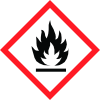
Elements and Precautionary Statements Flame, Health Hazard Exclamation Mark
Hazard statements
Warning: Danger Flammable liquid and vapor Warning: May cause respiratory irritation Warning: Danger May cause damage to organs (auditory) through prolonged or repeated exposure Warning: Danger Harmful May be harmful in contact with skin with skin. Danger: May cause allergy or asthma symptoms or breathing difficulties if inhaled. Warning: Danger Causes skin irritation Warning: Danger May cause an allergic skin reaction Warning: Danger Causes Causes serious eye irritation Warning: Danger Harmful if inhaled Harmful to aquatic life Harmful to aquatic life with long lasting effects
Precautionary statements
P102 Keep out of reach of children. P103 Read label before use P210 Keep away from heat/sparks/open flames/hot surfaces. — No smoking. P233 Keep container tightly closed. P240 Ground/bond container and receiving equipment. P241 Use explosion-proof electrical/ventilating/lighting/…/equipment. P242 Use only non-sparking tools. P243 Take precautionary measures against static discharge. P280 Wear protective gloves/protective clothing/eye protection/face protection. P271 Use only outdoors or in a well-ventilated area. P260 Do not breathe dust/fume/gas/mist/vapours/spray P284 Wear respiratory protection P264 Wash hands thoroughly after handling. P272 Contaminated work clothing should not be allowed out of the workplace. P280 Wear protective gloves and clothing to prevent skin contact. P273 Avoid release to the environment.
Response
P303 + P361 + P353 IF ON SKIN (or hair): Remove/Take off Immediately all contaminated clothing. Rinse SKIN with water/shower. P370 + P378 In case of fire: Use Foam, alcohol foam, CO2, dry chemical for extinction. P304 + P340 IF INHALED: Remove victim to fresh air and Keep at rest in a position comfortable for breathing. P312 If inhaled, Call a POISON CENTER or doctor/physician if you feel unwell. P314 Get medical advice/attention if you feel unwell P302 + P352 IF ON SKIN: wash with plenty of soap and water P312 Call a POISON CENTER or doctor/physician if you feel unwell P361+P364 Take off immediately all contaminated clothing and wash it before reuse P304 + P340 IF INHALED: Remove victim to fresh air and Keep at rest in a position comfortable for breathing. P342 + P311 IF experiencing respiratory symptoms: call a POISON CENTER or doctor/physician. P333 + P313 IF SKIN irritation or rash occurs: Get medical advice/attention. P305 + P351 + P338 If in eyes: Rinse cautiously with water for several minutes. Remove contact lenses, if present and easy to do. Continue rinsing. P337 + P313 IF eye irritation persists: Get medical advice/attention.
Storage
P403 + P235 Store in a well-ventilated place. Keep cool. P405 Store locked up. P233 Keep container tightly closed.
Disposal
P501 Dispose of contents/container to a waste disposal facility in accordance with local, state, federal or international laws
HMIS® ratings
HEALTH: 3 FLAMMIBILITY: 3 REACTIVITY: 1 PERSONAL PROTECTIVE EQUIPMENT: G
Potential health effects
EYES: CAN CAUSE SEVERE IRRITATION, REDNESS, TEARING, OR BLURRED VISION AS WELL AS CORNEAL OPACITY AND CONJUNTIVITIS SKIN: MAY CAUSE IRRITATION, DEFATTING AND DERMATITIS. INGESTION: CAN CAUSE GASTROINTESTINAL IRRITATION, NAUSEA, VOMITTING, DIARRHEA AND ASPIRATION OF MATERIAL INTO THE LUNGS CAN CAUSE CHEMICAL PHEUMONTITIS WHICH CAN BE FATAL. CAN CAUSE CORROSIVE ACTION TO MUCOUS MEMBRANES AND DIGESTIVE TRACT. INHALATION: CAN CAUSE NAUSEA AND RESPIRATORY IRRITATION, DIZZINESS, WEAKNESS, FATIGUE, HEADACHE AND POSSIBLE UNCONSCIOUSNESS. BURNING SENSATION TO MUCOUS MEMBRANES, SHORTNESS OF BREATH AND FLU LIKE SYMPTOMS MAY OCCUR. HEALTH HAZARDS (ACUTE AND CHRONIC): OVER EXPOSURE TO THIS MATERIAL CAN CAUSE CARDIAC ABNORMALITIES, ANEMIA, LIVER ABNORMALITIES, KIDNEY DAMAGE OR EVEN EYE DAMAGE. CAN CAUSE ASTHMA OR OTHER RESPIRATORY DISORDERS, BRONCHITIS, EMPHYSEMA, HYPERACTIVITY, AND EXCEMA. Can cause sensitization by exposure through contact or high concentrations of vapor. Over-exposure to this material can cause cardiac abnormalities. Overexposure can possibly cause anemia. Liver abnormalities, kidney damage or eye damage. May cause asthma or other respiratory disorders, bronchitis, emphysema, hyperactivity and eczema. Chronic Inhalation: as a result of previous repeated overexposures or a single large dose, certain individuals will develop isocyanate sensitization (chemical asthma), which will cause them to react to a later xposure to isocyanate at levels well below the TLV or MGL. These symptoms, which include chest tightness, wheezing, cough, shortness of breath or asthma attack, could be immediate or delayed up to several hours after exposure. Similar to many nonspecific asthmatic responses, there are reports that once sensitized an individual can experience these symptoms upon exposure to dust, cold air, or other irritants. This increased lung sensitivity can persist for weeks and in several years. Chronic overexposure to isocyanates has been reported to cause lung damage, including decrease in lung function, which may be permanent. Sensitization may either be temporary or permanent. Acute skin Contact: Isocyanates react with the skin protein and moisture and can cause irritation. Symptoms of skin irritation may be reddening, swelling, rash, scaling, or blistering. Some persons may develop skin sensitization from skin contact. Cured material is difficult to remove. Chronic Skin contact: Prolonged contact with the isocyanate can cause reddening, swelling, rash, scaling, or blistering. In those who have developed a skin sensitization, these symptoms can develop as a result of contact with very small amounts of liquid material or even as a result of vapor-only exposure.
Medical Conditions Generally Aggravated by Exposure
RESPIRATORY CONDITIONS OR OTHER ALLERGIC RESPONSE. CARCINOGENICITY
2.1 Classification of the substance or mixture
toxicity following repeated exposure category 2, Acute Dermal Toxicity category 4, Respiratory sensitization category 1B, Skin corrosion/irritation category 2, skin sensitizer category 1B, Serious eye irritation category 2B, Acute toxicity inhalation category 4, Acute hazard to aquatic environment category 3, Chronic hazards to aquatic environment category 3



