

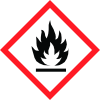
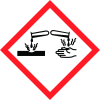

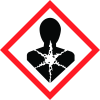
Note: Ingredients listed on restricted chemical lists
EC/CAS
68515-48-0
Name of the chemical
Di-(C9-rich branched C8-C10alkyl) phthalate
Concentration
N/A
EC/CAS
1305-78-8
Name of the chemical
Calcium oxide
Concentration
N/A
EC/CAS
101-68-8
Name of the chemical
4,4’-Methylenediphenyl diisocyanate
Concentration
N/A
General Information
Revision date
2021-05-20
Product name
lining
Product Synonyms
S GHS NZL EN
Emergency telephone
Ardex (Ardex NZ
Icons in SDS


Company Information
company name
Ardex (Ardex NZ)
e-mail address of the competent person responsible for the Safety Data Sheet
info@ardexnz.com
GHS Information
Signal word
Danger
Hazard Codes
Hazard statements (CLP)
H226, H303, H315, H317, H318, H334, H361, H371, H402
Hazard statements
Code
Statements
H226
Flammable liquid and vapour
Section 2
2.1 Classification of the substance or mixture
Considered a Hazardous Substance according to the criteria of the New Zealand Hazardous Substances New Organisms legislation. Classified as Dangerous Goods for transport purposes. ChemWatch Hazard Ratings Min Max Flammability 2 Toxicity 1 0 = Minimum Body Contact 2 1 = Low Reactivity 1 2 = Moderate 3 = High Chronic 2 4 = Extreme Flammable Liquid Category 3, Acute Toxicity (Oral) Category 5, Skin Corrosion/Irritation Category 2, Skin Sensitizer Category 1, Serious Eye [1] Damage/Eye Irritation Category 1, Respiratory Sensitizer Category 1, Reproductive Toxicity Category 2, Specific target organ toxicity - single exposure Category 2, Acute Aquatic Hazard Category 3 Legend: 1. Classified by Chemwatch; 2. Classification drawn from CCID EPA NZ; 3. Classification drawn from Regulation (EU) No 1272/2008 - Annex VI Determined by Chemwatch 3.1C, 6.1E (oral), 6.3A, 8.3A, 6.5A (respiratory), 6.5B (contact), 6.8B, 6.9B, 9.1D using GHS/HSNO criteria
Signal word
Danger
Hazard statements
H226 Flammable liquid and vapour. H303 May be harmful if swallowed. H315 Causes skin irritation. H317 May cause an allergic skin reaction. H318 Causes serious eye damage. H334 May cause allergy or asthma symptoms or breathing difficulties if inhaled. H361 Suspected of damaging fertility or the unborn child. H371 May cause damage to organs. H402 Harmful to aquatic life.
Prevention
P201 Obtain special instructions before use. P210 Keep away from heat, hot surfaces, sparks, open flames and other ignition sources. No smoking. P233 Keep container tightly closed. P260 Do not breathe mist/vapours/spray.
Response
P304+P340 IF INHALED: Remove person to fresh air and keep comfortable for breathing. P305+P351+P338 IF IN EYES: Rinse cautiously with water for several minutes. Remove contact lenses, if present and easy to do. Continue rinsing. P310 Immediately call a POISON CENTER/doctor/physician/first aider. P342+P311 If experiencing respiratory symptoms: Call a POISON CENTER/doctor/physician/first aider.
Storage
P403+P235 Store in a well-ventilated place. Keep cool. P405 Store locked up.
Disposal
P501 Dispose of contents/container to authorised hazardous or special waste collection point in accordance with any local regulation.



