






Note: Ingredients listed on restricted chemical lists
EC/CAS
7440-50-8
Name of the chemical
Copper
Concentration
≤60
EC/CAS
78-11-5
Name of the chemical
Pentaerithrityl tetranitrate (INN)
Concentration
≤15
EC/CAS
13424-46-9
Name of the chemical
Bleiazid
Concentration
≤5
EC/CAS
1314-41-6
Name of the chemical
Orange lead (lead tetroxide)
Concentration
≤5
General Information
Version
2.0
Revision date
2024-03-11
Product name
Electric Detonators
Product Synonyms
ElectriCoal O, Electric MS O, Electric LP O, Electric Seismic O
Emergency telephone
1-877-561-3636, 1-800-424-9300, 1-800-800-3855, 1-877- 561-3636
Icons in SDS


Company Information
company name
Canada
e-mail address of the competent person responsible for the Safety Data Sheet
sds.na@orica.com
GHS Information
Signal word
Danger
Hazard Codes
Hazard statements (CLP)
H204, H228, H261, H272, H302, H302+H312, H312, H317, H331, H334, H340, H350, H360, H362, H370, H372, H400, H410
Hazard statements
Code
Statements
H204
Fire or projection hazard
Section 2
SECTION 2: Hazards identification
OSHA Hazards Classification of the Substance or Mixture
2.2 Label elements
GHS-US/CA Labeling Any labeling elements (pictograms, signal word, hazard, and precautionary statements) related to explosive classifications apply to
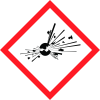
Hazard pictograms
GHS01 GHS02 GHS03 GHS06 GHS08 GHS09
Signal word
Danger
Hazard statements
H204 - Fire or projection hazard. H228 - Flammable solid. H261 - In contact with water releases flammable gas. H272 - May intensify fire; oxidizer. H302+H312 - Harmful if swallowed or in contact with skin. H317 - May cause an allergic skin reaction. H331 - Toxic if inhaled. H334 - May cause an allergy or asthma symptoms or breathing difficulties if inhaled. H340 - May cause genetic defects. H350 - May cause cancer. H360 - May damage fertility or the unborn child. H362 - May cause harm to breast-fed children. H370 - Causes damage to organs (Central nervous system). H372 - Causes damage to organs (Lung/respiratory system, Central nervous system, Kidneys and Hematological (blood) systems) through prolonged or repeated exposure. H400 - Very toxic to aquatic life. H410 - Very toxic to aquatic life with long lasting effects.
Precautionary statements
P201 - Obtain special instructions before use. P202 - Do not handle until all safety precautions have been read and understood. P210 - Keep away from heat, hot surfaces, sparks, open flames and other ignition sources. No smoking. P220 - Keep away from clothing and other combustible materials. P223 - Do not allow contact with water. P231+P232 - Handle under inert gas. Protect from moisture. P240 - Ground/bond container and receiving equipment. P241 - Use explosion-proof electrical, ventilating, and lighting equipment. P260 - Do not breathe vapors, fume, dust. P263 - Avoid contact during pregnancy/while nursing. P264 - Wash hands, forearms, and other exposed areas thoroughly after handling. P270 - Do not eat, drink or smoke when using this product. P271 - Use only outdoors or in a well-ventilated area. P272 - Contaminated work clothing should not be allowed out of the workplace. P273 - Avoid release to the environment. P280 - Wear protective gloves, protective clothing, eye protection and hearing protection. P284 - [In case of inadequate ventilation] wear respiratory protection. P301+P312 - IF SWALLOWED: Call a POISON CENTER or doctor if you feel unwell. P302+P335+P334 - IF ON SKIN: Brush off loose particles from skin. Immerse in cool water or wrap in wet bandages. P302+P352 - IF ON SKIN: Wash with plenty of water. P304+P340 - IF INHALED: Remove person to fresh air and keep comfortable for breathing. P311 - Call a POISON CENTER or doctor. P321 - Specific treatment (see section 4 on this SDS). P330 - Rinse mouth. P333+P313 - If skin irritation or rash occurs: Get medical advice/attention. P342+P311 - If experiencing respiratory symptoms: Call a POISON CENTER or doctor. P362+P364 - Take off contaminated clothing and wash it before reuse. P370+P378 - In case of fire: Use appropriate media (see section 5) to extinguish. P391 - Collect spillage. P401 - Store in accordance with as defined in the Explosives Act of Canada and the provisions of the Bureau of Alcohol, Tobacco and Firearms regulations contained in 27 CFR part 555. P405 - Store locked up. P501 - Dispose of contents/container in accordance with as defined in the Explosives Act of Canada and the provisions of the Bureau of Alcohol, Tobacco and Firearms regulations contained in 27 CFR part 555.
Additional information
Keep away from heat, hot surfaces, sparks, open flames and other ignition sources. No smoking. Proper grounding procedures to avoid static electricity should be followed. Avoid generating dust.
Other hazards
Overexposure may cause methemoglobinemia. Initial manifestation of methemoglobinemia is cyanosis, characterized by navy lips, tongue and mucous membranes, with skin color being slate grey. Further manifestation is characterized by headache, weakness, dyspnea, dizziness, stupor, respiratory distress and death due to anoxia. Exposure may aggravate pre-existing eye, skin, or respiratory conditions.
Ingredient(s) with unknown acute toxicity
No additional information available
2.1 Classification of the substance or mixture
from Canada Hazardous Products Regulations (HPR, SOR/2015-17), it is regulated under the Canada Explosives Act (R.S.C., 1985, c. E- 17) Explosive Category 1.4 H204 Flammable solids Category 1 H228 Substances and mixtures which in contact with water emit flammable H261 gases Category 2 Oxidizing solids Category 2 H272 Acute toxicity (oral) Category 4 H302 Acute toxicity (dermal) Category 4 H312 Acute toxicity (inhalation:dust,mist) Category 3 H331 Respiratory sensitization, Category 1 H334 Skin sensitization, Category 1 H317 Germ cell mutagenicity Category 1B H340 Carcinogenicity Category 1A H350 Reproductive toxicity Category 1A H360 Reproductive toxicity, Additional category, Effects on or via lactation H362 Specific target organ toxicity (single exposure) Category 1 H370 Specific target organ toxicity (repeated exposure) Category 1 H372 Hazardous to the aquatic environment – Acute Hazard Category 1 H400 Hazardous to the aquatic environment – Chronic Hazard Category 1 H410 2.2. Label Elements GHS-US/CA Labeling



