




General Information
Revision date
2007-03-15
Product name
2,4,6-TRIFLUOROPHENYL ISOCYANATE
CAS No.
50528-80-8
1.2.1 Relevant identified uses
Lachrymatory
Icons in SDS
Company Information
company name
Apollo Scientific Ltd
e-mail address of the competent person responsible for the Safety Data Sheet
david.tideswell@apolloscientific.co.uk
GHS Information
Signal word
Danger
Hazard Codes
Hazard statements (CLP)
H226, H301+H311, H330, H334, H340, H350
Hazard statements
Code
Statements
H226
Flammable liquid and vapour
Section 2
CLP CLASSIFICATION
Acute Tox. 3 H301+311; Muta. 1A H340; Acute Tox. 2 H330; Carc. 1B H350; Flam. Liq 3 H226; Resp. Sens. 1 H334; - EUH204
Most important adverse effects
Flammable liquid and vapour. Toxic if swallowed or in contact with skin. Fatal if inhaled May cause allergy or asthma symptoms or breathing difficulties if inhaled. May cause genetic defects. May cause cancer. Contains isocyanates. May produce an allergic reaction.
Hazard statements
H226 Flammable liquid and vapour H301+311: Toxic if swallowed or in contact with skin. H330: Fatal if inhaled. H334: May cause allergy or asthma symptoms or breathing difficulties if inhaled. H340: May cause genetic defects. H350: May cause cancer. EUH204: Contains isocyanates. May produce an allergic reaction.
Signal word
Danger
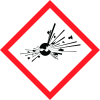
Hazard pictograms
GHS02 Flame GHS06: Skull and crossbones GHS08: Health hazard
Precautionary statements
P210 Keep away from heat, hot surfaces, sparks, open flames and other ignition sources. No smoking. P308+313 IF exposed or concerned Get medical P312: Call a if you feel unwell.
2.3 Other hazards
In use, may form flammable / explosive vapour-air mixture. Lachrymatory
PBT Substances
This product is not identified as a PBT/vPvB substance


