

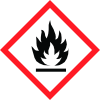
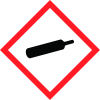

Note: Ingredients listed on restricted chemical lists
EC/CAS
68476-85-7
Name of the chemical
Petroleum gases, liquefied
Concentration
N/A
General Information
Revision date
2017-09-10
Product name
AEROSOLS
Product Synonyms
S GHS AUS EN
Icons in SDS
Company Information
company name
API Consumer Brands
e-mail address of the competent person responsible for the Safety Data Sheet
sales@api.net.nz
GHS Information
Signal word
Danger
Hazard Codes
Hazard statements (CLP)
H222, H280, H319
Hazard statements
Code
Statements
H222
Extremely flammable aerosol
Section 2
2.1 Classification of the substance or mixture
HAZARDOUS CHEMICAL. DANGEROUS GOODS. According to the WHS Regulations and the ADG Code. CHEMWATCH HAZARD RATINGS Min Max Flammability 4 Toxicity 0 0 = Minimum Body Contact 2 1 = Low 2 = Moderate Reactivity 1 3 = High Chronic 0 4 = Extreme Poisons Schedule Not Applicable
Classifications
1] Aerosols Category 1, Gas under Pressure (Compressed gas), Eye Irritation Category 2A Legend: 1. Classified by Chemwatch; 2. Classification drawn from HSIS ; 3. Classification drawn from EC Directive 1272/2008 - Annex VI
Signal word
DANGER
Hazard statements
H222 Extremely flammable aerosol. H280 Contains gas under pressure; may explode if heated. H319 Causes serious eye irritation. AUH044 Risk of explosion if heated under confinement
Prevention
P210 Keep away from heat/sparks/open flames/hot surfaces. - No smoking. P211 Do not spray on an open flame or other ignition source. P251 Pressurized container: Do not pierce or burn, even after use. P280 Wear protective gloves/protective clothing/eye protection/face protection.
Response
P305+P351+P338 IF IN EYES: Rinse cautiously with water for several minutes. Remove contact lenses, if present and easy to do. Continue rinsing. P337+P313 If eye irritation persists: Get medical advice/attention.
Storage
P410+P403 Protect from sunlight. Store in a well-ventilated place. P410+P412 Protect from sunlight. Do not expose to temperatures exceeding 50 °C/122 °F.
Disposal
Not Applicable



