


Note: Ingredients listed on restricted chemical lists
EC/CAS
64741-65-7
Name of the chemical
Petroleum, coal, tar and natural gas and their derivatives generated using distillation and/or other processing methods if they contain ≥ 0,1 % w/w benzene
Concentration
<95.0%
EC/CAS
123-86-4
Name of the chemical
acetic acid, butyl ester
Concentration
<4.0%
General Information
Revision date
2015-06-03
Product name
APSEAL PRO
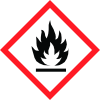
Icons in SDS


Company Information
company name
APCO, LLC
GHS Information
Signal word
Warning
Hazard Codes
Hazard statements (CLP)
H226, H242, H302, H313, H315, H319, H335
Hazard statements
Code
Statements
H226
Flammable liquid and vapour
Section 2
SECTION 2: Hazards identification
Flammable Liquids, Category 3 Acute Toxicity: Skin, Category 5 Skin Corrosion/Irritation, Category 2 Serious Eye Damage/Eye Irritation, Category 2A
Signal word
Warning
Hazard statements
H226 - Flammable liquid and vapor. H242 - Heating may cause a fire. H302 - Harmful if swallowed. H313 - May be harmful in contact with skin. H315 - Causes skin irritation. H319 - Causes serious eye irritation. H335 - May cause respiratory irritation.
Precautionary statements
P233 - Keep container tightly closed. P210 - Keep away from heat/sparks/open flames/hot surfaces. - No smoking. P280 - Wear protective gloves/protective clothing/eye protection/face protection. P241 - Use explosion-proof electrical/ventilating/lighting/.../ equipment. P243 - Take precautionary measures against static discharge. P234 - Keep only in original container. P264 - Wash hands thoroughly after handling. P270 - Do not eat, drink or smoke when using this product. P271 - Use only outdoors or in a well-ventilated area. P261 - Avoid breathing dust/fume/gas/mist/vapours/spray. P362+364 - Take off contaminated clothing and wash it before reuse.
Response
P370+378 - In case of fire, use CO2 or dry chemical to extinguish. P303+361+353 - IF ON SKIN (or hair): Remove/take off immediately all contaminated clothing. Rinse skin with water/shower. P301+312 - IF SWALLOWED: Call a POISON CENTER or doctor/physician if you feel unwell. P330 - Rinse mouth. P304+340 - IF INHALED: Remove victim to fresh air and keep at rest in a position comfortable for breathing. P311 - Call a POISON CENTER/doctor/.... P312 - Call a CERTS 800-552-3787 if you feel unwell. P302+352 - IF ON SKIN: Wash with plenty of soap and water. P332+313 - If skin irritation occurs, get medical advice/attention. P305+351+338 - IF IN EYES: Rinse cautiously with water for several minutes. Remove contact lenses, if present and easy to do. Continue rinsing. P337+313 - If eye irritation persists, get medical advice/attention.
Storage
P403+235 - Store in cool/well-ventilated place. P501 - Unused product is not a RCRA Hazardous waste. However, contaminated product and wastes may be RCRA hazardous. Users are advised to determine the appropriate disposal method based on local, state and federal regulations and comply with those regulations. P403+233 - Store container tightly closed in well-ventilated place - if product is as volatile as to generate hazardous atmosphere. Hazard Rating System 1 HEALTH FLAMMABILITY 2 PHYSICAL 0 HMIS PPE B
Potential health effects
Prolonged or repeated skin contact may cause defatting and dermatitis. (Acute and Chronic) Chronic Inhalation: May be harmful if inhaled. Causes respiratory tract irritation. Inhalation of vapors may cause drowsiness and dizziness. Skin Contact: Harmful if absorbed through the skin. Causes skin irritation. Prolonged and/or repeated contact may cause defatting of the skin and dermatitis. Not expected to cause an allergic skin reaction. A single prolonged skin exposure is not likely to result in the material being absorbed in harmful amounts. Fifty subjects underwent repeated insult patch-testing with n-butyl acetate. Patches containing 0.5 ml of butyl acetate were applied for nine 24-hour applications over a 3-week period; challenge patches were applied 10 to 14 days after the final induction application. No subject was sensitized. Eye Contact: Vapors may cause eye irritation. Ingestion: Harmful if swallowed. Aspiration hazard if swallowed - can enter lungs and cause damage. May cause gastrointestinal irritation with nausea, vomiting and diarrhea. Ingestion of large amounts may cause central nervous system depression.



