

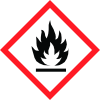
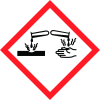
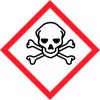

Note: Ingredients listed on restricted chemical lists
EC/CAS
108-95-2
Name of the chemical
Phenol
Concentration
N/A
General Information
Revision date
2021-03-07
Product name
Ninhydrin Test Kit
Icons in SDS


Company Information
company name
AnaSpec, Inc
e-mail address of the competent person responsible for the Safety Data Sheet
service@anaspec.com
GHS Information
Signal word
Danger
Hazard Codes
Hazard statements (CLP)
H225, H301, H301+H311, H311, H314, H318, H330, H341, H373, H402, H412
Hazard statements
Code
Statements
H225
Highly Flammable liquid and vapour
Section 2
SECTION 2: Hazards identification
NFPA Rating Emergency Overview: We do recommend handling all chemicals with caution. Use proper protective equipment when handling chemicals. To our knowledge, the hazards of this material have not been thoroughly investigated.
Classification according to GHS
H225 Flammable liquid (Category 2) H301 Acute Toxicity, Oral (Category 3) H330 Acute Toxicity, Inhalation (Category 2) H311 Acute Toxicity, Dermal (Category 3) H314 Skin corrosion (Category 3) H318 Serious Eye damage (Category 1) H341 Germ cell mutagenicity (Category 2) H373 Specific target organ toxicity- repeated exposure (Category 2) H402 Acute aquatic toxicity (Category 3) H412 Chronic aquatic toxicity (Category 3)
Signal word
DANGER
Hazard statements
Symbol/Pictogam H225 Flammable liquid and vapor. H301+H311 Toxic if swallowed or in contact with skin. H314 Causes severe skin burns and eye damage. H330 Fatal if inhaled. H341 Suspected of causing genetic defects. H373 May cause damage to organs through prolonged or repeated exposure. H412 Harmful to aquatic life with long lasting effects.
Precautionary statements
P210 Keep away from heat/sparks open flames/hot surfaces. –No smoking. P233 Keep containers tightly closed. P240 Ground/bond containers and receiving equipments. P241 Use explosion-proof electrical/ventilating/lighting/equipment. P243 Take precautionary measures against static discharge. P260 Do not breathe dust/fume/gas/mist/vapours/spray. P264 Wash skin thoroughly after handling. P271 Use only outdoors or in a well-ventilated area. P273 Avoid release to the environment. P280 Wear protective gloves/protective clothing/eye protection/ face protection. P284 Wear respiratory protection. P301, P330, IF SWALLOWED: rinse mouth. Do not induce vomiting. P331P303, P361,P353 IF ON SKIN: Remove/Take off immediately all contaminated clothing. Rinse skin with water/shower. P304, P340 IF INHALED: Remove victim to fresh air and keep at rest in a position comfortable for breathing. P305, P351, P338 IF IN EYES: Rinse cautiously with water for several minutes. Remove contact lenses, if present and easy to do. Continue rinsing. P310 Immediately call a POISON CENTER or doctor/physician. P361 Remove/take off immediately all contaminated clothing. P370, P378 In case of fire: Use dry sand, dry chemical or alcohol-resistant foam for extinction. P403, P233 Store in well-ventilated place. Keep containers tightly closed. P405 Store locked up. P501 Dispose of contents/containers to an approved waste disposal plant.
Potential health effects
for Inhalation: If inhaled, remove to fresh air. If not breathing, give artificial respiration. If breathing is difficult, give oxygen. Good hygiene practice requires that exposure be kept to a minimum and that suitable control measures be used in an occupational setting. Ingestion: If swallowed, wash out mouth with water provided person is conscious. Call a physician. Skin: In case of contact, immediately wash skin with soap and copious amount of water. Eyes: In case of contact, immediately flush eyes with copious amounts of water for at least 15 minutes. Chronic Exposures: No information available. We recommend limiting prolonged exposure. Target Organs: No information available
Health hazards
3 Flammability: 3 Reactivity Hazard: 0 3 Fire: 3 Reactivity Hazard: 0



