




Note: Ingredients listed on restricted chemical lists
EC/CAS
13674-84-5
Name of the chemical
Tris(2-chloro-1-methylethyl) phosphate
Concentration
N/A
EC/CAS
101-68-8
Name of the chemical
4,4’-Methylenediphenyl diisocyanate
Concentration
N/A
EC/CAS
7727-37-9
Name of the chemical
Nitrogen N2
Concentration
N/A
EC/CAS
29118-24-9
Name of the chemical
(E)-1,3,3,3-Tetrafluoro-1-propene
Concentration
N/A
EC/CAS
237-158-7
Name of the chemical
Tris(2-chloro-1-methylethyl) phosphate (TCPP)
Concentration
N/A
EC/CAS
202-966-0
Name of the chemical
4,4'-Methylendiphenyldiisocyanat 2,2'-Methylendiphenyldiisocyanat 2,4'-Methylendiphenyldiisocyanat Methylendiphenyldiisocyanat (790/2009)
Concentration
N/A
EC/CAS
231-783-9
Name of the chemical
Nitrogen N2
Concentration
N/A
General Information
Revision date
2021-01-07
Product name
Alumasc Fleece Back Spray Adhesive
supplier name
Alumasc Building Products Ltd
Emergency telephone
01744 648 400 - (Mon-Thurs – 08.30-17.00 Fri – 08.30-16.00
Icons in SDS
Company Information
company name
Alumasc Building Products Ltd
e-mail address of the competent person responsible for the Safety Data Sheet
technical@alumascroofing.com
GHS Information
Signal word
Danger
Hazard Codes
Hazard statements (CLP)
H280, H315, H317, H319, H334, H351
Hazard statements
Code
Statements
H280
Contains gas under pressure; may explode if heated
Section 2
EU Classification
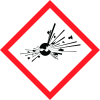
Regulation (EU) No. 1272/2008 [CPL] and amendments[1] H334 - Respiratory Sensitizer Category 1, H315 - Skin Corrosion/Irritation Category 2, H319 - Eye Irritation Category 2, H280 - Gas under Pressure (Compressed gas), H317 - Skin Sensitizer Category 1, H351 - Carcinogenicity Category 2. Legend: 1. Classified by Chemwatch; 2. Classification drawn from Regulation (EU) No 1272/2008 - Annex VI. 2.2 Labelling according to Regulation (EU) 1272/2008 Hazard pictures:
Signal word
Danger.
Hazard statements
H334: May cause allergy or asthma symptoms or breathing difficulties if inhaled. H315: Causes skin irritation. H319: Causes serious eye irritation. H280: Contains gas under pressure; may explode if heated. H317: May cause an allergic skin reaction. H351: Suspected of causing cancer.
Supplemental label elements
EUH044: Risk of explosion if heated under confinement. EUH204: Contains isocyanates. May produce an allergic reaction.
Precautionary statements
P201: Obtain special instructions before use. P304+P340 IF INHALED Remove person to fresh air and keep comfortable for breathing P405: Store locked up. P501: Dispose of contents/container to authorised hazardous or special waste
Prevention
P210: Keep away from heat, hot surfaces, sparks, open flames and other ignition sources. No smoking. P261: Avoid breathing gas. P280: Wear protective gloves/protective clothing/eye protection/face protection/ hearing protection. P284: In case of inadequate ventilation] wear respiratory protection. P272: Contaminated work clothing should not be allowed out of the workplace. P251: Do not pierce or burn, even after use. P271: Use only outdoors or in a well-ventilated area.
Response
P308+P313 IF exposed or concerned Get medical advice/ attention P342+P311 If experiencing respiratory symptoms Call a POISON CENTER/doctor/ physician/first aider. P302+P352 IF ON SKIN Wash with plenty of water and soap P305+P351+P338 IF IN EYES Rinse cautiously with water for several minutes. Remove contact lenses, if present and easy to do. Continue rinsing. P333+P313 If skin irritation or rash occurs Get medical advice/attention P337+P313 If eye irritation persists Get medical advice/attention P362+P364: Take off contaminated clothing and wash it before reuse.
Storage
P410+P403: Protect from sunlight. Store in a well ventilated place.
Disposal
collection point in accordance with any local regulation.
2.3 Other hazards
4,4'-Diphenylmethane Diisocyanate (MDI): Listed in the Europe Regulation (EC) No 1907/2006 - Annex XVII (Restrictions may apply). Methyl Ethyl Ketone: Listed in the Europe Regulation (EC) No 1907/2006 - Annex XVII (Restrictions may apply).


