



General Information
Revision date
2018-09-05
Product name
CYCLOHEXANONE
Product Synonyms
pennyroyal oil; Cat. No. 14033; Airex 930; Screen Opener Aerosol; OCD Thinner; Product Code: 8.22269
Chemical name
cyclohexanone
CAS No.
108-94-1
1.2.1 Relevant identified uses
production of adipic acid and caprolactam; production of polymers and resins. Reagent chemical. Used in wood stains; paint varnish and spot remover; degreasing of metals, polishes; textile dyeing and processing and in lubricating oil additives. Occurs naturally in the herb Pennyroyal
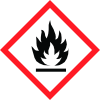
Icons in SDS


Company Information
company name
ALPHA CHEMICALS PTY LTD
e-mail address of the competent person responsible for the Safety Data Sheet
shane@alphachem.com.au
GHS Information
Signal word
Danger
Hazard Codes
Hazard statements (CLP)
H226, H302, H304, H312, H319, H332, H361d
Hazard statements
Code
Statements
H226
Flammable liquid and vapour
Section 2
2.1 Classification of the substance or mixture
HAZARDOUS CHEMICAL. DANGEROUS GOODS. According to the WHS Regulations and the ADG Code. ChemWatch Hazard Ratings Min Max Flammability 2 Toxicity 2 0 = Minimum Body Contact 2 1 = Low Reactivity 1 2 = Moderate 3 = High Chronic 2 4 = Extreme Poisons Schedule Not Applicable [1] Flammable Liquid Category 3, Acute Toxicity (Oral) Category 4, Acute Toxicity (Dermal) Category 4, Acute Toxicity (Inhalation) Category 4, Eye Irritation Category 2A, Reproductive Toxicity Category 2, Aspiration Hazard Category 1 Legend: 1. Classified by Chemwatch; 2. Classification drawn from HCIS; 3. Classification drawn from Regulation (EU) No 1272/2008 - Annex VI
2.2 Label elements
Page 1 continued...
Signal word
Danger
Hazard statements
H226 Flammable liquid and vapour. H302 Harmful if swallowed. H312 Harmful in contact with skin. H332 Harmful if inhaled. H319 Causes serious eye irritation. H361d Suspected of damaging the unborn child. H304 May be fatal if swallowed and enters airways.
Prevention
P201 Obtain special instructions before use. P210 Keep away from heat, hot surfaces, sparks, open flames and other ignition sources. No smoking. P233 Keep container tightly closed. P271 Use only outdoors or in a well-ventilated area. P280 Wear protective gloves, protective clothing, eye protection and face protection. P240 Ground and bond container and receiving equipment. P241 Use explosion-proof electrical/ventilating/lighting/intrinsically safe equipment. P242 Use non-sparking tools.
Response
P301+P310 IF SWALLOWED: Immediately call a POISON CENTER/doctor/physician/first aider. P308+P313 IF exposed or concerned: Get medical advice/ attention. P331 Do NOT induce vomiting. P370+P378 In case of fire: Use alcohol resistant foam or normal protein foam to extinguish. P305+P351+P338 IF IN EYES: Rinse cautiously with water for several minutes. Remove contact lenses, if present and easy to do. Continue rinsing. P337+P313 If eye irritation persists: Get medical advice/attention. P301+P312 IF SWALLOWED: Call a POISON CENTER/doctor/physician/first aider if you feel unwell. P302+P352 IF ON SKIN: Wash with plenty of water.
Storage
P403+P235 Store in a well-ventilated place. Keep cool. P405 Store locked up.
Disposal
P501 Dispose of contents/container to authorised hazardous or special waste collection point in accordance with any local regulation.



