



Note: Ingredients listed on restricted chemical lists
EC/CAS
150-76-5
Name of the chemical
Mequinol
Concentration
N/A
EC/CAS
205-769-8
Name of the chemical
Hydroquinone methylether/Mequinol
Concentration
N/A
General Information
Revision date
2021-02-02
Product name
Acrylic acid
CAS No.
79-10-7
Emergency telephone
Department
Icons in SDS
Company Information
company name
Alfa Aesar
e-mail address of the competent person responsible for the Safety Data Sheet
uktech@alfa.com
GHS Information
Signal word
Danger
Hazard Codes
Hazard statements (CLP)
H226, H302, H302+H312+H332, H312, H314, H318, H332, H335, H400
Hazard statements
Code
Statements
H226
Flammable liquid and vapour
Section 2
Physical hazards
Flammable liquids Category 3 (H226)
Health hazards
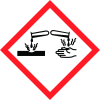
Acute oral toxicity Category 4 (H302) Acute dermal toxicity Category 4 (H312) Acute Inhalation Toxicity - Vapors Category 4 (H332) Skin Corrosion/Irritation Category 1 A (H314) Serious Eye Damage/Eye Irritation Category 1 (H318) Specific target organ toxicity - (single exposure) Category 3 (H335)
Environmental hazards
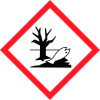
Acute aquatic toxicity Category 1 (H400)
Hazard statements
see section 16 H226 - Flammable liquid and vapor H314 - Causes severe skin burns and eye damage H335 - May cause respiratory irritation H400 - Very toxic to aquatic life H302 + H312 + H332 - Harmful if swallowed, in contact with skin or if inhaled
Signal word
Danger
Precautionary statements
P280 - Wear protective gloves/protective clothing/eye protection/face protection P301 + P330 + P331 - IF SWALLOWED: rinse mouth. Do NOT induce vomiting P302 + P350 - IF ON SKIN: Gently wash with plenty of soap and water P305 + P351 + P338 - IF IN EYES: Rinse cautiously with water for several minutes. Remove contact lenses, if present and easy to do. Continue rinsing P310 - Immediately call a POISON CENTER or doctor/physician P210 - Keep away from heat, hot surfaces, sparks, open flames and other ignition sources. No smoking P304 + P340 - IF INHALED: Remove victim to fresh air and keep at rest in a position comfortable for breathing
2.3 Other hazards
Substance is not considered persistent, bioaccumulative and toxic (PBT) / very persistent and very bioaccumulative (vPvB) Stench Toxic to terrestrial vertebrates



