

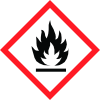


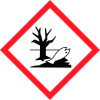
General Information
Version
AD59 ROKET BLASTER
Revision date
2015-07-27
Product name
N HEPTANE
Product name
N HEPTANE
Identification on the label/Trade name
Roket Blaster HEPTYL HYDRIDE,DIPROPYL METHANE
CAS No.
142-82-5
REACH No
01-2119457603-38-XXXX
1.2.1 Relevant identified uses
Manufacture of substance Use as an intermediate Distribution of substance Formulation &
supplier name
ALCOHOLS
Emergency telephone
+44 (0)1256 883 966, 44 (0) 1279 - 757613, +44(0) 1270 502891
Icons in SDS


Company Information
company name
ALCOHOLS
e-mail address of the competent person responsible for the Safety Data Sheet
msds@alcohols.co.uk, info@deluxematerials.com
GHS Information
Signal word
Danger
Hazard Codes
Hazard statements (CLP)
H225, H304, H315, H336, H400, H410
Hazard statements
Code
Statements
H225
Highly Flammable liquid and vapour
Section 2
SECTION 2: Hazards identification
Emergency telephone +44(0) 1270 502891 2.1. Classification of the substance or mixture Classification Mixture
Physical hazards
2.1. Classification of the Flam. Liq. 2 - H225 or mixture
2.1 Classification of the substance or mixture
SECTION 2: Hazards identification Classification Mixture Physical hazards 2.1. Classification of the substance or mixture Flam. Liq. 2 - H225 Classification Health hazards Skin Irrit. 2 - H315 Asp. Tox. 1 - H304 STOT SE 3 - H336 Physical hazards Environmental hazards Flam. Liq. 2 - H225 Aquatic Acute 1 - H400 Aquatic Chronic 1 - H410 Health hazards Skin Irrit. 2 - H315 Asp. Tox. 1 - H304 STOT SE 3 - H336 Environmental hazards Aquatic Acute 1 - H400 Aquatic Chronic 1 - H410 Classification (67/548/EEC or F;R11 Xn;R65 Xi;R38 R67 N;R50/53 1999/45/EC) Human health Splashes in the eyes may cause redness and irritation. Irritating to skin. Product has a defatting effect on skin. Prolonged or repeated contact with skin may cause irritation, redness and dermatitis. Spray mists irritate the respiratory system, and cause coughing and difficulties in breathing. In high concentrations, vapours may be irritating to the respiratory system. In high concentrations, vapours and spray mists are narcotic and may cause headache, fatigue, dizziness and nausea. In case of overexposure, organic solvents may depress the central nervous system causing dizziness and intoxication, and at very high concentrations unconsciousness and death. Droplets of the product aspirated into the lungs through ingestion or vomiting may cause a serious chemical pneumonia. May cause sensitisation or allergic reactions in sensitive individuals. Environmental The product contains a substance which is very toxic to aquatic organisms and which may cause long-term adverse effects in the aquatic environment. Physicochemical The product is highly flammable, and explosive vapours/air mixtures may be formed even at normal room temperatures. Vapours are heavier than air and may travel along the floor and accumulate in the bottom of containers. Vapours may be ignited by a spark, a hot surface or an ember.
Health hazards
Skin Irrit. 2 - H315 Asp. Tox. 1 - H304 STOT SE 3 - H336
Environmental hazards
Aquatic Acute 1 - H400 Aquatic Chronic 1 - H410 Classification (67/548/EEC or F;R11 Xn;R65 Xi;R38 R67 N;R50/53 1999/45/EC) Human health Splashes in the eyes may cause redness and irritation. Irritating to skin. Product has a defatting effect on skin. Prolonged or repeated contact with skin may cause irritation, redness and dermatitis. Spray mists irritate the respiratory system, and cause coughing and difficulties in breathing. In high concentrations, vapours may be irritating to the respiratory system. In high concentrations, vapours and spray mists are narcotic and may cause headache, fatigue, dizziness and nausea. In case of overexposure, organic solvents may depress the central nervous system causing dizziness and intoxication, and at very high concentrations unconsciousness and death. Droplets of the product aspirated into the lungs through ingestion or vomiting may cause a serious chemical pneumonia. May cause sensitisation or allergic reactions in sensitive individuals Environmental The product contains a substance which is very toxic to aquatic organisms and which may cause long-term adverse effects in the aquatic environment Physicochemical The product is highly flammable, and explosive vapours/air mixtures may be formed even at normal room temperatures. Vapours are heavier than air and may travel along the floor and accumulate in the bottom of containers. Vapours may be ignited by a spark, a hot surface or an ember
2.2 Label elements
EC number 205-563-8
Signal word
Danger
Hazard statements
H225 Highly flammable liquid and vapour. H304 May be fatal if swallowed and enters airways. H315 Causes skin irritation. H336 May cause drowsiness or dizziness. H400 Very toxic to aquatic life. H410 Very toxic to aquatic life with long lasting effects. P241 Use explosion-proof electrical/ventilating/lighting/…/equipment. P242 Use only non-sparking tools. P261 Avoid breathing dust/fume/gas/mist/vapours/spray. P264 Wash … thoroughly after handling. P271 Use only outdoors or in a well-ventilated area. P280 Wear protective gloves/protective clothing/eye protection/face protection. P301+P310 IF SWALLOWED: Immediately call a POISON CENTER/doctor. P302+P352 IF ON SKIN: Wash with plenty of water. P303+P361+P353 IF ON SKIN (or hair): Take off immediately all contaminated clothing. Rinse skin with water/shower. P304+P340 IF INHALED: Remove person to fresh air and keep comfortable for breathing. P312 Call a POISON CENTER/doctor if you feel unwell. P321 Specific treatment (see … on this label). P331 Do NOT induce vomiting. P332+P313 If skin irritation occurs: Get medical advice/attention. P362 Take off contaminated clothing. P370+P378 In case of fire: Use … for extinction. P391 Collect spillage. P403+P233 Store in a well-ventilated place. Keep container tightly closed. P403+P235 Store in a well-ventilated place. Keep cool. P405 Store locked up.
Precautionary statements
P210 Keep away from heat, hot surfaces, sparks, open flames and other ignition sources. No smoking. P240 Ground/bond container and receiving equipment. P243 Take precautionary measures against static discharge. P273 Avoid release to the environment. Dispose of contents / container via a licensed waste contractor
Supplemental label elements
P233 Keep container tightly closed.
2.3 Other hazards
This substance is not classified as PBT or vPvB according to current EU criteria.



