

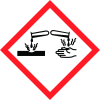
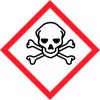
Note: Ingredients listed on restricted chemical lists
EC/CAS
7664-39-3
Name of the chemical
Hydrofluoric acid, its normal salts, its complexes and hydrofluorides with the exception of those given in Annex III
Concentration
N/A
EC/CAS
7732-18-5
Name of the chemical
Water, distilled, conductivity or of similar purity H2O
Concentration
N/A
General Information
Revision date
2021-01-04
Product name
RUSTEX
1.2.1 Relevant identified uses
Dissolves rust stains in carpets and rugs
supplier name
Agar Cleaning Systems Pty. Ltd
Icons in SDS


Company Information
company name
Agar Cleaning Systems Pty. Ltd
e-mail address of the competent person responsible for the Safety Data Sheet
sales@agar.com.au
GHS Information
Signal word
Danger
Hazard Codes
Hazard statements (CLP)
H290, H301, H311, H314, H331
Hazard statements
Code
Statements
H290
May be corrosive to metals
Section 2
Hazard statements
This product is classified as hazardous according to the criteria of SWA. Dangerous Good according to Australian Dangerous Goods (ADG) Code, IATA or IMDG/IMSBC criteria. H290: May be corrosive to metals. H301: Toxic if swallowed. H311: Toxic in contact with skin. H331: Toxic if inhaled. H314: Causes severe skin burns and eye damage.
SUSMP Classification
S6
ADG classification
Class 8 Corrosive Substances. Subsidiary Risk Class 6.1 Toxic substances
UN Number
1790, HYDROFLUORIC ACID, with not more than 60% hydrogen fluoride
Signal word
DANGER Corrosive to Metals – Category 1 Acute Toxicity (Oral) – Category 3 Acute Toxicity (Dermal) – Category 3 Acute Toxicity (Inhalation) – Category 3 Skin Corrosion/Irritation - Category 1 Serious eye damage - Category 1
Prevention
P102: Keep out of reach of children. P234: Keep only in original packaging. P260: Do not breathe mist, vapours or spray. P264: Wash contacted areas thoroughly after handling. P270: Do not eat, drink or smoke when using this product. P271: Use only outdoors or in a well-ventilated area. P280: Wear protective gloves, protective clothing and eye or face protection. Page 2 of 7
Response
P310: Immediately call a POISON CENTRE or doctor. P301+P330+P331 IF SWALLOWED Rinse mouth. Do NOT induce vomiting P302+P352 IF ON SKIN Wash with plenty of water P321: Specific treatment with calcium gluconate gel. See Section 4 of this SDS. P361+P364: Take off immediately all contaminated clothing and wash it before reuse. P304+P340 IF INHALED Remove person to fresh air and keep comfortable for breathing P305+P351+P338 IF IN EYES Rinse cautiously with water for several minutes. Remove contact lenses, if present and easy to do. Continue rinsing. P390: Absorb spillage to prevent material damage.
Storage
P403+P233: Store in a well-ventilated place. Keep container tightly closed. P405: Store locked up.
Disposal
P501: If they can not be recycled, dispose of contents to an approved waste disposal plant and containers to landfill (see Section 13 of this SDS). Emergency Overview Physical Description & Colour: Clear, colourless liquid. Odour: Faint pungent acid odour. Avoid inhaling this product.
Health hazards
Toxic if swallowed, in contact with skin and if inhaled. Causes severe skin burns and eye damage. Hydrofluoric acid burns are a unique clinical entity. Dilute solutions deeply penetrate before dissociating, thus causing delayed injury and symptoms. Burns to the fingers and nail beds may leave the overlying nails intact. Severe burns occur after exposure of concentrated (i.e., 50% or stronger solution) Hydrofluoric acid to 1% or more body surface area (BSA), exposure to Hydrofluoric acid of any concentration to 5% or more BSA, or inhalation of Hydrofluoric acid fumes from a 60% or stronger solution. The vast majority of cases involve only small areas of exposure, usually on the digits. Solutions of less than 7% may take several hours before onset of symptoms, resulting in delayed presentation, deeper penetration of the undissociated HF acid, and a more severe burn. Pathophysiology: The 2 mechanisms that cause tissue damage are corrosive burn from the free hydrogen ions and chemical burn from tissue penetration of the fluoride ions. Fluoride ions penetrate and form insoluble salts with calcium and magnesium. Soluble salts also are formed with other cations but dissociate rapidly. Consequently, fluoride ions release, and further tissue destruction occurs. Mortality/Morbidity: Local effects include tissue destruction and necrosis. Burns may involve underlying bone. Systemic fluoride ion poisoning from severe burns is associated with hypocalcemia, hyperkalemia, hypomagnesemia, and sudden death. Deaths have been reported from concentrated acid burns to as little as 2.5% BSA. SWA has a publication available, and it can be found at https://www.safeworkaustralia.gov.au/system/files/documents/1702/hydrogenfluoride_1989pdf.pdf



