



Note: Ingredients listed on restricted chemical lists
EC/CAS
270-705-8/68476-86-8
Name of the chemical
Petroleum gases, liquefied, sweetened
Concentration
10-30%
EC/CAS
265-192-2/64742-89-8
Name of the chemical
Solvent naphtha (petroleum), light aliph
Concentration
1-5%
EC/CAS
204-658-1/123-86-4
Name of the chemical
acetic acid, butyl ester
Concentration
1-5%
General Information
Version
02
Revision date
2016-01-13
Product name
Multipurpose Primer
1.2.1 Relevant identified uses
Use as a preparatory measure whenever a quality finish is desired over metal or wood. Can beapplied to machinery, railings, electrical motors, presses, shop equipment, shelving, compressors, generators, bicycles, appliances, ladders, wood furniture, and...
Emergency telephone
+64 9 2638114
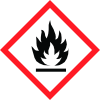
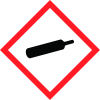
Icons in SDS


Company Information
company name
Aervoe Industries Incorporated
e-mail address of the competent person responsible for the Safety Data Sheet
mailbox@aervoe.com, Aervoe.sps@xtra.co.nz
GHS Information
Signal word
Danger
Hazard Codes
Hazard statements (CLP)
H220, H222, H225, H226, H229, H304, H319, H336, H340, H350
Hazard statements
Code
Statements
H220
Extremely flammable gas
Section 2
SECTION 2: Hazards identification
Classifications GHS HSNO
Physical hazards
Aerosol - Category 1 Flam. Gas 1 2.1.1A Flam. Liq. 2 3.1B Flam. Liq. 3 3.1C Press. Gas
Health hazards
Carc. 1B 6.7A Muta. 1B 6.6A Eye Irrit. 2 6.4A Asp. Tox. 1 6.1E STOT SE3
Environmental hazards
N/AV
Signal word
Danger
Hazard statements
H220 – Extremely flammable gas. H222 – Extremely Flammable Aerosol H225 – Highly flammable liquid and vapour. H226 – Flammable liquid and vapour. H229 - Pressurized container: may burst if heated H304 – May be fatal if swallowed and enters airways. H319 – Causes serious eye irritation. H336 – May cause drowsiness or dizziness. H340 – May cause genetic defects H350 – May cause cancer
Precautionary statements
P101 - If medical advice is needed, have product container or label at hand P102 - Keep out of reach of children P103 - Read label before use P210 - Keep away from heat/sparks/open flames/hot surfaces - no smoking P211 - Do not spray on an open flame or other ignition source P251 - Pressurized container: Do not pierce or burn, even after use P261 - Avoid breathing dust/fume/gas/mist/vapours/spray P262 - Do not get in eyes, on skin, or on clothing P264 - Wash … thoroughly after handling P280 - Wear protective gloves/eye protection/face protection P303+P361+P353 - If on skin or hair, remove/takeoff immediately all contaminated clothing. Rinse skin with water/shower. P410+P412 - Protect from sunlight. Do not expose to temperatures exceeding 50ºC/122ºF P501 - Dispose of contents/container in accordance with local/regional/national/international regulation P251 - Pressurized container: Do not pierce or burn, even after use
2.1 Classification of the substance or mixture
GHS HSNO Physical Hazards: Aerosol - Category 1 Flam. Gas 1 2.1.1A Flam. Liq. 2 3.1B Flam. Liq. 3 3.1C Press. Gas Health Hazards Carc. 1B 6.7A Muta. 1B 6.6A Eye Irrit. 2 6.4A Asp. Tox. 1 6.1E STOT SE3 Environmental Hazards: N/AV



