


Note: Ingredients listed on restricted chemical lists
EC/CAS
270-704-2/68476-85-7
Name of the chemical
Petroleum gases, liquefied
Concentration
30-60%
EC/CAS
203-777-6/110-54-3
Name of the chemical
n-Hexan (790/2009)
Concentration
<1%
General Information
Version
Centron
Revision date
2018-05-10
Product name
Centron
1.2.1 Relevant identified uses
PC35 Washing and cleaning products
supplier name
Aerosol Solutions Ltd
Icons in SDS


Company Information
company name
Aerosol Solutions Ltd
e-mail address of the competent person responsible for the Safety Data Sheet
sales@aerosolsolutions.co.uk
GHS Information
Signal word
Danger
Hazard Codes
Hazard statements (CLP)
H222, H229, H315, H336, H411
Hazard statements
Code
Statements
H222
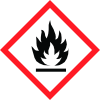
Extremely flammable aerosol
Section 2
SECTION 2: Hazards identification
Classification (EC 1272/2008) Classification of the substance or mixture Classification (EC 1272/2008)
Physical hazards
Aerosol 1 - H222, H229
Health hazards
Skin Irrit. 2 - H315 STOT SE 3 - H336
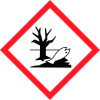
Environmental hazards
Aquatic Chronic 2 - H411 Human health Gas or vapour is harmful on prolonged exposure or in high concentrations. In high concentrations, vapours and aerosol mists have a narcotic effect and may cause headache, fatigue, dizziness and nausea. Deliberately concentrating and inhaling the contents of this container is dangerous and can be fatal Environmental The product contains a substance which is toxic to aquatic organisms and which may cause long-term adverse effects in the aquatic environment Physicochemical Aerosol containers can explode when heated, due to excessive pressure build-up. The product is extremely flammable. When sprayed on a naked flame or any incandescent material the aerosol vapours can be ignited
Signal word
Danger
Hazard statements
H222 Extremely flammable aerosol. H229 Pressurised container: may burst if heated. H315 Causes skin irritation. H336 May cause drowsiness or dizziness. H411 Toxic to aquatic life with long lasting effects.
Precautionary statements
P210 Keep away from heat, hot surfaces, sparks, open flames and other ignition sources. No smoking. P211 Do not spray on an open flame or other ignition source. P251 Do not pierce or burn, even after use. P271 Use only outdoors or in a well-ventilated area. P410+P412 Protect from sunlight. Do not expose to temperatures exceeding 50°C/122°F. P102 Keep out of reach of children. P260 Do not breathe vapour/ spray. P262 Do not get in eyes, on skin, or on clothing. P501 Dispose of contents/ container in accordance with local regulations.
Contains
HYDROCARBONS, C6-C7, n-alkanes, isoalkanes, cyclics, <5% n-hexane Detergent labelling g 30% aliphatic hydrocarbons
Other hazards
This product does not contain any substances classified as PBT or vPvB
2.1 Classification of the substance or mixture
Classification (EC 1272/2008) Physical hazards Aerosol 1 - H222, H229 Health hazards Skin Irrit. 2 - H315 STOT SE 3 - H336 Environmental hazards Aquatic Chronic 2 - H411 Human health Gas or vapour is harmful on prolonged exposure or in high concentrations. In high concentrations, vapours and aerosol mists have a narcotic effect and may cause headache, fatigue, dizziness and nausea. Deliberately concentrating and inhaling the contents of this container is dangerous and can be fatal. Environmental The product contains a substance which is toxic to aquatic organisms and which may cause long-term adverse effects in the aquatic environment. Physicochemical Aerosol containers can explode when heated, due to excessive pressure build-up. The product is extremely flammable. When sprayed on a naked flame or any incandescent material the aerosol vapours can be ignited.



