



Note: Ingredients listed on restricted chemical lists
EC/CAS
203-625-9/108-88-3
Name of the chemical
Toluene
Concentration
30-50%
EC/CAS
200-857-2/75-28-5
Name of the chemical
iso-Butan, enthält 0,1% Butadien
Concentration
1-10%
EC/CAS
203-448-7/106-97-8
Name of the chemical
n-Butan, enthält 0,1% Butadien
Concentration
1-10%
EC/CAS
128-80-3
Name of the chemical
2,2′-[Cyclohexylidenebis[(2-methyl-4,1-phenylene)azo]]bis[4-cyclohexylphenol] (Solvent Yellow 29; CI 21230) when used as a substance in hair dye products
Concentration
1-10%
General Information
Version
6.1
Revision date
2017-07-18
Product name
EASY COAT
Emergency telephone
+44 (0) 1256 854318
Icons in SDS


Company Information
company name
Advanced Engineering Ltd
e-mail address of the competent person responsible for the Safety Data Sheet
sales@advancedengineering.co.uk
GHS Information
Signal word
Danger
Hazard Codes
Hazard statements (CLP)
H222, H229, H315, H319, H336, H361d, H373
Hazard statements
Code
Statements
H222
Extremely flammable aerosol
Section 2
SECTION 2: Hazards identification
Classification under CLP Classification of the substance or mixture Classification under CLP Flam. Aerosol 1: H222; Skin Irrit. 2: H315; STOT SE 3: H336; Eye Irrit. 2: H319; Repr. 2 H361d; STOT RE 2: H373; -: EUH066; -: H229
Most important adverse effects
Repeated exposure may cause skin dryness or cracking. Extremely flammable aerosol Pressurised container: May burst if heated. Causes skin irritation. Causes serious eye irritation. May cause drowsiness or dizziness. Suspected of damaging the unborn child May cause damage to organs [nervous system] through prolonged or repeated exposure [inhalation (vapour)]
Hazard statements
* EUH066: Repeated exposure may cause skin dryness or cracking. H222: Extremely flammable aerosol. Page: 2 H229 Pressurised container May burst if heated H315: Causes skin irritation. H319: Causes serious eye irritation. H336: May cause drowsiness or dizziness. H361d: Suspected of damaging the unborn child. H373: May cause damage to organs [nervous system] through prolonged or repeated exposure [inhalation (vapour)].
Hazard pictograms
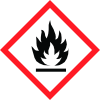
GHS02: Flame GHS07: Exclamation mark GHS08: Health hazard
Signal word
Danger
Precautionary statements
P210: Keep away from heat, hot surfaces, sparks, open flames and other ignition sources. No smoking. P211: Do not spray on an open flame or other ignition source. P251: Do not pierce or burn, even after use. P260: Do not breathe spray. P280: Wear protective gloves / protective clothing / eye protection / face protection. P304+340 IF INHALED Remove person to fresh air and keep comfortable for breathing P305+351+338 IF IN EYES Rinse cautiously with water for several minutes. Remove contact lenses, if present and easy to do. Continue rinsing. P410+412: Protect from sunlight. Do not expose to temperatures exceeding 50 ºC.
Other hazards
* Heating may cause an explosion. In use, may form flammable / explosive vapour-air mixture.
PBT Substances
This product is not identified as a PBT/vPvB substance.
2.1 Classification of the substance or mixture
Classification under CLP: Flam. Aerosol 1: H222; Skin Irrit. 2: H315; STOT SE 3: H336; Eye Irrit. 2: H319; Repr. 2: H361d; STOT RE 2: H373; -: EUH066; -: H229 Most important adverse effects: Repeated exposure may cause skin dryness or cracking. Extremely flammable aerosol. Pressurised container: May burst if heated. Causes skin irritation. Causes serious eye irritation. May cause drowsiness or dizziness. Suspected of damaging the unborn child. May cause damage to organs [nervous system] through prolonged or repeated exposure [inhalation (vapour)].



