



Note: Ingredients listed on restricted chemical lists
EC/CAS
63148-56-1
Name of the chemical
Siloxanes and Silicones, Me 3,3,3-trifluoropropyl
Concentration
47-50%
EC/CAS
77-58-7
Name of the chemical
Dibutylzinndilaurat; Dibutyl[bis(dodecanoyloxy)]stannan (2017/776)
Concentration
3-4%
EC/CAS
556-67-2
Name of the chemical
D4
Concentration
<1%
General Information
Version
3.0
Revision date
2020-04-15
Product name
SLIPS Dolphin Part B
Product Synonyms
SLIPS® Marine Paint, SLIPS® Bottom Paint, Dolphin Paint
Chemical name
Unspecified
1.2.1 Relevant identified uses
Use for creating anti-fouling lubricious surface. For professional use only
Emergency telephone
1-800-535-5053, 1-352-323-3500
Icons in SDS


Company Information
company name
Adaptive Surface Technologies
e-mail address of the competent person responsible for the Safety Data Sheet
info@adaptivesurface.tech
GHS Information
Signal word
Danger
Hazard Codes
Hazard statements (CLP)
H226, H315, H317, H318, H341, H360, H370, H372, H412
Hazard statements
Code
Statements
H226
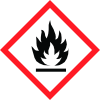
Flammable liquid and vapour
Section 2
SECTION 2: Hazards identification
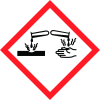
Classification (GHS-US) Classification of the substance or mixture Classification (GHS-US) Flammable Liquid Category 3 (H226) Skin Irritation Category 2 (H315) Eye Damage Category 1 (H318) Skin Sensitizer Category 1 (H317) Germ Cell Mutagen Category 2 (H341) Reproductive Toxicity Category 1B (H360) Specific Target Organ Toxicity Single Exposure Category 1 (H370) Specific Target Organ Toxicity Repeated Exposure Category 1 (H372) Aquatic Chronic Toxicity Category 3 (H412) Full text of H-phrases: see section 16
2.2 Label elements
CLP (EC No. 1272/2008)-GHS-US labeling
Signal word
Danger
Hazard statements
H226-Flammable liquid and vapor H315 - Causes skin irritation H17-May cause an allergic skin reaction H318-Causes serious eye damage H341-Suspected of causing genetic defects H360-May damage fertility or the unborn child H370-Causes damage to thymus. H372 Causes damage to thymus through prolonged or repeated exposure. H412-Harmful to aquatic life with long lasting effects
Precautionary statements
P201-Obtain special instructions before use P202- Do not handle until all safety precautions have been read and understood P210-Keep away from heat, hot surfaces, sparks, open flames and other ignition sources. No smoking. P233 Keep container tightly closed. P240 Ground and bond container and receiving equipment P241 Use explosion-proof electrical, ventilating and lighting equipment. P242 Use only non-sparking tools. P243 Take precautionary measures against static discharge. P260-Do not breathe mists, vapors or spray. P264 - Wash hands, forearms, and exposed areas thoroughly after handling P270-Do not eat, drink or smoke when using this product P272-Contaminated work clothing must not be allowed out of the workplace P273-Avoid release to the environment P280 - Wear eye protection, protective clothing, protective gloves. P301+P330+P331- IF SWALLOWED: Rinse mouth. Do NOT induce vomiting P303+P361+P353-IF ON SKIN(or hair): Remove immediately all contaminated clothing. Rinse skin with shower. P333+P313-If skin irritation or rash occurs: Get medical attention. P363 Wash contaminated clothing before reuse P305+P351+P338+P310- IF IN EYES: Rinse cautiously with water for several minutes. Remove contact lenses, if present and easy to do. Continue rinsing. Immediately call a POISON CENTER or doctor. P308 + P313 IF exposed or concerned: Get medical advice. P370 + P378 In case of fire: Use water spray, alcohol- resistant foams, dry chemicals or carbon dioxide to extinguish P405-Store locked up P403 + P235 Store in a well-ventilated place. Keep cool P501- Dispose of contents and container to an approved waste disposal plant
Other hazards
The hydrolysis of a component in this mixture is ethanol. Overexposure to ethanol by skin absorption, inhalation or ingestion may have a narcotic effect (headache, nausea, drowsiness)
2.1 Classification of the substance or mixture
Classification (GHS-US) Flammable Liquid Category 3 (H226) Skin Irritation Category 2 (H315) Eye Damage Category 1 (H318) Skin Sensitizer Category 1 (H317) Germ Cell Mutagen Category 2 (H341) Reproductive Toxicity Category 1B (H360) Specific Target Organ Toxicity Single Exposure Category 1 (H370) Specific Target Organ Toxicity Repeated Exposure Category 1 (H372) Aquatic Chronic Toxicity Category 3 (H412) Full text of H-phrases: see section 16



