

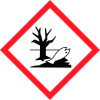


Note: Ingredients listed on restricted chemical lists
EC/CAS
68476-33-5
Name of the chemical
Fuel oil, residual
Concentration
N/A
General Information
Revision date
2024-06-13
Product name
VLFSO 0,5% S
1.2.1 Relevant identified uses
Used as marine fuel Specific restrictions on There are not known restrictions on use
supplier name
Acelen
Icons in SDS


Company Information
company name
Acelen
GHS Information
Signal word
DANGER
Hazard Codes
Hazard statements (CLP)
H227, H303, H315, H317, H332, H340, H350, H361, H373, H410
Hazard statements
Code
Statements
H227
Combustible liquid
Section 2
SECTION 2: Hazards identification
Classification of the substance or mixture Flammable Liquids - Category 4; Acute Toxicity - Oral - Category 5; Acute Toxicity - Inhalation - Category 4; Skin Corrosion/Irritation - Category 2; Skin Sensitization - Category 1; Germ Cell Mutagenicity - Category 1B; Carcinogenicity - Category 1A; Reproductive Toxicity - Category 2; Specific Target Organ Toxicity – Repeated Exposure - Category 2; Hazardous to the Aquatic Environment - Acute Hazard - Category 1; Hazardous to the Aquatic Environment - Chronic Hazard - Category 1 Classification system adopted Globally Harmonized System of Classification and Labeling of Chemicals (GHS), United Nations.
Signal word
DANGER
Hazard statements
H227 Combustible liquid. H303 May be harmful if swallowed. H315 Causes skin irritation. H317 May cause an allergic skin reaction. H332 Harmful if inhaled. H340 May cause genetic defects. H350 May cause cancer. H361 Suspected of damaging fertility or the unborn child. H373 May cause damage to the blood, to the thyme and to the liver through prolonged or repeated exposure. H410 Very toxic to aquatic life with long lasting effects. Precautionary
Prevention
P203 Obtain, read and follow all safety instructions before use. P210 Keep away from heat, hot surfaces, sparks, open flames and other ignition sources. No smoking. P260 Do not breathe dust/fume/gas/mist/vapours/spray. P261 Avoid breathing dust/fume/gas/mist/vapours/spray. P264 Wash hands thoroughly after handling. P271 Use only outdoors or in a well-ventilated area. P272 Contaminated work clothing should not be allowed out of the workplace. P273 Avoid release to the environment. P280 Wear protective gloves, protective clothing, eye protection, face protection and hearing protection. RESPONSE TO EMERGENCY: P301 + P317 IF SWALLOWED: Get medical help. P302 + P352 IF ON SKIN: Wash with plenty of water. P304 + P340 IF INHALED: Remove person to fresh air and keep comfortable for breathing. P317 Get medical help. P318 IF exposed or concerned, get medical advice. P319 Get medical help if you feel unwell. P321 Specific treatment. P332 + P317 If skin irritation occurs: Get medical help. P333 + P317 If skin irritation or rash occurs: Get medical help. P362 + P364 Take off contaminated clothing and wash it before reuse. P370 + P378 In case of fire: Use carbon dioxide (CO2), foam, water mist and powder to extinguish. P391 Collect spillage.
Storage
P403 Store in a well-ventilated place. P405 Store locked up. DISPOSITION: P501 Dispose of contents and container in accordance with local regulations.
Other hazards which do not result in classification
The material has no other hazards.
2.1 Classification of the substance or mixture
Flammable Liquids - Category 4; substance or mixture: Acute Toxicity - Oral - Category 5; Acute Toxicity - Inhalation - Category 4; Skin Corrosion/Irritation - Category 2; Skin Sensitization - Category 1; Germ Cell Mutagenicity - Category 1B; Carcinogenicity - Category 1A; Reproductive Toxicity - Category 2; Specific Target Organ Toxicity – Repeated Exposure - Category 2; Hazardous to the Aquatic Environment - Acute Hazard - Category 1; Hazardous to the Aquatic Environment - Chronic Hazard - Category 1. Classification system Globally Harmonized System of Classification and Labeling of Chemicals (GHS), United Nations. adopted



