

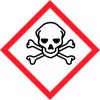

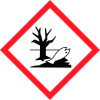
Note: Ingredients listed on restricted chemical lists
EC/CAS
200-484-5/60-57-1
Name of the chemical
Dieldrin (ISO)
Concentration
TWA
General Information
Revision date
2018-02-20
Product name
P-037NB-100
CAS No.
60-57-1
supplier name
AccuStandard, Inc
Emergency telephone
1-203-502-7070, +001-203-502-7070
Icons in SDS


Company Information
company name
AccuStandard, Inc
e-mail address of the competent person responsible for the Safety Data Sheet
edocs@accustandard.com
GHS Information
Signal word
Danger
Hazard Codes
Hazard statements (CLP)
H300, H311, H331, H335, H350, H401, H410, H413
Hazard statements
Code
Statements
H300
Fatal if swallowed
Section 2
SECTION 2: Hazards identification
2.2 Label elements
0 3 HEALTH 3 0 FLAMMABILITY - continued H413 - May cause long-term adverse effects in the aquatic environment. Precautionary Codes: P202 - This product should only by used by persons trained in the safe handling of hazardous chemicals. P233 - Store in a tightly closed container. (P404) P235 - Store in a cool dry place. P260 - Do not breathe dust. P262 - Do not get in eyes, on skin or clothing. P264 - Wash thoroughly after handling. Do not take internally. Eye wash and safety equipment should be readily available. P280 - Protective gloves must be worn to prevent skin contact. P284 - Respiratory Protection: If workplace exposure limit(s) of product or any component is exceeded (see TLV/PEL), or a risk assessment shows air-purifying respirators are appropriate, use of a NIOSH/MSHA approved air supplied respirator is advised. Use a full-face respirator with multi-purpose combination (US) or type ABEK (EN14387) respirator cartridges in absence of proper environmental control. Always use respirators and components tested and approved under appropriate government standards such as NIOSH (US) or CEN (EU). Engineering and/or administrative controls should be implemented to reduce exposure. P338 - Eye contact: Immediately flush with plenty of water. After initial flushing, remove and contact lenses and continue flushing for at least 15 minutes. Assure adequate flushing by separating the eyelids with fingers. P360 - Skin contact: Immediately wash skin with soap and plenty of water. Remove contaminated clothing. Get medical attention if symptoms occur. Wash clothing before reuse.
Signal word
Danger 0
Hazard statements
H300 - May be fatal if swallowed. (Acute toxicity, oral, category 2) H311 - Toxic if absorbed through skin. (Acute toxicity, dermal, category 3) H331 - Toxic if inhaled. (Acute toxicity, inhalation, category 3) H335 - May be irritating to mucous membrane and upper respiratory system. (Specific target organ toxicity, single exposure; Respiratory tract irritation, category 3) H350
2.3 Other hazards
2.2.1 - Symptom of Exposure Health/Environment HIGHLY TOXIC. May cause headache, dizziness, nausea, vomiting, general malaise, muscle twitching, and convulsions. May cause blood, central nervous system, kidney, and liver damage. (Specific target organ toxicity - single exposure), Category 2 Overexposure by any route to chlorinated insecticides may cause headache, nausea, vomiting, nervousness and hyperactivity, unusual sensations and fatigue. Convulsions and coma may follow. Bioaccumulation of this chemical may occur. It is strongly advised that this substance does not enter the environment. Toxic to fish and other water organisms. (H410) May cause long-term adverse effects in the aquatic environment. (H413)
Potential health effects
May be irritating to eyes. May be irritating to skin. Toxic if absorbed through skin. (Acute toxicity, dermal, category 3) Readily absorbed through skin. May be irritating to mucous membrane and upper respiratory system. (Specific target organ toxicity, single exposure; Respiratory tract irritation, category 3) Toxic if inhaled. (Acute toxicity, inhalation, category 3) May be fatal if swallowed. (Acute toxicity, oral, category 2) 2.2.3 - Routes of Entry Inhalation, ingestion or skin contact. - continued
Other hazards
continued 2.2.4 - Carcinogenicity



