

Note: Ingredients listed on restricted chemical lists
EC/CAS
1303-86-2
Name of the chemical
Dibortrioxid (790/2009)
Concentration
N/A
EC/CAS
215-125-8
Name of the chemical
Dibortrioxid (790/2009)
Concentration
N/A
General Information
Product name
BOROKSİT
Substance name
Diboron trioxide
Product Synonyms
Boron trioxide, diboron trioxide, anhydrous boric acid, boric oxide
CAS No.
1303-86-2
REACH No
01-2119486655-24-0003
1.2.2. Uses advised against
Not applicable, there are no uses of Boroksit advised against
Manufacturer Name
ETİ MADEN İŞLETMELERİ GENEL MÜDÜRLÜĞÜ
Icons in SDS
Company Information
company name
AB ETIPRODUCTS OY
e-mail address of the competent person responsible for the Safety Data Sheet
sales@etiproducts.com
GHS Information
Signal word
Danger
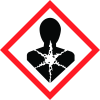
Hazard Codes
Hazard statements (CLP)
H360FD
Hazard statements
Code
Statements
H360FD
May damage fertility; May damage the unborn child
Section 2
CLP CLASSIFICATION
Harmonized classification provided in the 1st ATP to CLP (Regulation EC N° 790/2009) Repr. Cat. 1B; H360FD Specific concentrations limits : Repr. 1B; H360FD: C ≥3.1%
Prevention
P201; P202; P280
Response
P308+P313
Storage
P405
Precautionary statements
Disposal : P501 P201 : Obtain special instruction before use. P202 : Do not handle until all safety precautions have been read and understood. P280 : Wear protective gloves/protective clothing/eye protection/face protection. P308+P313 IF exposed or concerned Get medical advice/attention P405 : Store locked up. 2.2.2. According to REACH, Annex XVII Restricted to professional users
Additional information
For the full text of Hazard Class/Statements and Precautionary Statements see SECTION 16.3.
2.2 Label elements
2.2.1. Label according to Regulation (EC) N°1272/2008 (CLP)
Signal word
Danger
Hazard statements
H360FD May damage fertility or the unborn child
2.3 Other hazards
Emergency overview Boroksit is a white odourless, solid (glassy/porous) substance that is not flammable, combustible or explosive, and has low acute oral and dermal toxicity.
Potential health effects
Inhalation is the most significant route of exposure in occupational and other settings. Dermal exposure is not usually a concern because Boroksit is poorly absorbed through intact skin. Inhalation Occasional mild irritation effects to nose and throat may occur from inhalation of Boroksit dusts at levels higher than 10 mg/m3. Eye contact Boroksit is non-irritating to eyes in normal industrial use. Skin contact Boroksit does not cause irritation to intact skin. Ingestion Products containing Boroksit are not intended for ingestion. Boroksit has low acute toxicity. Small amounts (e.g. a teaspoon) swallowed accidentally are not likely to cause effects; swallowing amounts larger than that may cause gastrointestinal symptoms. Reproductive/developmental Animal ingestion studies in several species, at high doses, indicate that borates cause reproductive and developmental effects [1]. A human study of occupational exposure to borate dust showed no adverse effect on reproduction. An epidemiological study and a peer reviewing report of the past epidemiological studies conducted in China didn’t show any negative effect of boron on human fertility [2]. A study conducted in Turkey with boron exposed mine workers showed that mean blood concentrations of the high exposure group is ~6 times and ~9 times lower than those of the highest no effect level of boron in blood with regard to developmental and reprotoxic effects (respectively) in rats. With those findings, no unfavourable effects of boron exposure on reproductive indicators are observed in humans [3, 4]. Potential ecological effects Large amounts of Boroksit can be harmful to plants and other species. Therefore releases to the environment should be minimized. Signs and symptoms of exposure Symptoms of accidental over-exposure to Boroksit have been associated with ingestion or absorption through large areas of damaged skin. These may include nausea, vomiting, and diarrhoea, with delayed effects of skin redness and peeling (see SECTION 11).



