



Note: Ingredients listed on restricted chemical lists
EC/CAS
204-402-9/120-51-4
Name of the chemical
Benzyl benzoate
Concentration
26.5 - 53.038
EC/CAS
202-860-4/100-52-7
Name of the chemical
benzaldehyde
Concentration
2.7 - 5.3
EC/CAS
202-859-9/100-51-6
Name of the chemical
Benzyl Alcohol
Concentration
1.5 - 3
EC/CAS
232-433-8/8008-57-9
Name of the chemical
Citrus aurantium amara and dulcis peel oil (40)
Concentration
1.3 - 2.55
EC/CAS
201-134-4/78-70-6
Name of the chemical
1,6-Octadien-3-ol, 3,7-dimethyl
Concentration
1 - 2
EC/CAS
203-341-5/105-87-3
Name of the chemical
2,6-Octadien-1-ol, 3,7-dimethyl-,1-acetate, (2E)- (40)
Concentration
0.6 - 1.25
EC/CAS
204-642-4/123-68-2
Name of the chemical
Allyl hexanoate
Concentration
0.5 - 1
EC/CAS
202-589-1/97-53-0
Name of the chemical
eugenol
Concentration
0.4 - 0.7
EC/CAS
204-589-7/122-99-6
Name of the chemical
2-Phenoxyethanol
Concentration
0.3 - 0.5
EC/CAS
245-843-7/23726-92-3
Name of the chemical
(Z)-1-(2,6,6-trimethyl-1-cyclohexen-1-yl)-2-buten-1-one (16) (38)
Concentration
0.3 - 0.5
EC/CAS
205-500-4/141-78-6
Name of the chemical
acetic acid, ethyl ester
Concentration
0.2 - 0.3
EC/CAS
203-375-0/106-22-9
Name of the chemical
Citronellol/ (±) 3,7-Dimethyl-6-octen-1-ol
Concentration
0.2 - 0.3
EC/CAS
224-052-0/4180-23-8
Name of the chemical
1-Methoxy-4-(1E)-1-propen-1-yl-benzene (trans-Anethole) (40)
Concentration
0.1 - 0.2
EC/CAS
203-956-9/112-30-1
Name of the chemical
1-decanol
Concentration
0 - 0.0056
EC/CAS
205-550-7/142-62-1
Name of the chemical
hexanoic acid
Concentration
0 - 0.0001
General Information
Version
2.0
Revision date
2025-04-03
Product name
BLACK CHERRY
1.2.1 Relevant identified uses
Professional use,Industrial use Industrial/Professional use spec Industrial
Icons in SDS


Company Information
company name
2_HEADER_HAZARD_IDENTIFICATION
GHS Information
Signal word
Warning
Hazard Codes
Hazard statements (CLP)
H302, H315, H317, H319, H361, H400, H410, H411
Hazard statements
Code
Statements
H302
Harmful if swallowed
Section 2
SECTION 2: Hazards identification
According to Regulation (EC) No. 1272/2008 (CLP) Classification of the substance or mixture
Adverse physicochemical, human health and environmental effects
Suspected of damaging fertility or the unborn child. Harmful if swallowed. Causes skin irritation. Causes serious eye irritation. Very toxic to aquatic life. Toxic to aquatic life with long lasting effects. May cause an allergic skin reaction
Hazard pictograms
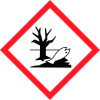
GHS07 GHS08 GHS09
Signal word
Warning
Contains
benzyl benzoate; benzaldehyde; Oxypheylon (Raspberry ketone) crystals; benzyl alcohol; Orange oil ; Aldehyde C-16; Linalool; para-Tolyl aldehyde; Geranyl acetate; Ethyl maltol; Allyl caproate; Eugenol; Cyclamal; Damascone Beta; Citronellol Pure; Liffarome; trans- Anethole
Hazard statements
H302 - Harmful if swallowed. H315 - Causes skin irritation. H317 - May cause an allergic skin reaction. H319 - Causes serious eye irritation. H361 - Suspected of damaging fertility or the unborn child. H410 - Very toxic to aquatic life with long lasting effects.
Precautionary statements
P201 - Obtain special instructions before use. P202 - Do not handle until all safety precautions have been read and understood. P261 - Avoid breathing dust/fume/gas/mist/vapours/spray. P264 - Wash hands, forearms and face thoroughly after handling. P270 - Do not eat, drink or smoke when using this product. P272 - Contaminated work clothing should not be allowed out of the workplace.
Additional information
For professional users only.
2.3 Other hazards
Contains no PBT and/or vPvB substances ≥ 0.1% assessed in accordance with REACH Annex XIII The mixture does not contain substance(s) included in the list established in accordance with Article 59(1) of REACH for having endocrine disrupting properties, or substance(s) are not identified as having endocrine disrupting properties in accordance with the criteria set out in Commission Delegated Regulation (EU) 2017/2100 or Commission Regulation (EU) 2018/605 at a concentration equal to or greater than 0,1 %
2.1 Classification of the substance or mixture
Classification according to Regulation (EC) No. 1272/2008 [CLP] Acute toxicity (oral), Category 4 H302 Skin corrosion/irritation, Category 2 H315 Serious eye damage/eye irritation, Category 2 H319 Skin sensitisation, Category 1 H317 Reproductive toxicity, Category 2 H361 Hazardous to the aquatic environment – Acute Hazard, H400 Category 1 Hazardous to the aquatic environment – Chronic Hazard, H411 Category 2 Full text of H- and EUH-statements: see section 16 Adverse physicochemical, human health and environmental effects Suspected of damaging fertility or the unborn child. Harmful if swallowed. Causes skin irritation. Causes serious eye irritation. Very toxic to aquatic life. Toxic to aquatic life with long lasting effects. May cause an allergic skin reaction. 2.2. Label elements Labelling according to Regulation (EC) No. 1272/2008 [CLP] Hazard pictograms (CLP) : GHS07 GHS08 GHS09 Signal word (CLP) : Warning Contains : benzyl benzoate; benzaldehyde; Oxypheylon (Raspberry ketone) crystals; benzyl alcohol; Orange oil ; Aldehyde C-16; Linalool; para-Tolyl aldehyde; Geranyl acetate; Ethyl maltol; Allyl caproate; Eugenol; Cyclamal; Damascone Beta; Citronellol Pure; Liffarome; trans- Anethole Hazard statements (CLP) : H302 - Harmful if swallowed. H315 - Causes skin irritation. H317 - May cause an allergic skin reaction. H319 - Causes serious eye irritation. H361 - Suspected of damaging fertility or the unborn child. H410 - Very toxic to aquatic life with long lasting effects. Precautionary statements (CLP) : P201 - Obtain special instructions before use. P202 - Do not handle until all safety precautions have been read and understood. P261 - Avoid breathing dust/fume/gas/mist/vapours/spray. P264 - Wash hands, forearms and face thoroughly after handling. P270 - Do not eat, drink or smoke when using this product. P272 - Contaminated work clothing should not be allowed out of the workplace. Extra phrases : For professional users only. 2.3. Other hazards Contains no PBT and/or vPvB substances ≥ 0.1% assessed in accordance with REACH Annex XIII The mixture does not contain substance(s) included in the list established in accordance with Article 59(1) of REACH for having endocrine disrupting properties, or substance(s) are not identified as having endocrine disrupting properties in accordance with the criteria set out in Commission Delegated Regulation (EU) 2017/2100 or Commission Regulation (EU) 2018/605 at a concentration equal to or greater than 0,1 % SECTION 3: Composition/information on ingredients 3.1. Substances Not applicable 3.2. Mixtures Name Product identifier % Classification according to Regulation (EC) No. 1272/2008 [CLP] benzyl benzoate CAS-No.: 120-51-4 26.5 – 53.038 Acute Tox. 4 (Oral), H302 EC-No.: 204-402-9 Aquatic Acute 1, H400 EC Index-No.: 607-085-00-9 Aquatic Chronic 2, H411 REACH-no: 01-2119976371- 33 benzaldehyde CAS-No.: 100-52-7 2.7 – 5.3 Acute Tox. 4 (Oral), H302 substance with national workplace exposure limit(s) EC-No.: 202-860-4 Acute Tox. 4 (Inhalation), H332 (BG, FI, HU, LT, LV, PL) EC Index-No.: 605-012-00-5 Skin Irrit. 2, H315 REACH-no: 01-2119455540- Eye Irrit. 2, H319 44 Repr. 2, H361 STOT SE 3, H335 Oxypheylon (Raspberry ketone) crystals CAS-No.: 5471-51-2 2 – 4 Acute Tox. 4 (Oral), H302 EC-No.: 226-806-4 Name Product identifier % Classification according to Regulation (EC) No. 1272/2008 [CLP] beta-Ionone CAS-No.: 14901-07-6 1.6 – 3.25 Aquatic Chronic 2, H411 EC-No.: 238-969-9 Verdox CAS-No.: 88-41-5 1.5 – 3 Aquatic Chronic 2, H411 EC-No.: 201-828-7 REACH-no: 01-2119970713- 33 benzyl alcohol CAS-No.: 100-51-6 1.5 – 3 Acute Tox. 4 (Oral), H302 substance with national workplace exposure limit(s) EC-No.: 202-859-9 Acute Tox. 4 (Inhalation), H332 (BG, CZ, DE, FI, LT, LV, PL, SI, CH) EC Index-No.: 603-057-00-5 Skin Irrit. 2, H315 REACH-no: 01-2119492630- Eye Irrit. 2, H319 38 Skin Sens. 1, H317 Orange oil CAS-No.: 8008-57-9 1.3 – 2.55 Flam. Liq. 3, H226 EC-No.: 232-433-8 Skin Irrit. 2, H315 REACH-no: 01-2119493353- Skin Sens. 1, H317 35 Asp. Tox. 1, H304 Aquatic Acute 1, H400 Aquatic Chronic 2, H411 Aldehyde C-16 CAS-No.: 77-83-8 1.3 – 2.55 Skin Sens. 1B, H317 EC-No.: 201-061-8 Aquatic Chronic 2, H411 REACH-no: 01-2119967770- 28 Linalool CAS-No.: 78-70-6 1 – 2 Skin Irrit. 2, H315 EC-No.: 201-134-4 Eye Irrit. 2, H319 EC Index-No.: 603-235-00-2 Skin Sens. 1B, H317 REACH-no: 01-2119474016- 42 para-Tolyl aldehyde CAS-No.: 104-87-0 0.7 – 1.4 Acute Tox. 4 (Oral), H302 EC-No.: 203-246-9 Geranyl acetate CAS-No.: 105-87-3 0.6 – 1.25 Skin Irrit. 2, H315 EC-No.: 203-341-5 Skin Sens. 1, H317 REACH-no: 01-2119973480- Aquatic Chronic 3, H412 35 Ethyl maltol CAS-No.: 4940-11-8 0.5 – 1 Acute Tox. 4 (Oral), H302 EC-No.: 225-582-5 Allyl caproate CAS-No.: 123-68-2 0.5 – 1 Acute Tox. 3 (Oral), H301 EC-No.: 204-642-4 Acute Tox. 3 (Dermal), H311 REACH-no: 01-2119983573- Acute Tox. 3 (Inhalation), H331 26 Aquatic Acute 1, H400 Aquatic Chronic 3, H412 Benzyl acetate CAS-No.: 140-11-4 0.5 – 1 Aquatic Chronic 3, H412 substance with national workplace exposure limit(s) EC-No.: 205-399-7 (BE, DK, ES, IE, LT, LV, PT, RO) REACH-no: 01-2119638272- 42 alpha-Ionone CAS-No.: 127-41-3 0.5 – 1 Aquatic Chronic 3, H412 EC-No.: 204-841-6 REACH-no: 01-2119965149- 27 CAS-No.: 104-21-2 0.4 – 0.75 Skin Sens. 1, H317 EC-No.: 203-185-8 Name Product identifier % Classification according to Regulation (EC) No. 1272/2008 [CLP] Eugenol CAS-No.: 97-53-0 0.4 – 0.7 Acute Tox. 4 (Oral), H302 EC-No.: 202-589-1 Eye Irrit. 2, H319 REACH-no: 01-2119971802- Skin Sens. 1B, H317 33 2-phenoxyethanol CAS-No.: 122-99-6 0.3 – 0.5 Acute Tox. 4 (Oral), H302 substance with national workplace exposure limit(s) EC-No.: 204-589-7 STOT SE 3, H335 (AT, DE, FI, PL, SI, CH) EC Index-No.: 603-098-00-9 Eye Dam. 1, H318 REACH-no: 01-2119488943- 21 Cyclamal CAS-No.: 103-95-7 0.3 – 0.5 Skin Irrit. 2, H315 EC-No.: 203-161-7 Skin Sens. 1B, H317 REACH-no: 01-2119970582- Aquatic Chronic 2, H411 32 Damascone Beta CAS-No.: 23726-92-3 0.3 – 0.5 Skin Irrit. 2, H315 EC-No.: 245-843-7 Skin Sens. 1B, H317 Aquatic Chronic 2, H411 ethyl acetate CAS-No.: 141-78-6 0.2 – 0.3 Flam. Liq. 1, H224 substance with national workplace exposure limit(s) EC-No.: 205-500-4 Eye Irrit. 2, H319 (AT, BE, BG, CY, CZ, DE, DK, EE, ES, FI, FR, GB, EC Index-No.: 607-022-00-5 STOT SE 3, H336 GI, GR, HR, HU, IE, IT, LT, LU, LV, MT, NL, PL, PT, REACH-no: 01-2119475103- RO, SE, SI, SK, NO, CH); substance with a 46 Community workplace exposure limit Citronellol Pure CAS-No.: 106-22-9 0.2 – 0.3 Skin Irrit. 2, H315 EC-No.: 203-375-0 Eye Irrit. 2, H319 REACH-no: 01-2119453995- Skin Sens. 1B, H317 23 Liffarome CAS-No.: 67633-96-9 0.1 – 0.2 Skin Sens. 1B, H317 EC-No.: 266-797-4 trans-Anethole CAS-No.: 4180-23-8 0.1 – 0.2 Skin Sens. 1B, H317 EC-No.: 224-052-0 acetophenone CAS-No.: 98-86-2 0.1 – 0.15 Acute Tox. 4 (Oral), H302 substance with national workplace exposure limit(s) EC-No.: 202-708-7 Eye Irrit. 2, H319 (BE, BG, DK, ES, FI, HU, IE, LT, LV, PL, PT, RO) EC Index-No.: 606-042-00-1 REACH-no: 01-2119533169- 37 Alcohol C-10 CAS-No.: 112-30-1 0 – 0.0056 Aquatic Chronic 3, H412 substance with national workplace exposure limit(s) EC-No.: 203-956-9 (BG, DE, LT, LV, RO, CH) Aldehyde C-6 CAS-No.: 66-25-1 0 – 0.0014 Flam. Liq. 3, H226 substance with national workplace exposure limit(s) EC-No.: 200-624-5 (FI, PL) Caproic acid CAS-No.: 142-62-1 0 – 0.0001 Eye Dam. 1, H318 substance with national workplace exposure limit(s) EC-No.: 205-550-7 Skin Corr. 1C, H314 (BG, LT, LV) Full text of H- and EUH-statements: see section 16 SECTION 4: First aid measures 4.1. Description of first aid measures First-aid measures general : Never give anything by mouth to an unconscious person. If you feel unwell, seek medical advice (show the label where possible). IF exposed or concerned: Get medical advice/attention. Call a poison center or a doctor if you feel unwell. First-aid measures after inhalation : Remove person to fresh air and keep comfortable for breathing. Allow affected person to breathe fresh air. Allow the victim to rest. First-aid measures after skin contact : Remove affected clothing and wash all exposed skin area with mild soap and water, followed by warm water rinse. If skin irritation or rash occurs: Get medical advice/attention. Specific treatment (see Get medical advice/attention. on this label). If skin irritation occurs: Get medical advice/attention. Wash skin with plenty of water. Take off contaminated clothing. If skin irritation or rash occurs: Get medical advice/attention. First-aid measures after eye contact : Rinse immediately with plenty of water. Obtain medical attention if pain, blinking or redness persists. Rinse cautiously with water for several minutes. Remove contact lenses, if present and easy to do. Continue rinsing. If eye irritation persists: Get medical advice/attention. First-aid measures after ingestion : Do NOT induce vomiting. Obtain emergency medical attention. Rinse mouth. Call a poison center or a doctor if you feel unwell. 4.2. Most important symptoms and effects, both acute and delayed Symptoms/effects : Not expected to present a significant hazard under anticipated conditions of normal use. Symptoms/effects after skin contact : Irritation. May cause an allergic skin reaction. Symptoms/effects after eye contact : Eye irritation. 4.3. Indication of any immediate medical attention and special treatment needed Treat symptomatically. SECTION 5: Firefighting measures 5.1. Extinguishing media Suitable extinguishing media : Sand. Water spray. Dry powder. Foam. Carbon dioxide. Unsuitable extinguishing media : Do not use a heavy water stream. 5.2. Special hazards arising from the substance or mixture Hazardous decomposition products in case of fire



