
Remarque : Ingrédients figurant sur la liste des produits chimiques restreints
CE/CAS
106-97-8
Nom du produit chimique
n-Butan, enthält 0,1% Butadien
Concentration
N/A
CE/CAS
64742-49-0
Nom du produit chimique
Naphtha (petroleum), hydrotreated light; Low boiling point hydrogen treated naphtha (A complex combination of hydrocarbons obtained by treating a petroleum fraction with hydrogen in the presence of a catalyst. It consists of hydrocarbons having carbon numbers predominantly in the range of C4 through C11 and boiling in the range of approximately - 20 °C to 190 °C.)
Concentration
N/A
CE/CAS
7429-90-5
Nom du produit chimique
Aluminium
Concentration
N/A
CE/CAS
75-28-5
Nom du produit chimique
iso-Butan, enthält 0,1% Butadien
Concentration
N/A
CE/CAS
7440-50-8
Nom du produit chimique
Copper
Concentration
N/A
Répertorié dans
CE/CAS
64742-48-9
Nom du produit chimique
Naphtha (petroleum), hydrotreated heavy; Low boiling point hydrogen treated naphtha (A complex combination of hydrocarbons obtained by treating a petroleum fraction with hydrogen in the presence of a catalyst. It consists of hydrocarbons having carbon numbers predominantly in the range of C6 through C13 and boiling in the range of approximately 65 °C to 230 °C.)
Concentration
N/A
CE/CAS
64742-54-7
Nom du produit chimique
Distillates (petroleum), hydrotreated heavy paraffinic; Base oil — unspecified (A complex combination of hydrocarbons obtained by treating a petroleum fraction with hydrogen in the presence of a catalyst. It consists of hydrocarbons having carbon numbers predominantly in the range of C20 through C50 and produces a finished oil of at least 19 10-6 m2.s-1 at 40 °C. It contains a relatively large proportion of saturated hydrocarbons.)
Concentration
N/A
CE/CAS
64742-82-1
Nom du produit chimique
Naphtha (petroleum), hydrodesulfurized heavy
Concentration
N/A
Informations générales
Date de révision :
2021-02-07
A. Nom du produit
AL 1100, Spray antigrippant à l"aluminium, 249 g
1.5 Utilisation recommandée :
Agent antifriction et lubrifiant
1.2.2. Utilisations déconseillées
Sans objet
En cas d'urgence:
Emergencies involving a spill, fire, explosion or exposure
Icônes dans la FDS
Informations sur la société
raison sociale
Würth Canada Limited
adresse e-mail
prodsafe@wurth.ca
Informations SGH
mot indicateur
Danger
Hazard Codes
Mentions de danger (CLP)
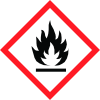
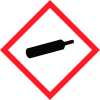
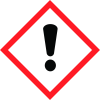
H222, H280, H336, H372
Mentions de danger
Code
Déclarations
H222
Aérosol extrêmement inflammable
H280
Contient un gaz sous pression ; peut exploser sous l'effet de la chaleur
H336
Peut provoquer somnolence ou des vertiges
H372
Risque avéré d'effets graves pour les organes à la suite d'expositions répétées ou d'une exposition prolongée
Section 2
RUBRIQUE 2: Identification des dangers
Classement SGH Classement SGH en conformité avec les règlements sur les produits dangereux Aérosols inflammables Catégorie 1 Gaz sous pression : Gaz liquéfié Toxicité systémique sur un Catégorie 3 organe cible précis - exposi- tion unique Toxicité systémique sur un Catégorie 1 (Système nerveux central) organe cible précis - exposi- tion répétée
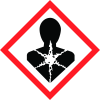
Pictogrammes de danger
Mot indicateur Déclarations sur les risques : H222 Aérosol extrêmement inflammable. H280 Contient un gaz sous pression; peut exploser sous l'effet de la chaleur. H336 Peut provoquer somnolence ou des vertiges. H372 Risque avéré d'effets graves pour les organes (Système nerveux central) à la suite d'expositions répétées ou d'une ex- position prolongée.
Conseils de prudence
Prévention: P210 Tenir à l'écart de la chaleur, des surfaces chaudes, des étincelles, des flammes nues et de toute autre source d'ignition. Ne pas fumer. P211 Ne pas vaporiser sur une flamme nue ou sur toute autre source d'ignition. P251 Ne pas perforer ni brûler, même après usage. P260 Ne pas respirer les aérosols. P264 Se laver la peau soigneusement après manipulation. P270 Ne pas manger, boire ou fumer en manipulant ce produit. P271 Utiliser seulement en plein air ou dans un endroit bien ventilé. Intervention: P304 + P340 + P312 EN CAS D'INHALATION: Transporter la personne à l’extérieur et la maintenir dans une position où elle peut confortablement respirer. Appeler un médecin en cas de malaise. P314 Consulter un médecin en cas de malaise. Entreposage: P405 Garder sous clef. P410 + P412 Protéger du rayonnement solaire. Ne pas exposer à une température supérieure à 50 °C (122 °F). Élimination: P501 Éliminer le contenu et le récipient dans une installation d'élimination des déchets agréée.
2.3 Autres dangers
Inconnu.


