


Remarque : Ingrédients figurant sur la liste des produits chimiques restreints
CE/CAS
7631-86-9
Nom du produit chimique
Silver adsorbed on silicon dioxide
Concentration
N/A
CE/CAS
64742-48-9
Nom du produit chimique
Naphtha (petroleum), hydrotreated heavy; Low boiling point hydrogen treated naphtha (A complex combination of hydrocarbons obtained by treating a petroleum fraction with hydrogen in the presence of a catalyst. It consists of hydrocarbons having carbon numbers predominantly in the range of C6 through C13 and boiling in the range of approximately 65 °C to 230 °C.)
Concentration
N/A
CE/CAS
7429-90-5
Nom du produit chimique
Aluminium
Concentration
N/A
CE/CAS
162881-26-7
Nom du produit chimique
Phenyl bis(2,4,6-trimethylbenzoyl)-phosphine oxide
Concentration
N/A
CE/CAS
64742-95-6
Nom du produit chimique
Solvent naphtha (petroleum), light aromatic; Low boiling point naphtha — unspecified (A complex combination of hydrocarbons obtained from distillation of aromatic streams. It consists predominantly of aromatic hydrocarbons having carbon numbers predominantly in the range of C8 through C10 and boiling in the range of approximately 135 °C to 210 °C.)
Concentration
N/A
CE/CAS
265-150-3
Nom du produit chimique
Naphtha (petroleum), hydrotreated heavy; Low boiling point hydrogen treated naphtha (A complex combination of hydrocarbons obtained by treating a petroleum fraction with hydrogen in the presence of a catalyst. It consists of hydrocarbons having carbon numbers predominantly in the range of C6 through C13 and boiling in the range of approximately 65 °C to 230 °C.)
Concentration
N/A
CE/CAS
200-753-7
Nom du produit chimique
Benzol
Concentration
N/A
CE/CAS
265-199-0
Nom du produit chimique
Solvent naphtha (petroleum), light aromatic; Low boiling point naphtha — unspecified (A complex combination of hydrocarbons obtained from distillation of aromatic streams. It consists predominantly of aromatic hydrocarbons having carbon numbers predominantly in the range of C8 through C10 and boiling in the range of approximately 135 °C to 210 °C.)
Concentration
N/A
CE/CAS
231-072-3
Nom du produit chimique
Aluminium
Concentration
N/A
Informations générales
Date de révision :
2022-01-20
A. Nom du produit
3Y5399 UVIPRIM ARGENT, ENCRE UVIPRIM
En cas d'urgence:
+33 (0) 1.45.42.59.59
Icônes dans la FDS
Informations sur la société
raison sociale
TIFLEX
adresse e-mail
qse@tiflex.fr
Informations SGH
mot indicateur
Danger
Hazard Codes
Mentions de danger (CLP)
H315, H317, H318, H411
Mentions de danger
Code
Déclarations
H315
Provoque une irritation cutanée
H317
Peut provoquer une allergie cutanée
H318
Provoque de graves lésions des yeux.
H411
Toxique pour les organismes aquatiques, entraîne des effets néfastes à long terme
Section 2
2.1. Classification de la substance ou du mélange
Conformément au règlement (CE) n° 1272/2008 et ses adaptations. Irritation cutanée, Catégorie 2 (Skin Irrit. 2, H315). Lésions oculaires graves, Catégorie 1 (Eye Dam. 1, H318). Sensibilisation cutanée, Catégorie 1 (Skin Sens. 1, H317). Toxicité chronique pour le milieu aquatique, Catégorie 2 (Aquatic Chronic 2, H411). Ce mélange ne présente pas de danger physique. Voir les préconisations concernant les autres produits présents dans le local.
2.2 éléments détiquette
Conformément au règlement (CE) n° 1272/2008 et ses adaptations.
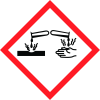
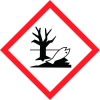
Pictogrammes de danger
GHS05 GHS07 GHS09
Mention d'avertissement
Identificateur du produit : EC 235-921-9 DIACRYLATE D'HEXAMETHYLENE EC 629-850-6 ACIDE 2-PROPENOIQUE, PRODUIT DE REACTION AVEC PENTAERYTHRITOL 015-189-00-5 OXYDE DE BIS(2,4,6-TRIMETHYLBENZOYL)PHENYLPHOSPHINE EC 282-810-6 ETHYL PHENYL(2,4,6-TRIMETHYLBENZOYL)PHOSPHINATE Etiquetage additionnel : Mentions de danger et informations additionnelles sur les dangers : H315 Provoque une irritation cutanée. H317 Peut provoquer une allergie cutanée. H318 Provoque de graves lésions des yeux. H411 Toxique pour les organismes aquatiques, entraîne des effets néfastes à long terme.
La prévention
P273 Éviter le rejet dans l’environnement. P280 Porter des équipements de protection des yeux et des mains.
Conseils de prudence
Intervention P302 + P352 EN CAS DE CONTACT AVEC LA PEAU: Laver abondamment à l’eau. P305 + P351 + P338 EN CAS DE CONTACT AVEC LES YEUX: Rincer avec précaution à l'eau pendant plusieurs minutes. Enlever les lentilles de contact si la victime en porte et si elles peuvent être facilement enlevées. Continuer à rincer. P310 Appeler immédiatement un CENTRE ANTIPOISON ou un médecin en cas d'exposition. P332 + P313 En cas d’irritation cutanée: consulter un médecin.
2.3 Autres dangers
Le mélange ne contient pas de 'Substances extrêmement préoccupantes' (SVHC)>= 0.1% publiées par l’Agence Européenne des Produits Chimiques (ECHA) selon l’article 57 du REACH : http://echa.europa.eu/fr/candidate-list-table. Se référer à la rubrique 3 pour identifier les substances concernées. Le mélange ne répond pas aux critères applicables aux mélanges PBT ou vPvB, conformément à l'annexe XIII du règlement REACH (CE) n° 1907/2006. Le mélange ne contient pas de substances >= 0,1 % présentant des propriétés perturbant le système endocrinien conformément aux critères énoncés dans le règlement délégué (UE) 2017/2100 de la Commission ou dans le règlement (UE) 2018/605 de la Commission.


