


Remarque : Ingrédients figurant sur la liste des produits chimiques restreints
CE/CAS
13463-67-7
Nom du produit chimique
Reaction mass of titanium dioxide and silver chloride
Concentration
17,9
CE/CAS
64742-95-6
Nom du produit chimique
Solvent naphtha (petroleum), light aromatic; Low boiling point naphtha — unspecified (A complex combination of hydrocarbons obtained from distillation of aromatic streams. It consists predominantly of aromatic hydrocarbons having carbon numbers predominantly in the range of C8 through C10 and boiling in the range of approximately 135 °C to 210 °C.)
Concentration
6,3
CE/CAS
85-44-9
Nom du produit chimique
Phthalic anhydride
Concentration
5,8
CE/CAS
123-86-4
Nom du produit chimique
acetic acid, butyl ester
Concentration
1,5
CE/CAS
98-82-8
Nom du produit chimique
Cumol (2022/692)
Concentration
1,3
CE/CAS
64742-54-7
Nom du produit chimique
Distillates (petroleum), hydrotreated heavy paraffinic; Base oil — unspecified (A complex combination of hydrocarbons obtained by treating a petroleum fraction with hydrogen in the presence of a catalyst. It consists of hydrocarbons having carbon numbers predominantly in the range of C20 through C50 and produces a finished oil of at least 19 10-6 m2.s-1 at 40 °C. It contains a relatively large proportion of saturated hydrocarbons.)
Concentration
1,2
CE/CAS
64742-65-0
Nom du produit chimique
Distillates (petroleum), solvent-dewaxed heavy paraffinic; Base oil — unspecified (A complex combination of hydrocarbons obtained by removal of normal paraffins from a petroleum fraction by solvent crystallisation. It consists predominantly of hydrocarbons having carbon numbers predominantly in the range of C20 through C50 and produces a finished oil with a viscosity of not less than 19 10-6 m2.s-1 at 40 °C.)
Concentration
1,2
CE/CAS
64741-89-5
Nom du produit chimique
Distillates (petroleum), solvent-refined light paraffinic; Base oil — unspecified (A complex combination of hydrocarbons obtained as the raffinate from a solvent extraction process. It consists predominantly of saturated hydrocarbons having carbon numbers predominantly in the range of C15 through C30 and produces a finished oil having a viscosity of less than 19 10-6 m2.s-1 at 40 °C.)
Concentration
1,2
CE/CAS
64741-88-4
Nom du produit chimique
Distillates (petroleum), solvent-refined heavy paraffinic; Base oil — unspecified (A complex combination of hydrocarbons obtained as the raffinate from a solvent extraction process. It consists predominantly of saturated hydrocarbons having carbon numbers predominantly in the range of C20 through C50 and produces a finished oil with a viscosity of at least 19 10-6 m2.s-1 at 40 °C.)
Concentration
1,2
CE/CAS
107-21-1
Nom du produit chimique
Ethane-1,2-diol
Concentration
1,2
CE/CAS
8052-41-3
Nom du produit chimique
Stoddard solvent; Low boiling point naphtha — unspecified (A colourless, refined petroleum distillate that is free from rancid or objectionable odours and that boils in a range of approximately 149 °C to 205 °C.)
Concentration
0,2
CE/CAS
96-29-7
Nom du produit chimique
2-Butanonoxim (2020/1182)
Concentration
0,2
CE/CAS
67-56-1
Nom du produit chimique
Methanol
Concentration
0,2
CE/CAS
64742-48-9
Nom du produit chimique
Naphtha (petroleum), hydrotreated heavy; Low boiling point hydrogen treated naphtha (A complex combination of hydrocarbons obtained by treating a petroleum fraction with hydrogen in the presence of a catalyst. It consists of hydrocarbons having carbon numbers predominantly in the range of C6 through C13 and boiling in the range of approximately 65 °C to 230 °C.)
Concentration
0,1
Informations générales
Version
1.00
Date de révision :
2022-06-13
A. Nom du produit
ArmourShield 835: DTM High Gloss Polyurethane Enamel, WHITE BASE Tinted-085567505- 001
1.5 Utilisation recommandée :
Revêtements et peinture
Icônes dans la FDS


Informations sur la société
raison sociale
Cloverdale Paint Inc
Informations SGH
mot indicateur
Danger
Hazard Codes
Mentions de danger (CLP)
H226, H315, H317, H331, H334, H340, H350, H360, H402
Mentions de danger
Code
Déclarations
H226
Liquide et vapeurs inflammables
H315
Provoque une irritation cutanée
H317
Peut provoquer une allergie cutanée
H331
Toxique par inhalation
H334
Peut provoquer des symptômes allergiques ou d'asthme ou des difficultés respiratoires par inhalation
H340
Peut induire des anomalies génétiques
H350
Peut provoquer le cancer
H360
Peut nuire à la fertilité ou au fœtus
H402
Nocif pour les organismes aquatiques
Section 2
RUBRIQUE 2: Identification des dangers
Classification (GHS CA) Classification de la substance ou du mélange Classification (GHS-CA) Liquides inflammables, Catégorie 3 Toxicité aiguë (inhalation:vapeur) Catégorie 3 Corrosif/irritant pour la peau, Catégorie 2 Sensibilisation respiratoire, Catégorie 1 Sensibilisation cutanée, Catégorie 1 Germ cell mutagenicity, Category 1 Carcinogenicity, Category 1 Reproductive toxicity, Category 1 Dangereux pour le milieu aquatique — Danger H226 H331 H315 H334 H317 H340 H350 H360 H402 aigu, Catégorie 3 Texte intégral des mentions H : voir section 16
2.2 éléments détiquette
GHS-CA
Pictogrammes de danger
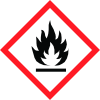
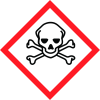
GHS02 GHS06 GHS08
Mentions de danger
H226 - Liquide et vapeurs inflammables H315 - Provoque une irritation cutanée H317 - Peut provoquer une allergie cutanée H331 - Toxique par inhalation H334 - Peut provoquer des symptômes allergiques ou d'asthme ou des difficultés respiratoires par inhalation H340 - Peut induire des anomalies génétiques H350 - Peut provoquer le cancer H360 - Peut nuire à la fertilité ou au fœtus H402 - Nocif pour les organismes aquatiques
Conseils de prudence
P201 - Se procurer les instructions avant utilisation. P202 - Ne pas manipuler avant d’avoir lu et compris toutes les précautions de sécurité. P210 - Tenir à l’écart de la chaleur, des surfaces chaudes, des étincelles, des flammes nues et de toute autre source d’inflammation. Ne pas fumer. P233 - Maintenir le récipient fermé de manière étanche. P240 - Mise à la terre/liaison équipotentielle du récipient et du matériel de réception. P241 - Utiliser du matériel électrique, de ventilation, d’éclairage antidéflagrant P261 - Éviter de respirer les brouillards, vapeurs, aérosols. 06/13/2022 FR-CA (Français - CA) 085567505-001-GEOTIN-1 Page 1 P264 - Se laver Peau soigneusement après manipulation. P271 - Utiliser seulement en plein air ou dans un endroit bien ventilé. P272 - Les vêtements de travail contaminés ne devraient pas sortir du lieu de travail. P273 - Éviter le rejet dans l’environnement. P280 - Porter un équipement de protection des yeux, un équipement de protection du visage, des gants de protection, des vêtements de protection. P284 - [Lorsque la ventilation du local est insuffisante] porter Un appareil respiratoire autorisé pour les vapeurs organiques. P303+P361+P353 - EN CAS DE CONTACT AVEC LA PEAU (ou les cheveux) Enlever immédiatement tous les vêtements contaminés. Rincer la peau à savon et l’eau . P304+P340 - EN CAS D’INHALATION Transporter la personne à l’extérieur et la maintenir dans une position où elle peut confortablement respirer. P308+P313 - EN CAS d’exposition prouvée ou suspectée Consulter un médecin. P333+P313 - En cas d’irritation ou d'éruption cutanée Consulter un médecin. P342+P311 - En cas de symptômes respiratoires Appeler un CENTRE ANTIPOISON. P362+P364 - Enlever les vêtements contaminés et les laver avant réutilisation. P370+P378 - En cas d’incendie Utiliser dioxyde de carbone (CO2), de la mousse, produit chimique sec pour l’extinction. P403+P233 - Stocker dans un endroit bien ventilé. Maintenir le récipient fermé de manière étanche. P403+P235 - Stocker dans un endroit bien ventilé. Conserver au frais P405 - Garder sous clef. P501 - Éliminer le contenu/récipient dans un centre de collecte de déchets dangereux ou spéciaux, conformément à la réglementation locale, régionale, nationale et/ou internationale
2.3 Autres dangers
Pas d'informations complémentaires disponibles
Toxicité aiguë inconnue (GHS-CA)
Aucune donnée disponible
2.1. Classification de la substance ou du mélange
Classification (GHS-CA) Liquides inflammables, Catégorie 3 H226 Toxicité aiguë (inhalation:vapeur) Catégorie 3 H331 Corrosif/irritant pour la peau, Catégorie 2 H315 Sensibilisation respiratoire, Catégorie 1 H334 Sensibilisation cutanée, Catégorie 1 H317 Germ cell mutagenicity, Category 1 H340 Carcinogenicity, Category 1 H350 Reproductive toxicity, Category 1 H360 Dangereux pour le milieu aquatique — Danger H402 aigu, Catégorie 3 Texte intégral des mentions H : voir section 16


